




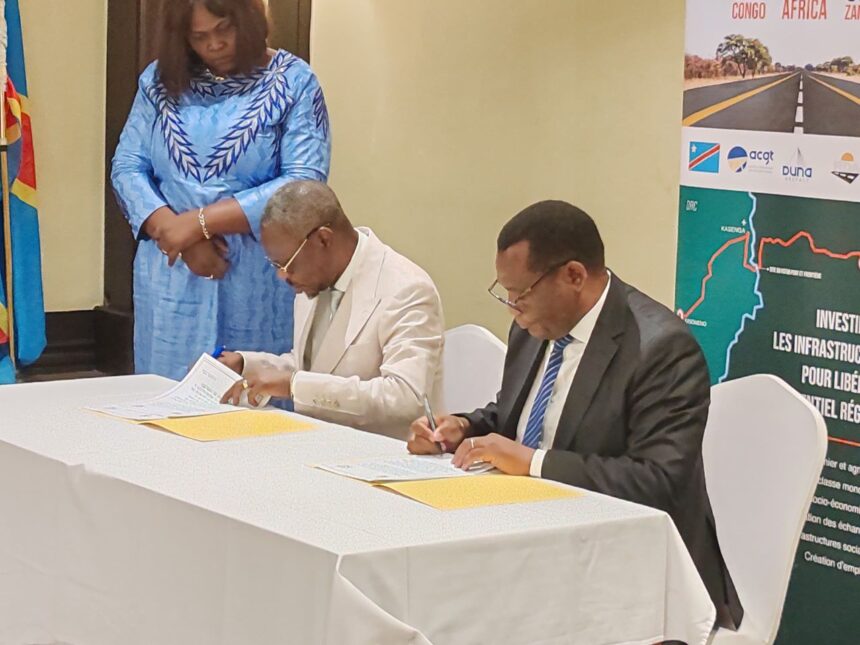
The Governments of the Republic of Zambia and the Democratic Republic of Congo (DRC) have reaffirmed their commitment to regional integration and trade facilitation following a successful Joint Steering Committee Meeting for the Kasomeno-Mwenda Public-Private Partnership (PPP) Road Project.
The Kasomeno-Mwenda PPP Project is a flagship cross-border infrastructure initiative designed to boost bilateral cooperation and leverage innovative financing for sustainable economic growth. The project is expected to enhance trade, improve connectivity, and stimulate development along the border regions.
The meeting was co-chaired by Zambia’s Ministry of Infrastructure, Housing and Urban Development Permanent Secretary, Professor Albert Malama, and DRC’s Secretary General for Infrastructure and Public Works, Engineer Georges Koshi Gimeya. Participants discussed progress on project implementation, key operational strategies, and measures to streamline cross-border activities.
Key outcomes of the meeting included the adoption of the Chalwe One Stop Border Post (OSBP) Operational Manual and Control Zone, which provides clear guidelines for border management and trade facilitation. Officials also approved an Action Matrix to guide project implementation and agreed to amend the Bilateral Agreement title to reflect the project’s evolving scope and objectives.
The Kasomeno-Mwenda PPP Project demonstrates how strategic partnerships between governments and the private sector can accelerate infrastructure development and promote sustainable economic growth. Enhanced road networks and streamlined border operations are expected to improve trade efficiency, attract investment, and strengthen regional integration between Zambia and the DRC.
By advancing cross-border infrastructure and cooperation, both governments are positioning the project as a model for future regional initiatives aimed at improving connectivity, boosting commerce, and fostering economic resilience across Southern Africa.