




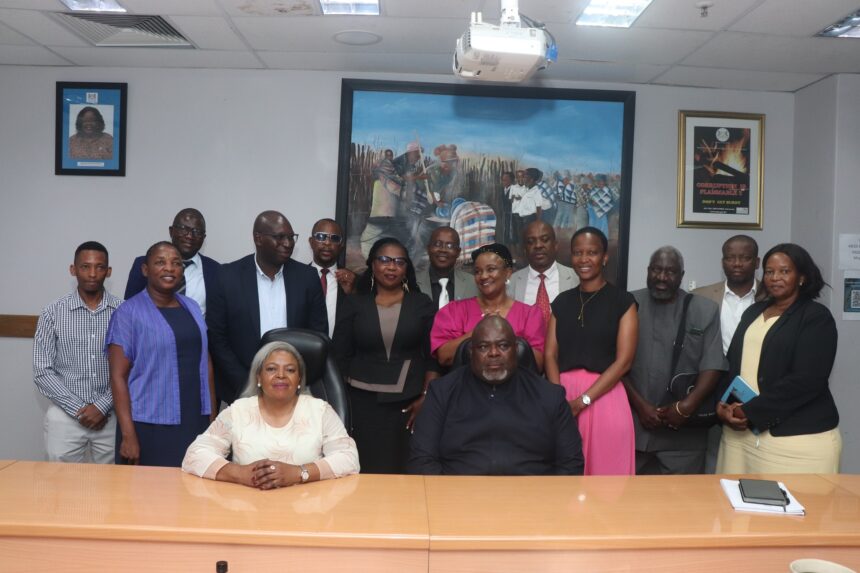
Botswana welcomed a Zambian delegation from the Directorate of National Science Centre, led by Director Professor Benson Banda, in a bid to strengthen STEM and competency-based education. The visit, hosted by Permanent Secretary Ms Mmamiki Kamanakao of the Ministry of Child Welfare and Basic Education, focused on evaluating the application of skills by teachers trained under the Knowledge Co-Creation Program (KCCP). The discussions aimed to enhance understanding of Science, Technology, Engineering, and Mathematics (STEM) education and Competency-Based Education (CBE), while promoting policy alignment for effective implementation in African schools.
The Knowledge Co-Creation Program, developed by Zambia in partnership with the Japan International Cooperation Agency (JICA), delivers structured STEM and competency-based training to African countries. The initiative is designed to support human capital development, educational reform, and innovation across the continent. During the engagement, both Botswana and Zambia explored ways to expand collaboration through school twinning programs, teacher exchanges, joint lesson studies, and joint research projects in STEM and CBE education. These initiatives aim to build strong bilateral ties while fostering educational innovation.
Ms Kamanakao highlighted that her Ministry is relatively new and is actively revising the national curriculum to integrate Science, Technology, Engineering, Arts, and Mathematics (STEAM) education. She explained that including the Arts alongside technical subjects helps develop well-rounded learners and encourages creativity. The Permanent Secretary emphasized that these reforms are intended to equip students with the skills required for the modern economy while strengthening cross-border cooperation in education.
The visit reflects Botswana’s commitment to advancing STEM and competency-based learning through regional partnerships. By collaborating with Zambia and leveraging programs like KCCP, the country seeks to improve teacher capacity, promote innovation in classrooms, and establish adaptable educational frameworks suitable for wider African contexts. The engagement signals a shared vision for preparing students with practical skills, fostering research, and creating sustainable educational models across the region.