



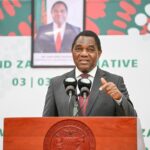




Zambia has officially launched its Country Structural Vulnerability and Resilience Assessment (CSVRA) Report, marking a major step in efforts to enhance early-warning systems, promote peace, and strengthen long-term national stability. The launch was led by Vice President Dr. W. K. Mutale Nalumango, highlighting the government’s commitment to proactive governance and resilience-building.
During the launch, Dr. Nalumango emphasized that the CSVRA will serve as a vital tool for identifying structural vulnerabilities and governance gaps. The report allows the government and stakeholders to monitor potential triggers of instability and take preventive action before crises arise. She noted that Zambia voluntarily initiated the CSVRA process in 2020, becoming the first country in Southern Africa to conduct such a comprehensive assessment. This initiative has since inspired other countries in the region to adopt similar approaches.
Hon. Mulambo Haimbe, Minister of Foreign Affairs and International Cooperation, highlighted the report’s role in safeguarding peace. He described the CSVRA as a key component of the continental early-warning system, designed to detect early signs of conflict and facilitate timely interventions. The minister reaffirmed the government’s commitment to using the findings to strengthen national resilience and prevent instability.
Regional leaders also recognized Zambia’s efforts. COMESA Secretary General Ms. Chileshe Kapwepwe commended the country for its leadership in advancing regional peace and resilience frameworks. She stated that Zambia’s proactive approach provides a model for other member states seeking to enhance early-warning and stability systems.
Ministry of Foreign Affairs Permanent Secretary for International Relations and Cooperation, Ms. Etambuyu Anamela Gundersen, noted that the CSVRA reflects the government’s commitment to peace and stability as foundations for socio-economic development. She credited President Hakainde Hichilema’s leadership in completing the report, which identifies critical vulnerabilities including economic pressures, environmental degradation, social inequalities, and exposure to natural disasters and climate change.
The CSVRA outlines early-warning mechanisms, targeted mitigation strategies, and resilience-building measures aimed at ensuring sustainable development and improving citizen well-being. By providing a structured approach to risk management, the report equips policymakers, civil society, and regional institutions to respond effectively to emerging threats.
The launch drew a diverse audience, including members of the Diplomatic Corps, Civil Society Organizations, Non-Governmental Organizations, representatives of international and regional institutions, traditional leaders, and government officials. Experts indicate that Zambia’s leadership in producing the CSVRA could significantly enhance national and regional stability while setting a precedent for data-driven peacebuilding strategies across Southern Africa.