





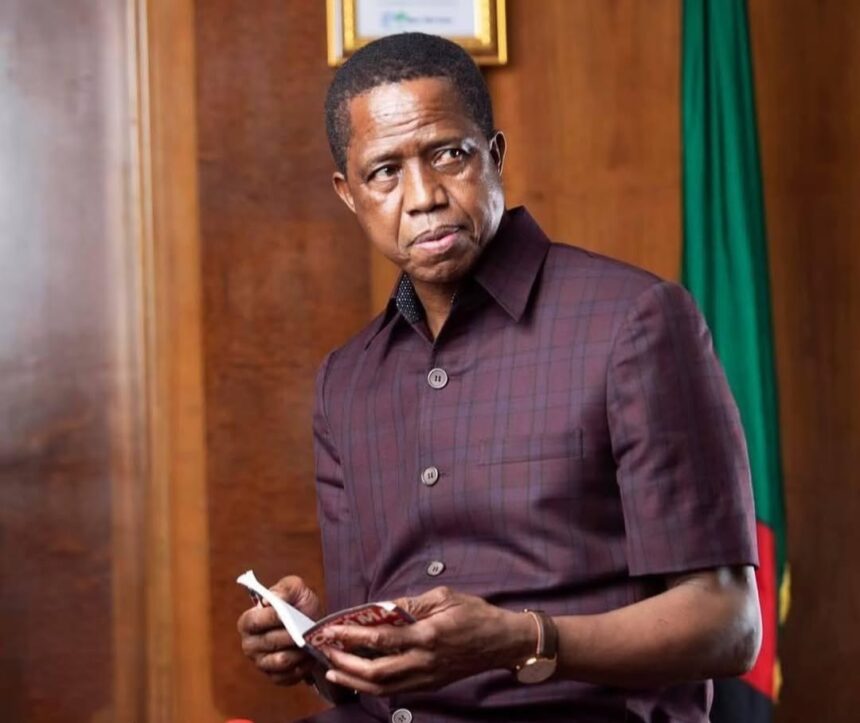
The long-standing legal impasse over the remains of former Zambian President Edgar Chagwa Lungu has taken a significant turn as the South African government has formally agreed to the technical release of his body. This development paves the way for a state burial in Zambia and marks Pretoria’s official withdrawal from the controversial court battle that has gripped Southern Africa.
Zambia’s Attorney General has responded swiftly, filing a Notice of Amendment in the Pretoria High Court under Case Number 2025-0965. The move eliminates South Africa’s Minister of International Relations and Cooperation from the list of respondents in the legal case.
The court document confirms the update by stating: “By removing THE MINISTER OF INTERNATIONAL RELATIONS AND COOPERATION as Ninth Respondent and by deleting paragraph (a) on the last page (signature) page thereof.” It further reads: “By deleting paragraphs 3.11 and 3.12 of the Applicant’s Supplementary Founding Affidavit.”
Legal analysts interpret this amendment as Pretoria’s consent for Zambia to repatriate the late president’s remains without opposition, effectively dissolving the international legal deadlock.
As speculation swirled online regarding the motives behind Zambia’s legal insistence on a state burial, government insiders have firmly pushed back against accusations of political manipulation. Dismissing the false narrative that Zambia was disregarding Lungu’s burial wishes, officials reiterated that the country’s objective is constitutional—upholding national dignity and respecting state protocols.
An editorial response from investigative platform ZimEye further illuminated the background, alleging that individuals facing money laundering charges in Lusaka collaborated with Zimbabwean fraudsters to spread confusion and misinformation. “Zambia is not worried about any corpse. Instead, individuals charged for money laundering… have spent the last four weeks publishing misleading rumours,” the platform reported.
The high-profile legal matter has inadvertently shed light on an alleged propaganda and identity fraud ring operating across Southern Africa. According to Zambian intelligence reports and court-aligned sources, individuals involved include Hopewell Chin’ono, a Zimbabwean journalist accused of holding multiple legal identities and previously discredited by both Zimbabwean authorities and the British Embassy in Harare, and Talent Rusere, a South African media figure presenting himself as a lawyer despite being absent from official legal registers.
These actors have been implicated in orchestrating disinformation campaigns targeting Mozambique, Zimbabwe, and Zambia. They are reportedly using major media platforms, including the South African Broadcasting Corporation (SABC), to amplify unverified claims, sow public discord, and disrupt legal and democratic institutions.
Public scrutiny intensified following a 5 June 2025 SABC broadcast where Africa Editor Sophie Mokoena claimed that Lungu had chosen to remain in South Africa until after Zambia’s 2026 elections. The claim, lacking validation from Zambian authorities or Lungu’s inner circle, has been labeled misleading. A formal complaint has since been lodged against the broadcaster.
Legal filings from the Zambian government make no mention of such wishes, further undermining the credibility of the SABC report and reinforcing the state’s stance against foreign-fueled misinformation.
The amendment submitted by VFV Attorneys on Zambia’s behalf not only streamlines the legal process but also offers a diplomatic resolution. It reads: “PLEASE TAKE NOTICE that the Applicant shall effect the amendments unless any objection is made thereto within 10 days from date hereof… The Applicant tenders the costs (if any) occasioned by the said amendment.”
This legal update clears the path for Zambia to conduct a state-managed burial for its former leader and reinforces the country’s right to oversee its own national processes without external interference.
While Zambia has scored both a legal and diplomatic win with the clearance of Lungu’s repatriation, the broader implications are concerning. The saga has exposed the growing threat of cross-border disinformation networks that exploit media platforms to influence regional politics and undermine sovereign institutions.
As Zambia prepares to lay former President Lungu to rest with full honors, attention now turns to how Southern African states will address the rising misuse of journalism by fraudsters linked to past instances of democratic instability.
This case continues to develop as regional governments and media watchdogs confront an emerging wave of digital deception targeting public trust and state integrity.