



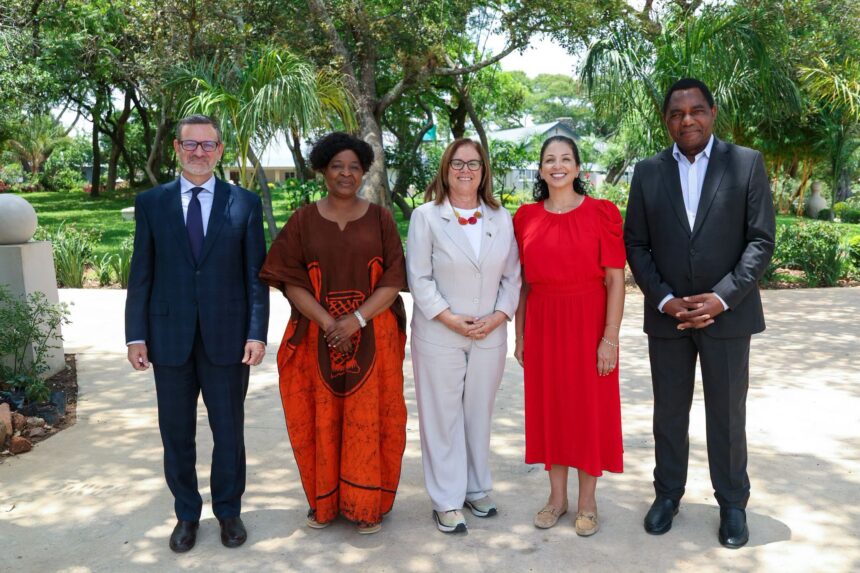
President Hakainde Hichilema has held discussions with the Ruderman Foundation on a potential partnership aimed at improving access to modern diagnostic medical equipment for people in remote and underserved parts of Zambia. The proposed collaboration seeks to bring advanced portable diagnostic technology closer to communities that face challenges accessing healthcare facilities and specialised medical services. The initiative could strengthen healthcare delivery by enabling medical professionals to conduct important diagnostic procedures closer to where patients live. It also reflects the government’s continued interest in exploring partnerships that can improve the quality, accessibility and reach of healthcare services across the country. Expanding access to medical technology is particularly important for rural communities, where long distances and limited healthcare infrastructure can delay the diagnosis and treatment of illnesses.
President Hichilema and First Lady Mutinta hosted representatives of the Ruderman Foundation, Mr and Mrs Ruderman, at the President’s farm in Choma yesterday. The discussions focused on areas of potential cooperation, particularly making state-of-the-art portable diagnostic medical equipment available to citizens in remote parts of Zambia. Israeli Ambassador to Zambia Ofra Farhi accompanied the Ruderman couple during the meeting. The engagement provided an opportunity to explore how cooperation between Zambia and the foundation could contribute to strengthening the country’s healthcare system. Although the discussions focused on potential collaboration, the proposed initiative points to opportunities for improving access to modern medical technology beyond major urban centres.
In a Facebook post following the meeting, President Hichilema explained that the discussions centred on making advanced portable diagnostic equipment accessible to citizens, especially those living in the most remote parts of the country. He emphasised the importance of bringing modern healthcare technology closer to communities that may struggle to access specialised medical services. Portable diagnostic equipment could help address some of the geographical barriers that prevent patients in rural areas from receiving timely medical assessments. By making such technology available closer to communities, healthcare providers could potentially identify certain medical conditions earlier and make more informed decisions about patient care. The President’s remarks highlight the importance of using technology and partnerships to improve healthcare access across Zambia.
Access to diagnostic services remains an important part of effective healthcare delivery. Before healthcare professionals can recommend appropriate treatment, they often need accurate information about a patient’s medical condition. Diagnostic equipment helps medical personnel identify possible illnesses, assess symptoms and monitor patients’ health. However, access to specialised equipment can be limited in facilities located far from major hospitals and urban medical centres. Patients in remote communities may therefore face additional challenges when they need tests that are unavailable at their nearest health facility.
The proposed partnership with the Ruderman Foundation could help address some of these challenges by supporting the availability of portable diagnostic technology. Unlike conventional equipment that may require permanent installation in specialised facilities, portable devices can offer greater flexibility in delivering certain diagnostic services. Depending on the equipment involved, healthcare workers could potentially use such technology during community outreach programmes, rural health visits and services at selected healthcare facilities. This approach could reduce the need for some patients to travel long distances simply to access basic diagnostic assessments. However, the actual benefits will depend on the type of equipment provided, its availability, trained personnel and the arrangements established for its use.
The potential collaboration also highlights the importance of partnerships between government and international organisations in strengthening Zambia’s healthcare sector. Governments often face significant demands when expanding healthcare infrastructure, purchasing specialised equipment and improving service delivery across large geographical areas. Partnerships can provide additional opportunities to access technology, expertise and other resources that support national development priorities. The engagement with the Ruderman Foundation could therefore create an opportunity to explore practical ways of improving diagnostic services in underserved communities. Any eventual arrangement will need to support Zambia’s healthcare priorities and ensure that the equipment reaches the people who need it most.
For rural patients, improved access to diagnostic services could make an important difference in their healthcare experience. Delayed diagnosis can complicate the management of certain illnesses and may result in patients requiring more extensive medical attention. Bringing suitable diagnostic technology closer to communities could help healthcare workers assess patients more efficiently and determine when referrals to larger medical facilities are necessary. It could also support outreach services that bring healthcare professionals and medical assessments directly to people who have difficulty travelling. Such interventions would be particularly valuable for communities located far from hospitals and specialised diagnostic centres.
However, introducing advanced portable medical equipment requires more than simply making the technology available. Healthcare workers need appropriate training to operate the devices, interpret results and follow established medical procedures. Equipment must also receive regular maintenance and technical support to ensure accurate and reliable performance. In addition, healthcare facilities need appropriate systems for managing patient information, handling diagnostic results and referring patients for further treatment where necessary. These considerations will be important if the proposed collaboration is to deliver sustainable improvements in healthcare services.
The involvement of Israeli Ambassador Ofra Farhi in the meeting also reflects the diplomatic dimension of the engagement. International cooperation can create opportunities for countries and organisations to share knowledge, technology and expertise in areas such as healthcare and medical innovation. Zambia’s engagement with the Ruderman Foundation could provide a platform for exploring how external partnerships can support national healthcare development objectives. Such cooperation can complement existing government efforts to improve medical services and expand access to healthcare. The next steps will depend on the outcome of the discussions and the development of any concrete partnership arrangements.
The meeting took place as President Hichilema continues a 10-day working holiday at his farm in Choma. Despite being away from the capital, the President has maintained engagements involving national development and public affairs. Last Friday, he held a public engagement in the district, providing an opportunity to interact with members of the public. He also attended two church services over the weekend. His meeting with the Ruderman Foundation formed part of the engagements taking place during his stay in Choma.
The proposed collaboration comes at a time when access to quality healthcare remains an important development priority for Zambia. Improving healthcare services requires investment in medical infrastructure, human resources, essential medicines and modern diagnostic technology. Rural communities need particular attention because geographical barriers can make accessing specialised services difficult. Portable diagnostic equipment could provide an additional way of extending certain medical services beyond established hospital facilities. If properly implemented, the initiative could complement other efforts to strengthen primary healthcare and improve the delivery of medical services.
President Hichilema’s discussions with the Ruderman Foundation represent an opportunity to explore innovative approaches to healthcare delivery in Zambia. The proposed focus on advanced portable diagnostic medical equipment could help bring essential diagnostic services closer to underserved communities and reduce some of the challenges associated with accessing specialised healthcare. However, the long-term impact will depend on the details of the partnership, the equipment selected and the support provided to healthcare professionals. Effective implementation, training, maintenance and equitable distribution will be essential to achieving the intended benefits. For communities in remote parts of Zambia, a successful collaboration could represent an important step towards making modern healthcare services more accessible, reliable and responsive to their needs.