






Zambia has called on the World Bank Group to accelerate the development of the Lobito Corridor Integrated Forest Economy (LIFE) Project, an initiative expected to strengthen the forestry sector, create jobs and attract private investment. Minister of Green Economy and Environment, Dr. Gilbert Siame, has urged the international financial institution to speed up the design and outline of the proposed project to allow both parties to finalise the agreement and move towards implementation. The initiative forms part of the Government’s broader Grow Zambia Agenda, which seeks to promote economic growth through increased production, value addition and private sector participation. The proposed project is expected to create new opportunities for businesses and communities along the Lobito Corridor while supporting sustainable forest management. Its successful implementation could also strengthen Zambia’s position as an emerging regional centre for forestry production and timber processing.
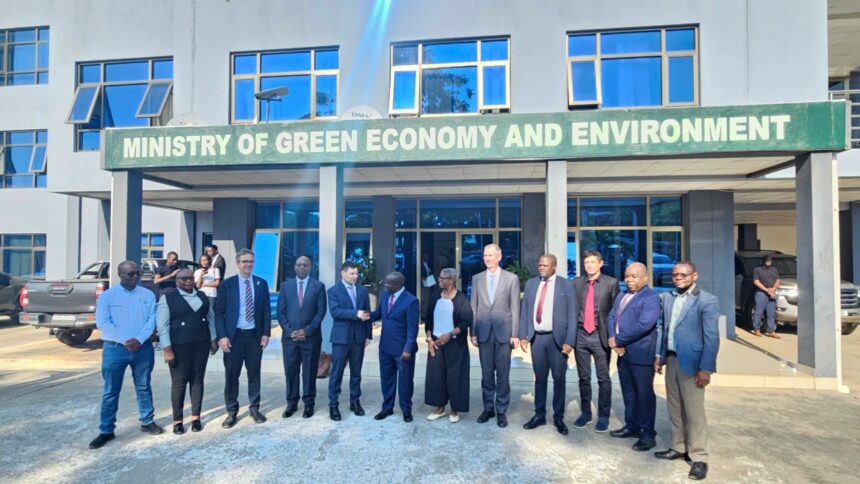
Dr. Siame made the appeal when he met a World Bank Group delegation at his office in Lusaka following a recent joint Government and World Bank exploratory mission to the Copperbelt Province. During the meeting, the Minister commended the World Bank for its continued partnership with the Zambian Government and called for stronger cooperation in developing the forestry sector. He emphasised the importance of agreeing on an effective implementation model that would deliver lasting economic and environmental benefits. Finalising the LIFE Project agreement would provide a foundation for moving from planning to practical activities that support forest businesses and local communities. The Minister also highlighted the project’s potential to stimulate economic growth along the Lobito Corridor in line with national development priorities.
The exploratory mission to the Copperbelt provided Government and the World Bank with an opportunity to assess the potential of Zambia’s forest economy and engage directly with companies, communities and other stakeholders. World Bank Group Country Manager for Zambia, Martine Valcin, described the mission as fruitful, noting that it helped both parties gain a clearer understanding of the opportunities available within the sector. The discussions also allowed the delegation to examine how the World Bank could work with Government to support forestry businesses and strengthen economic activities along the Lobito Corridor. Engagement with industry players is particularly important because successful project implementation will depend on understanding existing production capacity, investment plans and challenges affecting the sector. The findings from the mission are expected to contribute to the design of a project that responds to the practical needs of businesses and communities.
World Bank Lead Natural Resources Management Specialist for Eastern and Southern Africa, Laurent Debroux, said the institution sees significant potential to support value-added processing within Zambia’s forestry sector. He explained that expanding processing activities could create employment opportunities and empower communities located along the Lobito Corridor. Value addition is an important part of industrial development because it allows countries to generate greater economic benefits from locally available resources. Instead of concentrating mainly on growing and harvesting timber, Zambia can strengthen its economy by processing wood into products such as furniture and other finished goods. This creates opportunities for manufacturing businesses, skilled workers and smaller enterprises that supply services and materials to the industry. A stronger forestry value chain could therefore contribute to job creation, business development and increased domestic production.
Mr. Debroux also revealed that several companies visited during the Copperbelt mission were already planning to expand their plantations and invest in value addition. He described these developments as encouraging signs for the future of the forestry industry. Expansion of commercial plantations could help increase the supply of timber while supporting the development of processing industries. Such investments may also create opportunities for local suppliers, transport operators and communities involved in forestry-related activities. However, the long-term success of these investments will depend on responsible forest management and production practices that protect natural resources. Aligning private investment with sustainability objectives will be important in ensuring that the sector grows without compromising the environment.
World Bank Senior Natural Resources Management Specialist for Africa East and South, Andrew Zakharenka, said the Bank’s team would meet the Forestry Department the following week to agree on the design of the LIFE Project. He explained that the discussions would draw on the findings of the recent Copperbelt mission and help prepare the project for the finalisation of the agreement. This stage is important because the project design will determine how the proposed activities are organised, financed and implemented. It will also help clarify the roles of Government, the World Bank, private investors and other participating stakeholders. The meeting with the Forestry Department is therefore expected to contribute to establishing a practical framework for advancing the initiative.
The proposed Lobito Corridor Integrated Forest Economy Project is designed to build a sustainable forestry industry that generates employment, increases local value addition and attracts responsible private investment. It also seeks to create meaningful economic opportunities for communities while taking advantage of improved market access through the Lobito Corridor. The project is envisaged as a phased initiative led by the private sector, with support from public and concessional financing. Its approach is intended to encourage businesses to invest in forestry production and processing while Government and development partners strengthen the conditions required for long-term growth. This model could help reduce barriers to investment and encourage greater participation by both established companies and smaller enterprises.
One of the main areas expected to benefit from the LIFE Project is sustainable plantation development. Commercial plantations can provide a managed supply of timber for industries while helping to meet demand for wood products. The project also intends to support outgrower arrangements, which could allow small-scale farmers and local landholders to participate in commercial forestry through organised production systems. Such arrangements could create additional income opportunities for rural households while connecting local producers to established markets. Support for nurseries and plantation establishment could also create demand for seedlings, technical services and other inputs required by the forestry industry. For these opportunities to deliver lasting benefits, plantation development will need to follow responsible land management practices and appropriate environmental safeguards.
The project is also expected to promote domestic timber processing and furniture manufacturing. These activities could help Zambia retain more economic value from its forestry resources instead of relying primarily on the sale of less processed materials. Expanding local processing capacity would require investment in machinery, skilled labour, technology and reliable supply chains. It could also create opportunities for small and medium-sized enterprises to participate in furniture production and other wood-based businesses. Increased production of locally manufactured timber products could support the broader Grow Zambia Agenda by strengthening domestic industries and creating employment. Developing competitive products for local and regional markets will be essential to achieving these objectives.
Beyond commercial forestry and manufacturing, the LIFE Project is expected to support community enterprises such as beekeeping. This provides an opportunity to broaden the economic benefits of the forestry sector beyond timber production. Beekeeping can offer communities an additional source of income while encouraging the responsible management of forest landscapes. Other community-based activities may also benefit from improved access to markets and stronger links with established businesses. Including local enterprises in the forestry value chain could help ensure that communities participate directly in the economic opportunities generated by the project. This approach is important because sustainable development should deliver benefits to people living in and around areas where economic activities take place.
The financing model proposed for the LIFE Project will also play an important role in attracting investment. Public and concessional financing is expected to support policy reforms, strengthen institutional capacity and provide shared infrastructure that can make private investment more attractive. These interventions could help address some of the challenges that limit the growth of forestry businesses. Private investors would then have opportunities to participate in plantation establishment, processing, manufacturing and market development. A phased implementation approach could allow the project to develop gradually while responding to lessons learned during its early stages. Effective coordination between Government, the World Bank and industry players will be necessary to ensure that financing reaches the areas where it can generate meaningful economic benefits.
The Lobito Corridor is an important part of Zambia’s regional economic development ambitions because it offers opportunities to improve access to markets and strengthen trade connections. Better market access could help forestry companies transport their products to customers within Zambia and across regional markets. For manufacturers, reliable transport connections are important because they influence production costs, delivery times and competitiveness. The proposed LIFE Project seeks to connect the development of the forestry industry with these wider transport and trade opportunities. However, the full benefits will depend on continued investment in production capacity, logistics and supporting infrastructure. By linking sustainable forestry with improved regional connectivity, Zambia hopes to create a stronger foundation for industrial growth.
Government is targeting the commencement of plantation establishment under the LIFE Project in 2027. This target represents an important milestone in the proposed implementation process, although progress will depend on completing the project design, finalising the agreement and putting the necessary arrangements in place. The period leading up to implementation will therefore be important for agreeing on responsibilities, financing arrangements and environmental management requirements. Government and the World Bank will also need to ensure that private companies and local communities understand how they can participate in the initiative. Clear planning and effective coordination will help reduce implementation challenges and improve the project’s chances of delivering its intended results. The proposed 2027 start also highlights the importance of accelerating the preparatory work currently underway.
The meeting in Lusaka was attended by Ministry of Green Economy and Environment Permanent Secretary, Dr. Douty Chibamba, alongside the World Bank delegation led by Ms. Martine Valcin. Their participation reflects the importance of cooperation between Government institutions and international development partners in advancing major economic projects. The engagement also demonstrated the need to involve technical experts and industry stakeholders in designing initiatives that address both economic and environmental priorities. The forestry sector requires a balanced approach that supports investment and job creation while protecting forest resources for future generations. Strong institutional capacity and effective monitoring will therefore be essential throughout the project’s development and implementation.
The push to accelerate the Lobito Corridor Integrated Forest Economy Project represents an important opportunity for Zambia to strengthen its forestry industry and expand its manufacturing base. Through sustainable plantations, outgrower schemes, timber processing, furniture manufacturing and community enterprises, the initiative aims to create a broader and more inclusive forest economy. Its private sector-led approach could attract investment while public and concessional financing supports the reforms and infrastructure needed for growth. The proposed commencement of plantation establishment in 2027 gives Government and its partners a clear target to work towards. However, the project’s success will ultimately depend on timely finalisation of the agreement, effective implementation and meaningful participation by local communities and businesses. If these priorities are achieved, the LIFE Project could become an important contributor to Zambia’s Grow Zambia Agenda through sustainable production, value addition, job creation and stronger regional trade.