






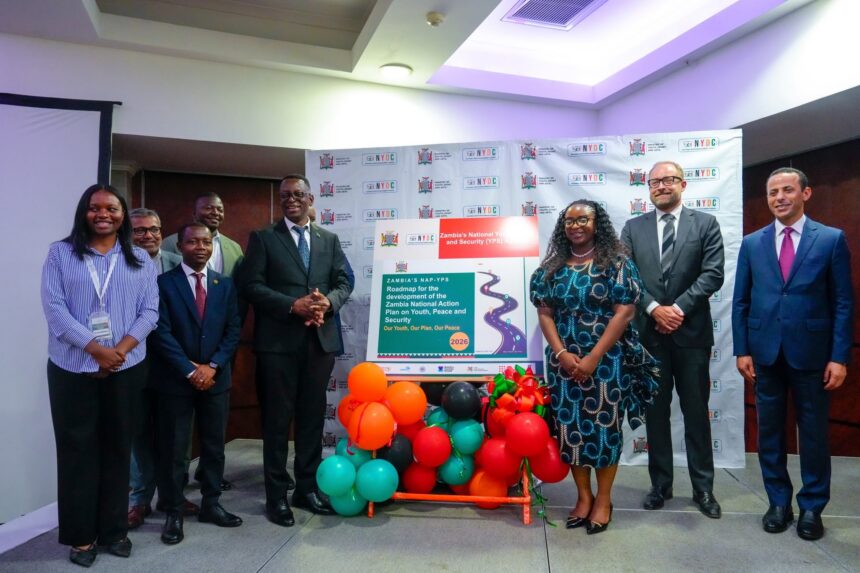
Zambia has taken an important step towards strengthening youth participation in peacebuilding with the official launch of the roadmap for developing the country’s first National Action Plan on Youth, Peace and Security (NAP-YPS). The initiative marks a significant milestone in efforts to recognise young people not only as beneficiaries of peace and security programmes but also as active contributors to preventing conflict and promoting national stability. Led by the Ministry of Youth, Sport and Arts, the process aims to create a clear framework for involving young people in decisions and activities that shape peace and security in their communities. The roadmap will guide consultations, institutional engagement and the development of practical measures for a comprehensive National Action Plan. It also reflects growing recognition that lasting peace requires the participation, leadership and experiences of young people.
The launch of the NAP-YPS development roadmap provides a foundation for a broader national process that will bring together young people, Government institutions and development partners. Rather than developing a plan without sufficient community involvement, the roadmap outlines a process through which young people can contribute their views, experiences and recommendations. This approach is important because the challenges affecting communities differ across regions and social groups. Young people living in different parts of Zambia may experience issues such as unemployment, social exclusion, inequality and limited opportunities in different ways. Understanding these experiences will help ensure that the eventual National Action Plan responds to actual community needs. The process is therefore expected to place meaningful youth participation at the centre of national peacebuilding efforts.
The National Action Plan on Youth, Peace and Security is particularly important because young people have a significant role to play in building peaceful and stable communities. They are often directly affected by social, economic and political challenges that can contribute to tensions and conflict. However, they also possess the energy, ideas and leadership skills needed to promote dialogue, understanding and cooperation. Through meaningful participation, young people can help identify early signs of conflict, encourage peaceful solutions and strengthen relationships within their communities. Recognising their contribution can also challenge the perception that youth are merely recipients of decisions made by older generations. Instead, the initiative seeks to create opportunities for young people to become active partners in shaping Zambia’s peace and security priorities.
The roadmap will provide guidance on how young people across the country can be engaged during the development of the National Action Plan. This is an important step towards ensuring that the final document reflects diverse experiences and perspectives rather than the views of a limited group of stakeholders. Inclusive consultations can help identify the specific barriers preventing young people from participating in peacebuilding activities. They can also highlight opportunities for strengthening youth leadership, community dialogue and cooperation with public institutions. Particular attention to the participation of young women and other groups that may face barriers to inclusion will be important in developing a representative framework. A national plan that reflects different voices is more likely to address the realities facing communities across Zambia.
The Ministry of Youth, Sport and Arts is leading the process through the National Youth Development Council (NYDC), which is expected to play an important role in coordinating youth participation. The involvement of the NYDC provides an important link between national policy discussions and the experiences of young people. As an institution focused on youth development, it can contribute to mobilising young people and supporting their engagement in the consultation process. The initiative also demonstrates the importance of cooperation between Government institutions and organisations working to promote youth empowerment. Effective coordination will be necessary to ensure that the roadmap translates into a practical and inclusive National Action Plan. It will also help establish a foundation for continued youth participation beyond the initial development process.
The United Nations Development Programme (UNDP) is among the partners supporting this collective effort. Its involvement reflects the importance of development partnerships in strengthening national institutions and promoting inclusive approaches to peace and security. The process also brings together regional and international organisations, including the African Union Commission, the Common Market for Eastern and Southern Africa (COMESA), the Southern African Development Community (SADC), the United Nations Population Fund (UNFPA) Zambia and Search for Common Ground. Their participation provides an opportunity to draw on regional experience and established approaches to youth engagement and peacebuilding. Cooperation among these organisations and the Zambian Government can help strengthen the technical and institutional foundations of the proposed plan. It also connects Zambia’s efforts with wider regional and international commitments to recognising young people as important contributors to peace and security.
The initiative is closely connected to the broader Youth, Peace and Security agenda, which recognises the important role young people play in preventing violence, building peace and supporting social development. This agenda encourages governments and institutions to move beyond viewing young people primarily through the lens of security risks. Instead, it promotes their participation as leaders, partners and contributors to peaceful societies. For Zambia, developing a National Action Plan provides an opportunity to translate these principles into national priorities and practical interventions. Such a framework could strengthen youth involvement in community decision-making, conflict prevention and peacebuilding programmes. It could also encourage stronger cooperation between young people, traditional leaders, local authorities and other institutions responsible for maintaining peace and stability.
Youth participation in peacebuilding is especially relevant when considering the social and economic challenges that can affect communities. Limited employment opportunities, poverty, unequal access to services and social exclusion can contribute to frustration and mistrust. These challenges do not automatically lead to conflict, but they can create conditions in which tensions become more difficult to manage. Giving young people meaningful opportunities to participate in community development can help address some of these concerns. When young people have a voice in decisions affecting their lives, they can contribute ideas that improve local programmes and strengthen relationships with institutions. The proposed National Action Plan can provide a framework for making such participation more organised and consistent.
Another important consideration is the need to ensure that youth participation goes beyond consultation. Listening to young people is an essential starting point, but their contributions must also influence decisions, policies and programmes. The success of the NAP-YPS process will therefore depend on how effectively the ideas gathered during consultations are translated into clear actions. Government institutions and development partners will need to identify responsibilities and establish ways of tracking progress. Young people should also have opportunities to remain involved in monitoring the implementation of initiatives that affect them. This would help build trust and demonstrate that their participation has a practical purpose.
The development of Zambia’s first National Action Plan on Youth, Peace and Security also presents an opportunity to strengthen cooperation between national institutions and communities. Peacebuilding cannot be achieved by Government alone because it requires participation from individuals and organisations at different levels of society. Schools, youth organisations, civil society groups, religious institutions and community leaders can all contribute to promoting dialogue and peaceful coexistence. Young people can also use their skills and knowledge to support awareness programmes and encourage constructive engagement among their peers. Bringing these groups together can help create stronger community networks that respond to challenges before they escalate. The proposed roadmap offers a starting point for organising these contributions within a coordinated national framework.
The launch of the roadmap represents an important milestone, but the real test will come during the development and implementation of the National Action Plan. Zambia will need to ensure that consultations are inclusive, institutional responsibilities are clear and the final plan contains practical measures that can be implemented. Adequate coordination, resources and sustained political commitment will also be important in turning the initiative into meaningful results. The participation of young people must remain central throughout the process rather than being limited to the launch and consultation stages. Their experiences and recommendations should help shape the priorities and actions of the final document. This will determine whether the initiative delivers lasting benefits for communities across the country.
Zambia’s move to develop its first National Action Plan on Youth, Peace and Security signals an important commitment to giving young people a stronger role in building a peaceful and stable nation. Through the leadership of the Ministry of Youth, Sport and Arts and the National Youth Development Council, supported by UNDP and regional and international partners, the country has established a foundation for a coordinated national process. The roadmap creates an opportunity to bring young people and institutions together to develop solutions that reflect the realities of communities across Zambia. However, the achievement of this goal will depend on turning young people’s voices into meaningful decisions, programmes and lasting opportunities for participation. A successful National Action Plan should not simply recognise young people as important to peacebuilding. It should give them the space, support and responsibility to actively shape the future of peace and security in Zambia.