






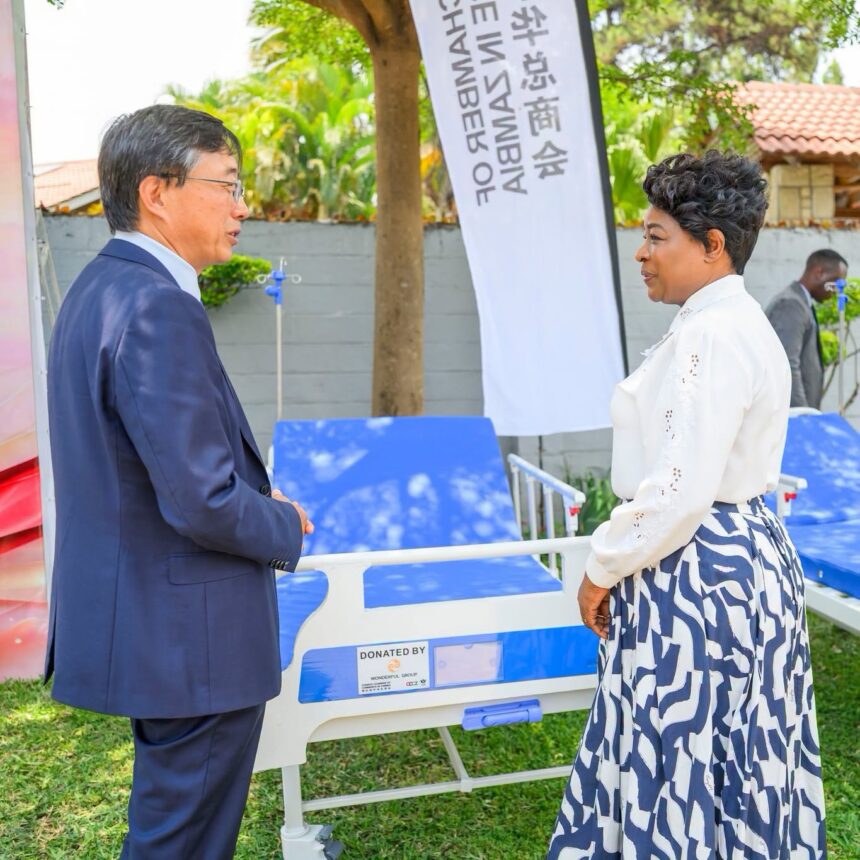
The Chinese Chamber of Commerce in Zambia (CCCZ) has donated 200 hospital beds and 200 sewing machines to the Office of the First Lady, Mrs. Mutinta Hichilema, in a contribution aimed at supporting healthcare services and promoting economic empowerment across the country. The donation was officially received by the First Lady during a ceremony held in Lusaka, highlighting the growing role of partnerships between government institutions, private-sector organisations and international business communities in supporting national development. The donated hospital beds are expected to benefit healthcare facilities that still require additional equipment, while the sewing machines will support cooperatives involved in skills development and income-generating activities. The contribution reflects a commitment to improving the welfare of Zambian citizens through practical support in two important areas of development. It also highlights the longstanding relationship between Zambia and China and the potential for cooperation to deliver meaningful benefits at community level.
Receiving the donation, Mrs. Mutinta Hichilema expressed gratitude to the Chinese Chamber of Commerce in Zambia for its generosity and commitment to supporting initiatives that improve people’s lives. She noted that the 200 hospital beds and 200 sewing machines would make a meaningful difference to many Zambians. The First Lady explained that the items would support her Office’s ongoing efforts to improve healthcare and promote economic empowerment, particularly among communities that need additional assistance. She further indicated that the donated equipment would be directed towards hospitals and cooperatives that had not yet received similar support. Her remarks highlighted the importance of ensuring that donations reach institutions and groups where they can address practical needs and create lasting benefits.
The donation of 200 hospital beds comes at an important time when access to appropriate healthcare equipment remains essential for improving the quality of medical services. Hospital beds are basic but important resources in healthcare facilities because they provide patients with suitable spaces for treatment, recovery and monitoring. Adequate equipment also helps healthcare workers perform their duties more effectively while supporting better patient care. By directing the donated beds to hospitals that have not yet benefited from similar assistance, the initiative could help address some of the equipment needs facing healthcare facilities. The contribution demonstrates how private-sector support can complement government efforts to strengthen healthcare infrastructure and improve access to essential services.
The 200 sewing machines are equally significant because they are intended to support cooperatives and promote economic empowerment. Sewing equipment can provide individuals and organised groups with opportunities to develop practical skills, produce garments and participate in income-generating activities. For women and other community members involved in cooperative businesses, access to appropriate equipment can help improve productivity and create opportunities for greater financial independence. The machines may also support skills development by enabling beneficiaries to strengthen their tailoring and garment-making capabilities. Through such initiatives, communities can gain access to tools that support entrepreneurship, self-reliance and participation in local economic activities.
Mrs. Hichilema also emphasised that improving the lives of Zambians requires collective action that extends beyond the responsibilities of Government. She acknowledged the importance of partnerships with organisations such as the Chinese Chamber of Commerce in Zambia, which can contribute resources and expertise towards addressing community needs. Her remarks reflect the understanding that national development requires cooperation between public institutions, private businesses, civil society and international partners. While Government remains responsible for delivering essential public services, contributions from other stakeholders can help strengthen existing programmes and reach communities that require additional support. The partnership with CCCZ therefore represents an example of how cooperation between different sectors can contribute to healthcare improvement and economic empowerment.
Speaking at the same ceremony, Ms. Etambuyu Anamela Gundersen, Permanent Secretary for International Relations and Cooperation at the Ministry of Foreign Affairs and International Cooperation, described the donation as evidence of the warm and enduring relations between Zambia and China. She noted that the relationship between the two countries is built on mutual respect, cooperation and a shared commitment to improving the welfare of their citizens. According to her remarks, the contribution goes beyond the provision of physical equipment because it represents a shared investment in human development and community empowerment. She also highlighted the importance of continued cooperation in strengthening bilateral relations. Her comments placed the donation within the broader context of diplomatic and economic ties between the two countries.
Zambia and China have maintained relations involving cooperation in various areas, including trade, investment, infrastructure and development. Partnerships between Chinese businesses operating in Zambia and local communities have also created opportunities for private-sector contributions to social development. The donation by CCCZ demonstrates how business organisations can support initiatives that address practical challenges beyond their commercial activities. Providing hospital beds and sewing machines brings together two areas of development that directly affect people’s quality of life. Healthcare support contributes to community well-being, while access to productive equipment can help individuals and cooperatives strengthen their economic activities. Such contributions can reinforce the wider relationship between the two countries by translating cooperation into tangible community benefits.
In his remarks, Mr. Li Tie, President of the Chinese Chamber of Commerce in Zambia, said the donation was intended to support women’s empowerment and contribute to the well-being of Zambian citizens. He expressed appreciation to the companies operating under the chamber that contributed towards making the donation possible. Their participation demonstrates the role that businesses can play in supporting social responsibility initiatives and contributing to development programmes in the communities where they operate. The involvement of several companies also highlights the importance of collective private-sector action in mobilising resources for community support. By working together through CCCZ, the participating businesses helped provide equipment intended to benefit healthcare institutions and cooperatives.
The companies that contributed to the donation include Sanhe Manufacturing Zambia Limited, Wonderful Group, JCHX Mining Construction Zambia Limited, Good Time Steel Company Zambia Limited and Lian Chao and Yue Ventures Limited. Their contributions formed part of the wider initiative coordinated by the Chinese Chamber of Commerce in Zambia. The participation of these companies reflects the potential for businesses to work collectively on programmes that support national development priorities. Corporate social responsibility initiatives can help strengthen relationships between companies and the communities in which they operate. They can also provide additional resources for addressing social and economic challenges that require cooperation among different stakeholders.
The donation also draws attention to the importance of empowering women through access to productive resources and practical economic opportunities. Sewing machines can help cooperatives move beyond basic skills training towards organised production and business development. With suitable support, beneficiaries may use the equipment to produce clothing and other textile products for local markets. Such activities can create opportunities for income generation while encouraging cooperation and entrepreneurship within communities. However, the long-term benefits will depend on how effectively the machines are distributed, maintained and used by the intended beneficiaries. Ensuring that recipients have access to relevant skills and opportunities to market their products will be important in helping the donation achieve its intended impact.
Similarly, the hospital beds will need to reach facilities where additional equipment can make a practical difference to patient care. Their distribution to hospitals that have not previously received similar assistance will help extend the benefits of the donation to institutions with outstanding needs. Proper allocation and maintenance will be important to ensure that the equipment remains useful over time. The contribution also highlights the value of identifying specific healthcare needs when planning support initiatives. By providing equipment that hospitals can use directly, organisations can complement wider efforts to improve healthcare delivery and strengthen the capacity of medical facilities.
The contribution from the Chinese Chamber of Commerce in Zambia represents a meaningful example of cooperation between the private sector and the Office of the First Lady. It brings together healthcare support, women’s economic empowerment and international relations within one community-focused initiative. Mrs. Mutinta Hichilema’s appreciation of the donation and the recognition of its importance by the Ministry of Foreign Affairs and International Cooperation highlight the value of partnerships in addressing national development needs. The participation of five Chinese-linked companies further demonstrates how businesses can contribute collectively to social welfare programmes. As the donated 200 hospital beds and 200 sewing machines reach their intended beneficiaries, their impact will depend on effective distribution and continued support for the institutions and cooperatives receiving them.
The donation reinforces an important message about Zambia’s development priorities: improving people’s lives requires cooperation, practical investment and a shared commitment to community welfare. The hospital beds will support efforts to strengthen healthcare services, while the sewing machines will create opportunities for skills development and economic empowerment. The partnership also provides another example of the longstanding friendship and cooperation between Zambia and China. Beyond the value of the donated equipment, the initiative highlights the positive role that responsible businesses can play in supporting communities and complementing government development programmes. Through continued collaboration between Government, the private sector and international partners, initiatives of this nature can contribute to a healthier, more economically empowered and more resilient Zambia.