





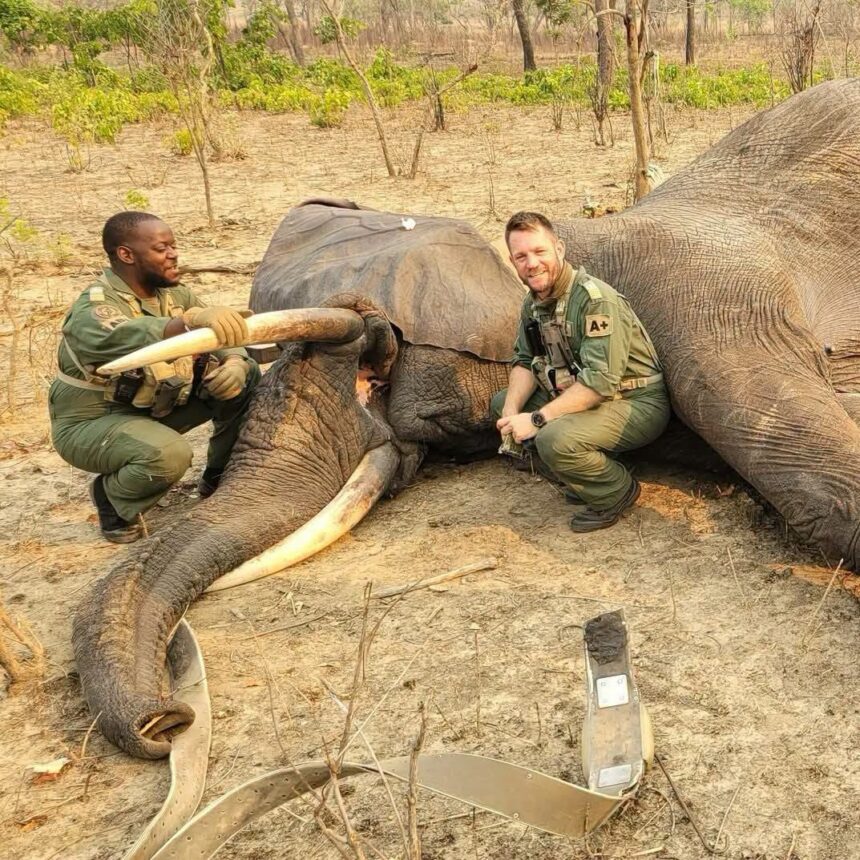
Zambia has achieved a major milestone in wildlife conservation after successfully conducting its first aerial elephant darting operation led entirely by a Zambian pilot and veterinarian in Kafue National Park. The historic operation, carried out on 23 August 2026, marks an important step in strengthening local expertise in specialised wildlife management and veterinary services. It was conducted by African Parks in collaboration with the Department of National Parks and Wildlife (DNPW), with support from Game Rangers International. The operation was led by African Parks pilot Mr. Kampamba Chitambi and DNPW Senior Veterinarian Dr. Johnathon Sinyinza. Beyond its technical significance, the achievement demonstrates Zambia’s growing ability to manage complex wildlife conservation activities using its own trained professionals.
The successful operation represents an important development in Zambia’s efforts to build national capacity in wildlife conservation. Aerial elephant darting requires specialised aviation skills, veterinary knowledge, careful planning and close coordination between different conservation professionals. The process involves locating and approaching an elephant from an aircraft before a qualified veterinarian administers a sedative or immobilising drug under controlled conditions. Such operations require a high level of precision because the safety of the animal and the professionals involved must remain a priority. Having an entirely Zambian pilot-veterinarian team successfully complete this operation demonstrates the progress made in developing specialised skills within the country’s conservation sector.
The operation was led by Mr. Kampamba Chitambi, an African Parks pilot, and Dr. Johnathon Sinyinza, a Senior Veterinarian with the Department of National Parks and Wildlife. Their participation highlights the growing contribution of Zambian professionals to specialised wildlife management activities that have traditionally required significant technical expertise. The collaboration between the pilot and veterinarian was central to the successful execution of the operation. It also demonstrated the importance of combining aviation experience with veterinary knowledge when undertaking complex wildlife interventions. Their achievement provides an important example of how local professionals can take leadership roles in protecting Zambia’s wildlife heritage.
A major factor behind this milestone was a four-year conservation pilot mentorship and development programme spearheaded by African Parks in Kafue National Park. The programme was designed to strengthen Zambia’s capacity to undertake complex conservation operations by developing local aviation expertise. Through mentorship and professional development, the initiative helped prepare Zambian personnel to take on specialised responsibilities within wildlife management. The successful elephant darting operation demonstrates the value of sustained investment in training and knowledge transfer. It also shows why building local expertise is essential for creating a conservation sector that can independently manage increasingly demanding operational responsibilities.
Kafue National Park provides an important setting for this achievement because of its significance to Zambia’s wildlife conservation and tourism sectors. It is one of the country’s major protected areas and is known for its diverse wildlife and natural landscapes. Protecting such an extensive conservation area requires skilled personnel, effective wildlife monitoring and the ability to respond to different management needs. Specialised veterinary operations form part of the wider range of activities that can support wildlife management in protected areas. Developing local professionals who can carry out these operations strengthens the country’s ability to respond to conservation challenges while maintaining greater national ownership of wildlife protection.
Elephant darting is a specialised wildlife management procedure that can serve different conservation and veterinary purposes. Depending on the circumstances, elephants may need to be temporarily immobilised for veterinary treatment, health assessments, research activities or other approved management interventions. Conducting such procedures from the air requires careful coordination between the pilot and veterinarian, as well as appropriate equipment and professional judgement. The veterinarian must assess the animal and determine the appropriate medication and dosage, while the pilot must maintain suitable flying conditions for the operation. The successful completion of Zambia’s first aerial elephant darting operation by an all-Zambian team therefore represents a significant demonstration of technical competence and professional coordination.
The achievement also highlights the importance of partnerships in advancing wildlife conservation across Zambia. African Parks worked alongside the Department of National Parks and Wildlife, the government institution responsible for managing and protecting the country’s national parks and wildlife resources. Game Rangers International also supported the operation, contributing to the collaborative conservation effort. These partnerships demonstrate how government institutions and conservation organisations can combine their expertise and resources to strengthen wildlife protection. Effective cooperation is particularly important in specialised activities where aviation, veterinary services, wildlife management and operational support must work together.
The Ministry of Tourism has recognised the organisations and institutions that contributed to making the historic operation possible. These include African Parks, the Department of National Parks and Wildlife, Game Rangers International, Nache Helicopters, Jager Aviation and the Zambia Civil Aviation Authority. Their involvement highlights the range of technical and institutional support required to carry out specialised aerial wildlife operations. Aviation organisations play an important role in supporting safe and effective aircraft operations, while conservation institutions provide the expertise needed to manage wildlife responsibly. The successful outcome reflects the value of cooperation between different sectors in achieving shared conservation objectives.
The milestone also reinforces the importance of co-management arrangements in Zambia’s protected areas. Such partnerships bring together government authorities and conservation organisations to strengthen the management of national parks and other protected landscapes. They can support improvements in technical capacity, operational planning, wildlife monitoring and the development of local professionals. By combining institutional knowledge with practical experience, these arrangements can help improve the effectiveness of conservation programmes. The successful aerial elephant darting operation demonstrates how long-term cooperation can produce results that strengthen both local expertise and national conservation capacity.
Building Zambian expertise in specialised wildlife management has benefits that extend beyond a single operation. Developing local pilots, veterinarians and other conservation professionals can reduce dependence on external technical support for certain specialised activities. It also creates opportunities for knowledge transfer and professional development within the country’s wildlife sector. As more Zambian professionals gain experience in complex conservation operations, institutions can strengthen their ability to manage wildlife challenges effectively. This approach supports long-term sustainability by ensuring that important technical knowledge and operational skills remain within the country.
Wildlife conservation also plays an important role in Zambia’s tourism industry. The country’s national parks, wildlife species and natural landscapes attract visitors interested in safari experiences and nature-based tourism. Maintaining healthy wildlife populations and well-managed protected areas is essential for preserving the natural attractions that support this sector. Successful conservation programmes can therefore contribute to tourism development while protecting ecosystems and biodiversity. Investments in skilled local professionals help strengthen the institutions responsible for safeguarding these resources and maintaining the quality of Zambia’s wildlife tourism experience.
The achievement is particularly relevant as Zambia continues to position itself as a leading sustainable tourism destination. Sustainable tourism depends on protecting natural resources while ensuring that communities and future generations can benefit from them. This requires more than promoting destinations and attracting visitors. It also involves investing in wildlife management, strengthening conservation institutions and developing the skills needed to protect vulnerable species and their habitats. Zambia’s first all-Zambian aerial elephant darting operation demonstrates progress in one specialised area of this broader responsibility. It also sends a positive message about the country’s commitment to developing its own conservation professionals.
The successful operation on 23 August 2026 is therefore more than an aviation and veterinary milestone. It represents the results of four years of mentorship, professional development and collaboration between conservation partners. The leadership demonstrated by Mr. Kampamba Chitambi and Dr. Johnathon Sinyinza highlights the growing role of Zambian professionals in protecting the country’s wildlife heritage. The involvement of African Parks, DNPW, Game Rangers International and other supporting institutions further demonstrates the importance of sustained partnerships. As Zambia continues strengthening its wildlife conservation and sustainable tourism sectors, developing local expertise will remain essential to achieving lasting results.
Zambia’s historic elephant darting operation in Kafue National Park marks an encouraging step towards greater national ownership of specialised wildlife management. It shows that investment in training, mentorship and institutional cooperation can equip local professionals to undertake complex conservation activities. More importantly, it reinforces the need to protect the country’s rich biodiversity through strong partnerships and continued investment in technical skills. The success of this operation provides a foundation for further development of Zambia’s wildlife veterinary and aviation capabilities. By empowering Zambian professionals to lead conservation efforts, the country is strengthening its ability to safeguard its natural heritage and ensure that future generations continue to benefit from its remarkable wildlife resources.