





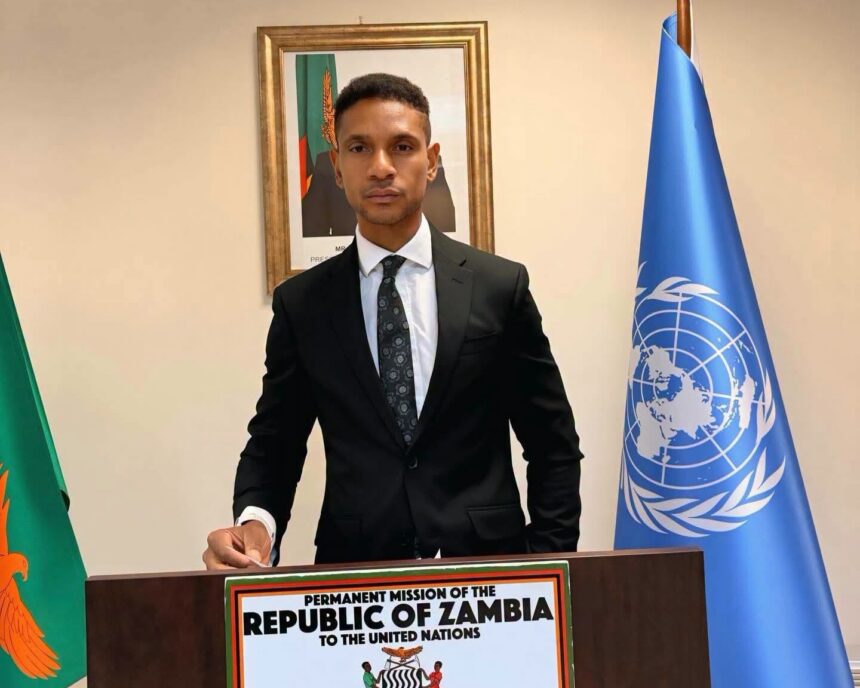
The Republic of Zambia has reaffirmed its commitment to achieving the Sustainable Development Goals (SDGs) by participating in the Ministerial Segment of the 2026 High-Level Political Forum (HLPF) on Sustainable Development at the United Nations Headquarters in New York. The annual gathering brought together Heads of State, Government Ministers and senior officials from around the world to review global progress toward implementing the 2030 Agenda for Sustainable Development. As countries continue to face economic, social and environmental challenges, the forum provides an important platform for strengthening international cooperation and sharing practical solutions. Zambia’s participation reflects its determination to accelerate sustainable development through inclusive policies and effective governance. The country’s representatives used the event to highlight progress already made while reaffirming their commitment to delivering meaningful results for citizens.
The High-Level Political Forum is convened under the auspices of the United Nations Economic and Social Council (ECOSOC) and serves as the UN’s primary platform for monitoring progress on the 2030 Agenda and its 17 Sustainable Development Goals. Every year, government leaders, policymakers and development experts gather to evaluate achievements, identify obstacles and exchange ideas on how to advance sustainable development worldwide. The forum plays a vital role in promoting accountability and encouraging countries to align national policies with internationally agreed development objectives. Through regular reviews and policy discussions, participating nations are able to learn from each other’s experiences while identifying innovative approaches to shared challenges. The 2026 session continues this important tradition by encouraging stronger collaboration and practical action.
This year’s forum is being held under the theme, “Transformative, equitable, innovative and coordinated actions for the 2030 Agenda for Sustainable Development and its Sustainable Development Goals for a sustainable future for all.” The theme reflects the growing recognition that achieving the SDGs requires comprehensive action across every sector of society. Governments are being encouraged to adopt innovative policies, strengthen partnerships and ensure that development efforts benefit all citizens without leaving vulnerable communities behind. The focus on coordinated action also recognizes that global challenges such as climate change, poverty, inequality and food insecurity cannot be addressed through isolated initiatives. Instead, countries are being urged to work together to develop integrated solutions that promote long-term sustainability and resilience.
Speaking on the sidelines of the ongoing forum, Ministry of Local Government and Rural Development Permanent Secretary for Administration, Dr. Gabriel Pollen, outlined Zambia’s ongoing efforts to promote inclusive and sustainable growth. He explained that the country’s participation demonstrates its commitment to accelerating implementation of the Sustainable Development Goals through practical reforms and improved governance systems. According to Dr. Pollen, Zambia continues to prioritize decentralized governance, allowing development decisions to be made closer to local communities where they can have the greatest impact. He also highlighted the importance of integrated development planning, which helps align national priorities with the SDGs while ensuring efficient use of available resources. These strategies form an essential part of Zambia’s broader vision for sustainable national development.
Dr. Pollen emphasized that Zambia has already made significant progress in integrating the Sustainable Development Goals into its national development planning framework. By embedding the SDGs within government policies and long-term planning, the country is working to ensure that development efforts remain focused, measurable and inclusive. He pointed to expanded access to essential public services as one of the notable achievements recorded in recent years. These improvements include investments in climate-resilient water supply systems and sanitation infrastructure designed to serve communities more effectively while adapting to changing environmental conditions. Such initiatives contribute directly to improving public health, reducing poverty and strengthening resilience against climate-related risks.
Climate resilience remains one of Zambia’s key development priorities as the country continues to experience the effects of climate change. Dr. Pollen noted that efforts have been made to strengthen vulnerable communities by implementing projects that improve their ability to cope with environmental challenges. These initiatives include investments in sustainable infrastructure, improved water management systems and community-based adaptation measures that reduce exposure to climate-related disasters. Building resilience not only protects livelihoods but also supports long-term economic stability and social well-being. Zambia’s approach demonstrates an understanding that sustainable development and climate action must advance together to achieve lasting results.
The Permanent Secretary also highlighted Zambia’s commitment to strengthening partnerships at every level of society. He explained that achieving the Sustainable Development Goals requires cooperation between national government, local authorities, development partners, the private sector and communities themselves. Multi-level partnerships encourage the sharing of expertise, financial resources and innovative ideas that can accelerate development outcomes. Localized innovation also plays an important role by allowing communities to develop solutions that address their unique social and economic circumstances. Through collaboration and innovation, Zambia aims to overcome persistent development challenges while ensuring that no community is left behind.
The opening of the Ministerial Segment also featured strong messages from international leaders calling for faster implementation of the Sustainable Development Goals. ECOSOC President His Excellency Lok Bahadur Thapa urged Member States to move beyond commitments and focus on delivering coordinated action. He stressed that effective coordination strengthens international efforts while fragmented approaches weaken progress toward shared objectives. His remarks reinforced the importance of governments working together to address complex global challenges through unified strategies and practical implementation. The message served as a reminder that achieving the SDGs requires more than policy declarations and depends on consistent action across all sectors.
United Nations Secretary-General António Guterres echoed similar concerns by acknowledging the significant global challenges that continue to slow progress toward the 2030 Agenda. He recognized that conflicts, economic uncertainty, climate change and other crises have complicated development efforts in many parts of the world. Despite these difficulties, he emphasized the urgent need for countries to accelerate the delivery of tangible results that improve the lives of people while protecting the planet. His call reflects growing international concern that the remaining years before 2030 will require stronger political commitment and greater collaboration. Governments are therefore being encouraged to transform commitments into measurable outcomes that benefit current and future generations.
Zambia’s participation in the 2026 High-Level Political Forum highlights the country’s continued commitment to advancing sustainable development through effective governance, inclusive policies and strong international cooperation. By integrating the Sustainable Development Goals into national planning, expanding access to essential services and investing in climate resilience, the country is working to build a more sustainable future for its citizens. The discussions taking place at the United Nations reinforce the importance of coordinated global action as countries seek practical solutions to shared challenges. As the world moves closer to the 2030 deadline, forums such as the HLPF remain essential for measuring progress, encouraging accountability and strengthening partnerships. Zambia’s engagement demonstrates its determination to contribute actively to global sustainable development while continuing to pursue inclusive economic growth and improved quality of life for all.