
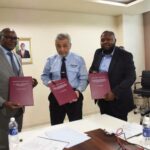
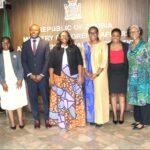

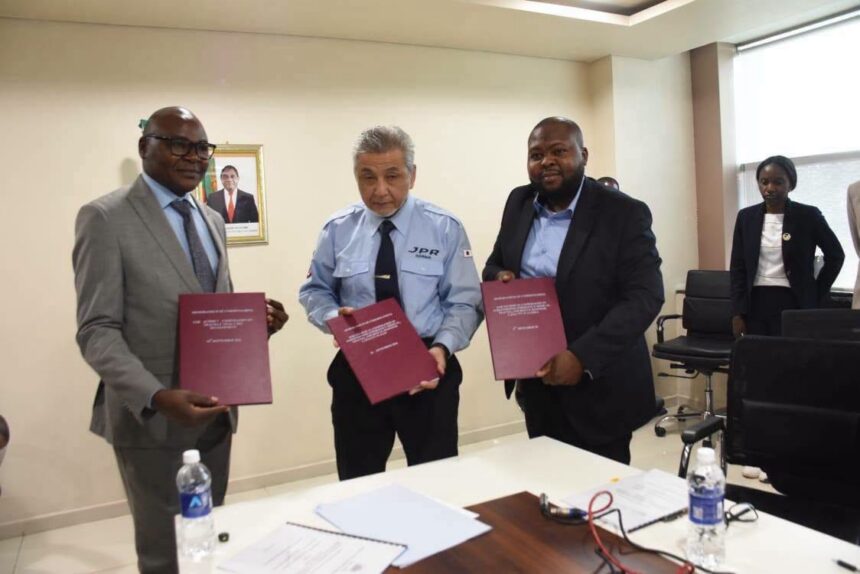
The Zambian Government has taken another step towards strengthening emergency response and rescue services after the Ministry of Local Government and Rural Development signed a Memorandum of Understanding with the Japan International Paramedical Rescue Technical Cooperation Corps and Community Emergency Rescue Services. The agreement was signed yesterday and focuses on improving emergency response coordination, frontline rescue capabilities and pre-hospital medical care across communities in Zambia. The partnership brings together government institutions, Japanese technical experts and local emergency responders to address key needs in rescue and trauma care. The initiative is expected to support the development of practical skills among firefighters, medical responders and other personnel involved in emergency operations. It also reflects the Government’s continued efforts to strengthen systems that protect lives and improve the ability of communities to respond when emergencies occur.
Speaking during the signing ceremony, Ministry of Local Government and Rural Development Permanent Secretary for Technical Services, Mr Nicholas Phiri, described the Memorandum of Understanding as a vital step towards improving Zambia’s national emergency response system. He said the partnership would strengthen coordination among emergency responders while improving frontline rescue capabilities and pre-hospital medical care. These areas are particularly important during road accidents, fires, natural disasters and other emergencies where the first few minutes can have a significant impact on the outcome for affected people. The agreement is expected to provide a platform for continued technical cooperation and skills development. By bringing different emergency response institutions closer together, the partnership can support a more coordinated approach to managing situations where lives are at risk.
Mr Phiri also highlighted the important role played by the Ministry in supporting Local Authorities to provide essential public services in communities. Fire and rescue operations remain an important responsibility at local level because emergency incidents can occur in urban, rural and rapidly developing areas. Local responders often serve as the first point of contact when communities face fires, accidents and other emergencies. Their ability to respond quickly depends on appropriate training, equipment, coordination and clear procedures. Strengthening these areas can help Local Authorities improve the quality and speed of emergency services available to residents.
The Permanent Secretary stressed that effective coordination between emergency responders and relevant institutions is essential when lives are at risk. Emergency situations often require firefighters, medical personnel, police officers, local authorities and community-based responders to work together under difficult conditions. Without clear coordination, delays can affect rescue operations and the delivery of initial medical care. The new partnership is therefore expected to support stronger cooperation and more organised emergency response procedures. Improved coordination can help responders understand their respective responsibilities and work more efficiently during incidents that require immediate intervention.
According to Mr Phiri, the MoU will address some of the existing needs through continuous capacity-building and technical cooperation programmes. The programmes will be tailored for firefighters and medical responders involved in rescue activities, giving them opportunities to strengthen their practical knowledge and technical competencies. Training can play an important role in improving how emergency personnel assess incidents, conduct rescues and provide initial care before patients reach medical facilities. The partnership also creates an opportunity for Zambian responders to benefit from specialised knowledge and experience from Japanese rescue professionals. Continued technical cooperation can help build a stronger pool of trained personnel capable of responding to emergencies in different communities.
The Government has welcomed international cooperation in emergency response capacity building as an important part of improving the skills available to Zambian responders. Mr Phiri said such cooperation can help equip emergency personnel with modern skills, knowledge and competencies needed to save lives and protect communities. International partnerships can also create opportunities for the exchange of practical experience and the introduction of approaches that can be adapted to local conditions. For Zambia, strengthening emergency response capacity is relevant not only to major incidents but also to everyday emergencies that affect individuals and communities. The focus on training and technical cooperation therefore forms an important component of the broader effort to improve public safety.
Japan International Paramedical Rescue Technical Cooperation Corps Director Mr Masaru Harima said the signed MoU reinforces the long-standing technical cooperation between Japanese rescue experts and Zambian local emergency groups. He specifically highlighted the importance of working with community-based first responders, who can play a critical role before specialised emergency teams arrive at an incident. Community responders can provide initial assistance and help stabilise emergency situations while professional rescue and medical teams are mobilised. Strengthening their skills can contribute to a more connected emergency response system that operates from the community level upwards. The partnership therefore extends beyond institutional cooperation and includes practical engagement with people who are directly involved in emergency response at local level.
Mr Harima further stated that the agreement would accelerate efforts to advance paramedic training and specialised fire and accident response in Zambia. He also pointed to the development of efficient protocols aimed at improving patient survival outcomes during emergencies. Effective protocols can help responders make timely decisions and provide appropriate initial care while patients are being transported or awaiting further medical attention. Specialised training in fire and accident response can also improve the ability of emergency personnel to operate safely in complex situations. These areas of cooperation are expected to form part of the technical support provided through the partnership.
The signing of the Memorandum of Understanding represents a significant development in Zambia’s efforts to strengthen emergency response services through collaboration between government institutions, local responders and international technical partners. The agreement places emphasis on capacity building, technical cooperation, paramedic training, fire response and improved coordination among emergency services. It also recognises the role of community-based responders in providing assistance during the crucial early stages of an emergency. As implementation progresses, the focus will be on translating the partnership into practical training, stronger response systems and improved preparedness across communities. The cooperation between Zambia and Japanese rescue experts ultimately aims to give emergency responders the skills and coordination they need to act effectively, protect communities and improve the chances of survival for people affected by emergencies.