






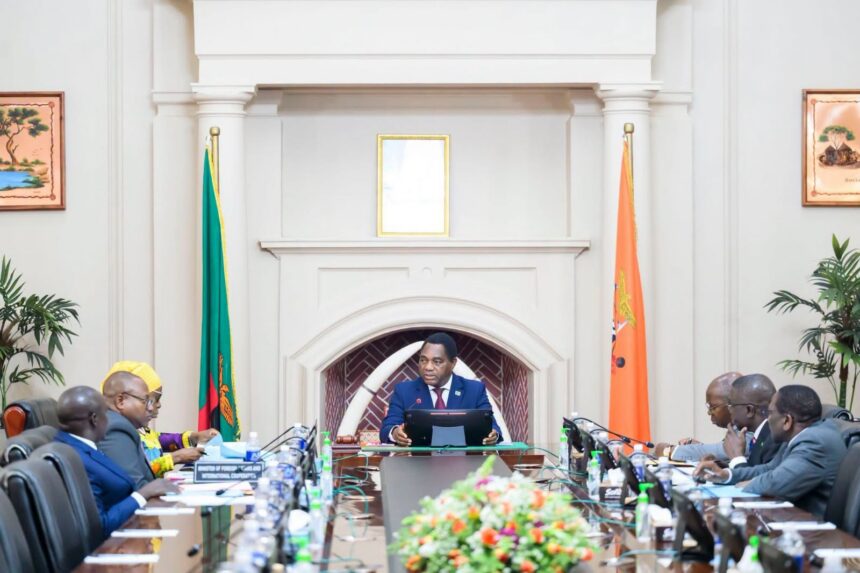
Zambia has sworn in four newly appointed ministers as President Hakainde Hichilema continues efforts to strengthen his administration and accelerate the country’s development agenda. The ministers are Hon. Dr Situmbeko Musokotwane, Minister of Finance, Hon. Mulambo Haimbe, Minister of Foreign Affairs, Hon. Dr Gilbert Siame, Minister of Green Economy, and Hon. Prof. Roma Chilengi, Minister of Health. Their swearing-in marks an important moment for the government as the ministers take on responsibilities in sectors that are central to Zambia’s economic progress, international relations, environmental sustainability and public health. The appointments also place renewed focus on the government’s commitment to delivering practical results for citizens. President Hichilema has made it clear that the new ministers must put national interests first and contribute directly to the Grow Zambia Agenda.
The President outlined a clear set of expectations for the newly sworn-in ministers as they begin their responsibilities in government. He called on them to uphold integrity, reject corruption and approach their work with dedication and accountability. The message places strong emphasis on both working hard and working smart, with government performance expected to be measured by tangible improvements in the lives of Zambians. The ministers will therefore be expected to move beyond policy discussions and ensure that their respective ministries contribute to investment, production, employment and stronger public services. Their performance will be closely linked to the broader objective of ensuring that economic growth delivers meaningful benefits to communities across the country.
Dr Situmbeko Musokotwane returns to the Finance Ministry at a time when economic management remains one of the most important priorities for Zambia. The Ministry of Finance plays a central role in managing public resources, supporting economic stability, creating conditions for investment and helping government fund essential services. His responsibilities will include supporting the country’s economic priorities while ensuring that public finances contribute to sustainable development and improved livelihoods. The Finance Ministry is also expected to play a key role in creating an environment that encourages production, business activity and job creation. Under the Grow Zambia Agenda, economic management must ultimately translate into opportunities and better living conditions for ordinary citizens.
Hon. Mulambo Haimbe, as Minister of Foreign Affairs, will be responsible for representing Zambia’s interests beyond its borders and strengthening the country’s diplomatic relationships. Foreign policy has an important role in supporting trade, investment, regional cooperation and international partnerships that can contribute to national development. Zambia’s engagement with other countries and international institutions can create opportunities for economic cooperation while also strengthening the country’s position on regional and global issues. Haimbe’s ministry will therefore have an important role in ensuring that diplomacy supports Zambia’s development priorities. Strong international relations can help create partnerships that contribute to investment, skills development, trade and other opportunities for the country.
Hon. Dr Gilbert Siame takes responsibility for the Green Economy Ministry, a portfolio that reflects the growing importance of sustainable economic development. Zambia has significant natural resources and agricultural potential, making environmental management an important part of long-term economic planning. The green economy agenda can support investment in sustainable industries while creating opportunities for employment and innovation. The ministry will need to balance economic development with responsible management of natural resources and environmental protection. Its work can contribute to a development model that encourages production while preparing Zambia to respond to environmental and economic challenges.
Hon. Prof. Roma Chilengi, as Minister of Health, takes on a ministry that directly affects the wellbeing of millions of Zambians. The health sector remains essential to improving quality of life, supporting productive communities and ensuring that people can access reliable public services. Strong health systems require effective leadership, responsible management of resources and continued attention to healthcare delivery at both national and community levels. The Ministry of Health will therefore be expected to translate government priorities into practical improvements for patients, healthcare workers and communities. Better healthcare services can also support the wider Grow Zambia Agenda by ensuring that citizens are healthy enough to participate fully in the economy and society.
President Hichilema’s message that public office is a trust places responsibility at the centre of the ministers’ new roles. Holding a senior government position means managing resources and making decisions that affect people across the country. The call to reject corruption is particularly significant because public confidence depends on government institutions being transparent, accountable and focused on service delivery. Each ministry must therefore demonstrate that public resources are being used responsibly and that programmes are producing measurable outcomes. The expectation is that leadership will be judged not only by policies announced but also by the results experienced by citizens.
The four ministries also represent different parts of the same national development effort. Finance can support investment and economic stability, Foreign Affairs can open doors for international cooperation, Green Economy can promote sustainable production and Health can strengthen the country’s human capital. When these areas work together, they can support a broader approach to economic development that reaches beyond government offices and into communities. Investment must create productive activity, productive activity must create jobs and stronger public services must ensure that economic progress improves people’s daily lives. This interconnected approach is central to the President’s call for every ministry to become an engine of the Grow Zambia Agenda.
The swearing-in also comes with a broader appeal for government officials to focus on measurable results. Zambia’s development priorities require ministries to set clear objectives, implement programmes effectively and assess whether those programmes are improving people’s lives. This approach places delivery at the heart of public administration and creates a stronger link between government plans and the experiences of citizens. It also reinforces the need for ministers to work closely with public servants, businesses, communities and other stakeholders. By focusing on outcomes, the government can demonstrate whether its development agenda is translating into real progress.
As the four ministers begin their new responsibilities, their work will be closely connected to Zambia’s economic and social ambitions. The Finance Ministry will remain central to economic management, while Foreign Affairs can support international partnerships and investment. The Green Economy Ministry can help build sustainable opportunities, while the Health Ministry can strengthen one of the country’s most important public services. Each minister faces different challenges, but they share the same responsibility to serve the national interest. Their success will ultimately depend on how effectively they turn government priorities into practical results for Zambians.
President Hichilema’s call to work, produce and Grow Zambia provides a clear direction for the newly sworn-in ministers and the wider government. The emphasis on integrity, hard work, smart decision-making and measurable delivery places citizens at the centre of public service. The four ministers now have an opportunity to strengthen their respective sectors while contributing to a shared national development programme. Their responsibilities extend beyond managing individual ministries because their decisions can influence investment, employment, public services and the country’s long-term development. As Zambia moves forward, the success of the Grow Zambia Agenda will depend on whether government leaders can turn these commitments into visible improvements in the lives of the people they have been appointed to serve.