




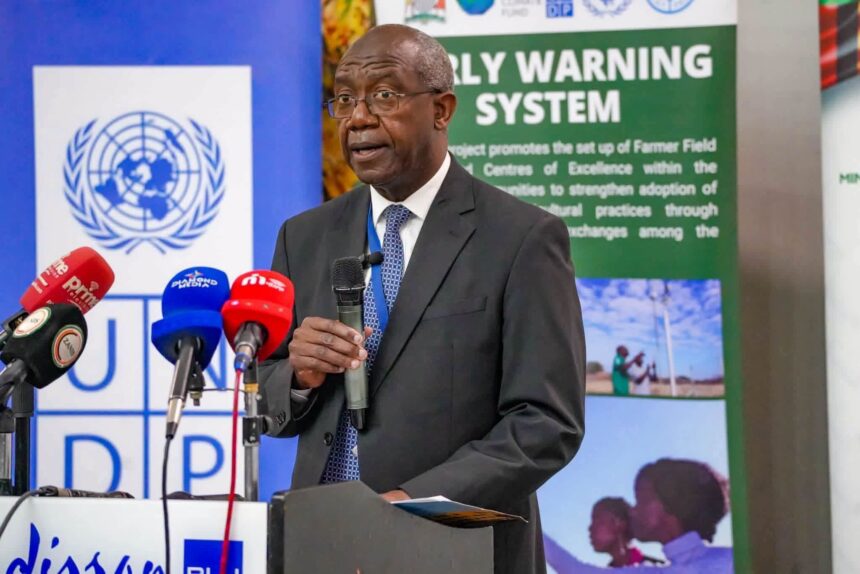
Secretary to the Cabinet Patrick Kangwa has directed government institutions across Zambia to activate contingency plans ahead of the anticipated effects of El Niño during the 2026-2027 rainfall season. The directive comes amid concerns that changing rainfall patterns could place additional pressure on food production and worsen food insecurity in parts of the country. Kangwa warned that government should not wait for the effects of adverse weather conditions to develop into a crisis before taking action. His remarks place emphasis on early preparedness, coordinated planning and timely interventions at national, provincial and local levels. The call also highlights the importance of ensuring that communities, particularly farmers, have enough information to adjust their activities before the rainfall season fully develops.
Kangwa issued the directive on September 11, 2026, during the launch of the 2026-2027 National Seasonal Rainfall Forecast Outlook. He instructed Permanent Secretaries, Provincial Administrations and Local Authorities to immediately activate contingency plans in response to the anticipated weather conditions. The plans are expected to help government institutions prepare for possible disruptions associated with changes in rainfall patterns. Kangwa noted that different parts of Zambia are expected to experience varying levels of rainfall during the coming season, meaning that the effects will not necessarily be the same across the country. This makes localised planning particularly important because communities will need responses that reflect the conditions expected in their respective areas.
The warning comes as Zambia continues to place strong emphasis on protecting food security and supporting agricultural production. Agriculture remains highly dependent on rainfall in many parts of the country, making seasonal weather conditions an important factor in decisions about planting, crop selection and farm management. Reduced or poorly distributed rainfall can affect crop establishment, plant growth and final yields, while prolonged dry periods can place additional pressure on livestock and water resources. Farmers therefore need timely and reliable seasonal information to make informed decisions before committing resources to the production season. Early preparation can help reduce potential losses and give farmers more options if rainfall conditions become less favourable than expected.
Kangwa stressed that government institutions should take action before adverse weather conditions become a crisis. This approach places preparedness at the centre of the country’s response to climate-related risks rather than relying mainly on emergency interventions after damage has already occurred. Activating contingency plans early can allow authorities to identify vulnerable communities, assess available resources and coordinate responses between different levels of government. Local authorities can also use the information to prepare for possible pressure on water supplies, agricultural activities and other essential services. A proactive approach can give institutions more time to respond when weather conditions begin to affect communities.
The varying rainfall outlook across Zambia also means that authorities will need to avoid treating the country as a single weather zone. Some areas may receive rainfall that supports agricultural activities, while others could experience conditions that create challenges for farmers and communities. The differences can affect decisions about planting dates, crop varieties, livestock management and water use. Provincial and local authorities are therefore positioned to play an important role in translating the national forecast into practical guidance for communities. Effective communication will be essential so that farmers understand what the forecast means for their specific areas and how they can adjust their plans.
Farmers were specifically encouraged to prepare early and adjust their activities according to the expected weather conditions. This could involve reviewing planting schedules, considering crops suited to anticipated conditions and managing available water and other farm resources carefully. Farmers can also use seasonal forecasts alongside local agricultural advice to make decisions that reduce exposure to weather-related risks. Early planning becomes especially important for small-scale producers who may have limited financial resources to recover from a failed season. Access to timely information can therefore play an important role in helping farming households make practical decisions before the full impact of the season becomes clear.
The anticipated effects of El Niño also raise concerns beyond crop production. Weather-related challenges can affect livestock, water availability, food prices and household livelihoods, particularly in communities that depend heavily on agriculture. If agricultural production declines significantly in affected areas, households may face reduced food supplies and lower agricultural income. Pressure on water resources can also create additional challenges for both rural communities and livestock farmers. Government contingency planning therefore needs to consider the wider effects of weather conditions rather than focusing only on rainfall and crop production.
The directive also underscores the need for coordination between national government structures and local institutions. Permanent Secretaries can help ensure that national departments incorporate seasonal risks into their planning, while Provincial Administrations can coordinate responses according to conditions within their respective provinces. Local Authorities are also important because they operate closer to communities and can help identify local vulnerabilities and communicate preparedness measures. Cooperation between these levels can reduce gaps in response planning and improve the delivery of support when communities face weather-related challenges. Strong coordination will be particularly important if rainfall conditions vary significantly between provinces or districts.
The launch of the 2026-2027 National Seasonal Rainfall Forecast Outlook provides an opportunity for government, farmers and other stakeholders to plan ahead rather than respond after problems emerge. Seasonal forecasts cannot remove the risks associated with changing weather patterns, but they can provide useful information for reducing exposure to those risks. Farmers can use the information to review production plans, while government institutions can prepare measures to support vulnerable communities. The effectiveness of the forecast will depend partly on how quickly and clearly the information reaches the people who need it. Turning seasonal climate information into practical action will therefore remain a key part of Zambia’s preparedness strategy.
Kangwa’s warning sends a clear message that Zambia cannot afford to wait for the effects of El Niño to become a national emergency before responding. The instruction to activate contingency plans gives government institutions a clear responsibility to prepare for different possible rainfall outcomes during the 2026-2027 season. Farmers and communities also have an important role to play by using available forecasts and adjusting their activities to the conditions expected in their areas. Early preparation can help reduce pressure on food production, protect livelihoods and strengthen the country’s ability to manage weather-related shocks. As Zambia enters the new rainfall season, coordinated action, timely information and practical preparation will be essential to protecting food security and supporting communities that depend on agriculture.