







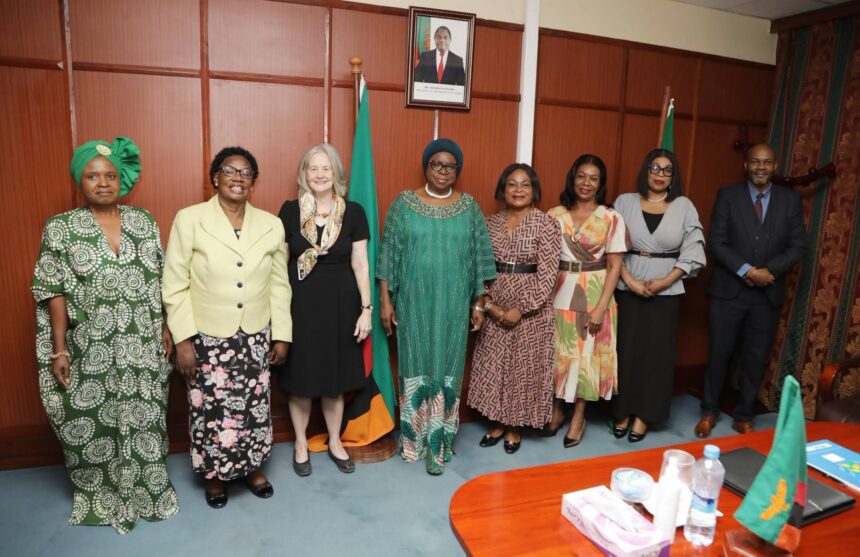
Zambia is stepping up efforts to connect local businesses with international markets, with a particular focus on empowering women entrepreneurs and expanding exports to the United States. Vice President of the Republic of Zambia Dr W.K. Mutale-Nalumango has highlighted the importance of business partnerships in helping Zambian companies overcome market access challenges and contribute to national economic growth. Her remarks followed a meeting with USAfrica Business Bridge President Joan Wadelton, whose work focuses on strengthening business relationships between Zambia and the United States. The engagement highlighted the potential of Zambian innovations, locally produced goods and entrepreneurial talent to reach a wider international audience. It also reinforced the Government’s commitment to an export-oriented Grow Zambia Agenda that supports business development, job creation and economic opportunities for women.
Dr Mutale-Nalumango expressed appreciation for initiatives that connect Zambian businesses with international partners and create opportunities for commercial cooperation. She noted that Zambia has innovative entrepreneurs and products with the potential to compete in the US market, but gaining access to international customers remains a challenge. Businesses often need reliable distribution networks, knowledge of foreign market requirements and connections with buyers before they can expand beyond their domestic markets. Partnerships that bridge these gaps can help local companies identify opportunities and develop strategies for reaching new customers. By encouraging stronger links between Zambian entrepreneurs and US businesses, the initiative could help turn local business potential into practical export opportunities.
The USAfrica Business Bridge initiative represents an opportunity to strengthen commercial connections between Zambia and the United States. Business networks can help entrepreneurs meet potential partners, understand market expectations and explore opportunities for trade and investment. For Zambian businesses, access to these networks could be particularly valuable when entering a large and competitive market such as the United States. However, successful market entry also requires businesses to meet relevant quality standards, understand regulations and develop products that respond to customer demand. Strong partnerships can help entrepreneurs navigate these requirements and improve their readiness to compete internationally.
The Vice President emphasised that the Grow Zambia Agenda is export-oriented, highlighting the importance of increasing the international reach of locally produced goods and services. Export growth can help businesses expand their customer base, increase revenue and build greater resilience by serving more than one market. It can also encourage improvements in product quality, production capacity and business management as companies prepare to meet international demand. For Zambia, supporting exporters could contribute to economic diversification and create opportunities in sectors beyond traditional sources of revenue. Achieving these benefits will require coordinated efforts to improve market access, strengthen business capacity and connect local producers with reliable international buyers.
Women entrepreneurs were a central focus of Dr Mutale-Nalumango’s message. She described Zambian women as hardworking, innovative and ambitious, emphasising their readiness to seize opportunities and contribute to national development. Women-led businesses can play an important role in creating jobs, providing goods and services and supporting economic activity within communities. Yet entrepreneurs may face obstacles when seeking finance, business networks, export information or access to international buyers. Initiatives that provide practical support and commercial connections can help women-owned enterprises address these challenges and expand their operations.
Improving access to international markets can offer women entrepreneurs opportunities to grow beyond the limits of local demand. A business that develops a product for domestic customers may be able to reach a much wider audience if it can establish suitable distribution channels and meet the requirements of overseas buyers. This process may involve adapting packaging, improving product consistency, developing export documentation and understanding the preferences of customers in the target market. Business mentoring and connections with experienced exporters can help entrepreneurs prepare for these demands. Such support can make international expansion more achievable for women-led businesses with strong products but limited access to global networks.
Zambia has a range of potential export opportunities in areas such as agricultural products, processed foods, textiles, crafts and other locally developed goods. The actual opportunities available to individual businesses will depend on product quality, production capacity, pricing, applicable regulations and demand in the destination market. Entrepreneurs seeking to enter the United States must also understand the import requirements that apply to their particular products. Building reliable supply chains and maintaining consistent standards are important for earning the confidence of international buyers. Business partnerships can help Zambian exporters identify suitable markets and prepare for the practical demands of cross-border trade.
The potential benefits extend beyond the individual businesses that secure export contracts. When local companies increase production, they may create employment opportunities and generate demand for services such as packaging, transport, storage and marketing. Small suppliers and other businesses can also benefit when growing enterprises purchase more goods and services locally. Increased commercial activity may help entrepreneurs reinvest in their operations, develop new products and train employees. These effects can contribute to broader economic development when export growth is supported by strong local supply chains and responsible business practices.
Strengthening Zambia-US business relations also requires sustained cooperation between entrepreneurs, government institutions and private sector organisations. International market access involves more than introducing business owners to potential buyers. Companies need practical information about trade rules, financial requirements, logistics, pricing and the costs associated with exporting. Support programmes can help businesses assess whether they are ready to export and identify areas that require improvement before entering a new market. By connecting business networks with practical export preparation, initiatives such as USAfrica Business Bridge can help entrepreneurs make better-informed decisions about international expansion.
Dr Mutale-Nalumango encouraged women entrepreneurs to take advantage of the experience, networks and opportunities available through the initiative. Her message placed responsibility on business owners to engage actively with potential partners and use available opportunities to strengthen their enterprises. Entrepreneurs who prepare clear business plans, understand their production capacity and identify suitable international customers may be better positioned to benefit from these connections. They must also consider how to maintain product quality and fulfil orders consistently as their businesses grow. Turning business introductions into lasting commercial relationships will require preparation, commitment and a clear understanding of market expectations.
The engagement with Joan Wadelton highlights the importance of creating stronger pathways between Zambian enterprise and international markets. Zambia’s locally developed products, innovations and entrepreneurial talent offer potential for export growth, but that potential must be supported by effective market access and business development. Women entrepreneurs stand to benefit when they can connect with buyers, learn from experienced business leaders and access opportunities to expand beyond domestic markets. The Grow Zambia Agenda provides a national framework for linking export development with job creation and wider economic progress. By strengthening Zambia-US business partnerships and supporting women-led enterprises, the country can work towards a more competitive private sector and greater participation in global trade.