





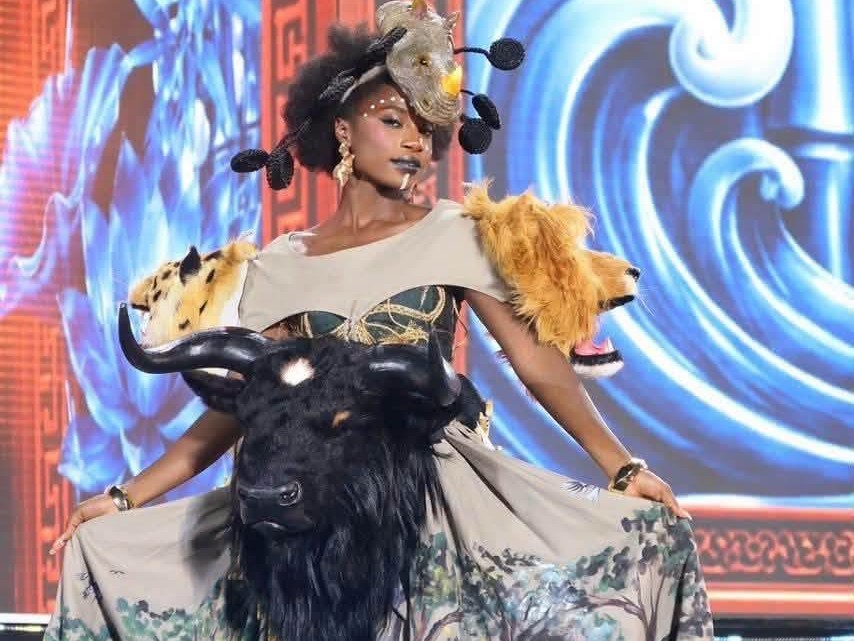
Zambia’s rich wildlife heritage and national identity have taken centre stage at the Miss World pageant through a striking national costume inspired by some of the country’s most iconic wild animals. The costume, presented by Adah Mushibi, celebrates Zambia’s natural beauty while highlighting the strength, courage and grace associated with its remarkable wildlife. Its design draws inspiration from the rhinoceros, lion and leopard, three powerful symbols that represent different qualities connected to Zambia’s natural heritage and national character. The presentation offers an opportunity to showcase Destination Zambia to an international audience while placing the country’s wildlife conservation story within a global cultural event. Through this representation, Zambia has demonstrated how fashion and pageantry can be used to communicate a country’s identity, heritage and tourism appeal.
The national costume brings together the strength of the rhinoceros, the courage of the lion and the grace of the leopard in one distinctive representation. Each animal carries a strong association with Zambia’s wildlife landscape and contributes to the wider message behind the design. The rhinoceros represents strength and resilience, qualities that speak to the determination required to protect wildlife and natural habitats. The lion reflects courage and power, while the leopard brings an element of elegance, agility and grace to the overall concept. By combining these characteristics, the costume presents wildlife not simply as an attraction but as an important part of the identity and spirit being represented on the international stage.
Adah Mushibi’s appearance provides Zambia with an opportunity to introduce international audiences to the country’s extraordinary natural heritage. National costumes at major pageants often serve as cultural statements, allowing contestants to communicate elements of their home countries through visual design. In this case, the focus on wildlife connects directly with one of Zambia’s strongest tourism assets. The costume provides a visual representation of the country’s wild landscapes and the animals that draw visitors from around the world. It also reinforces the idea that Zambia’s tourism identity extends beyond individual attractions to encompass a broader relationship between its people, wildlife and natural environment.
The Ministry of Tourism has commended the representation of Destination Zambia and its extraordinary wildlife on the global stage. Such recognition highlights the potential for cultural platforms like Miss World to contribute to destination marketing and international awareness. Zambia has a diverse tourism offering, but its wildlife remains one of the most important elements of the country’s appeal to international travellers. Presenting that heritage through a high-profile national costume can help generate interest among people who may not yet be familiar with Zambia’s tourism destinations. The representation therefore combines cultural expression with tourism promotion, giving audiences an opportunity to associate Zambia with its wildlife, natural beauty and distinctive national identity.
Wildlife plays a central role in Zambia’s tourism industry and contributes to the country’s reputation as a destination for nature-based experiences. Its protected areas and national parks provide habitats for a wide range of wildlife while offering visitors opportunities to experience animals in their natural surroundings. The rhinoceros, lion and leopard featured in the costume represent some of the powerful wildlife imagery associated with Africa and Zambia’s conservation heritage. Their inclusion also draws attention to the importance of protecting wildlife populations and maintaining the ecosystems in which they live. Celebrating these animals on an international platform can therefore help reinforce public appreciation for conservation alongside the promotion of tourism.
The costume’s symbolism also connects Zambia’s wildlife with the qualities of its people. Strength, courage, resilience and grace are not presented as characteristics belonging only to animals but as values that can form part of a broader national story. This gives the costume meaning beyond its visual appearance and allows it to communicate a message about Zambia through cultural representation. The combination of wildlife imagery and national pride creates a connection between the country’s natural resources and its people. It demonstrates how creative expression can provide a powerful way of presenting national identity to audiences beyond Zambia.
The international visibility created through the Miss World stage can also contribute to Zambia’s efforts to promote itself as a tourism destination. Potential visitors are increasingly exposed to destinations through cultural events, social media, fashion and international entertainment. A memorable national costume can capture attention and encourage audiences to learn more about the country behind the design. When the imagery highlights recognisable wildlife, it can also create a direct association between Zambia and nature-based tourism. This type of exposure complements traditional tourism marketing by presenting Destination Zambia through a cultural story that can appeal to audiences around the world.
The representation also comes at a time when Zambia continues to place importance on growing its tourism sector and attracting more international visitors. Wildlife tourism remains an important part of that ambition because international travellers often seek authentic experiences connected to nature and conservation. Showcasing Zambia’s animals and natural heritage can help strengthen the country’s tourism brand while encouraging greater interest in its parks, wildlife experiences and landscapes. At the same time, tourism growth needs to support responsible conservation and benefit communities connected to these natural resources. The international presentation of Zambia’s wildlife therefore offers an opportunity to promote both the country’s tourism potential and the importance of protecting its environmental heritage.
Adah Mushibi’s national costume ultimately represents more than a pageant outfit. It is a carefully framed celebration of Zambia’s wildlife, culture and national identity, bringing together the rhinoceros, lion and leopard to communicate strength, courage and grace. The Ministry of Tourism’s recognition of the presentation reflects the value placed on promoting Destination Zambia and its natural heritage to international audiences. As the country continues to pursue growth in tourism, creative platforms that showcase its wildlife can play an important role in building global awareness. Zambia’s wildlife heritage remains one of its most distinctive national assets, and presenting that heritage with pride can inspire greater interest in the country and its conservation story. Zambia’s message to the world is clear: its wild spaces, remarkable animals and vibrant national spirit remain central to a destination where the wild roams free and every experience moves you.