


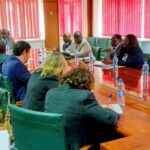
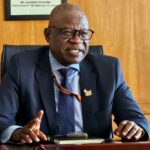

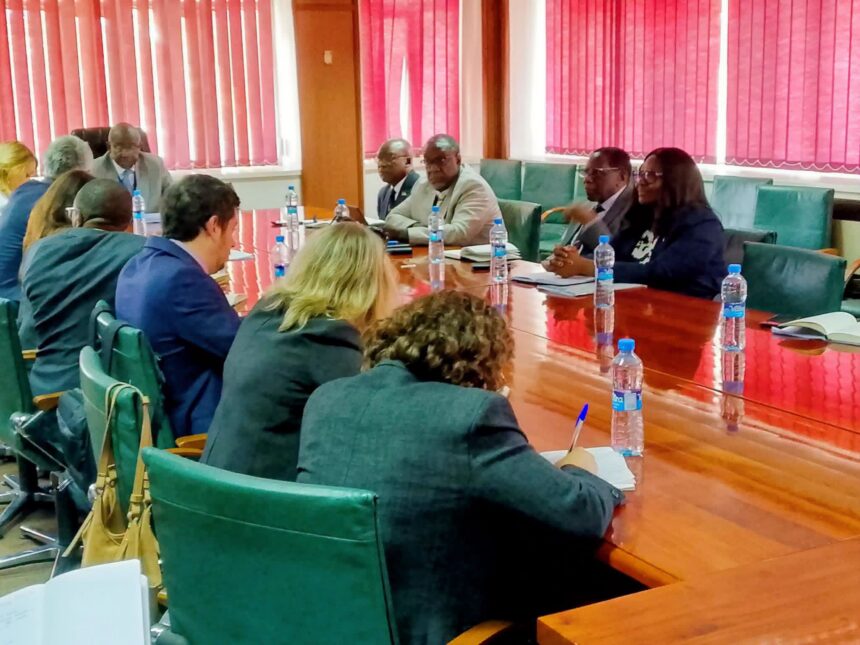
Secretary to the Cabinet Mr. Patrick Kangwa has met members of the diplomatic corps accredited to Zambia to provide an update on the August 2026 General Election and share Government’s reflections on the electoral process. The meeting was held yesterday at Cabinet Office and focused on the conduct of the election, the tabulation process and the constitutional procedures followed after voting. Mr. Kangwa also used the engagement to reassure diplomatic representatives of Government’s continued commitment to constitutionalism, the rule of law and national unity. The meeting comes after Zambia’s electoral authorities completed the process of counting and declaring the presidential result. It also provided an opportunity for Government to address concerns surrounding the election while highlighting the peaceful participation of citizens across the country.
During the meeting, Mr. Kangwa told members of the diplomatic corps that Zambians exercised their democratic rights in a generally peaceful, transparent and orderly manner. He acknowledged that concerns had been raised regarding aspects of the conduct of the election, demonstrating Government’s awareness of issues that emerged during the electoral process. The Secretary to the Cabinet stressed that any grievances arising from the election are being addressed through established legal and constitutional channels. This approach places emphasis on the institutions and procedures established by law to resolve electoral disputes. It also reinforces the importance of allowing the appropriate authorities to deal with complaints within the framework of Zambia’s constitutional democracy.
Mr. Kangwa further highlighted the high voter turnout recorded across the country, describing it as an indication of strong citizen participation in the democratic process. High participation in an election reflects the willingness of citizens to exercise their right to vote and contribute to determining the country’s political leadership. The Government’s assessment that the election was generally peaceful and orderly also points to the importance of maintaining stability throughout the electoral cycle. At the same time, acknowledging concerns about the conduct of the election provides space for those issues to be considered through the appropriate legal mechanisms. The balance between recognising peaceful democratic participation and addressing legitimate grievances remains important to maintaining public confidence in the electoral process.
One of the key issues discussed during the briefing was the temporary suspension of the tabulation process on 14 August 2026. Mr. Kangwa explained that the suspension followed isolated incidents of violence against electoral staff and reports of interference with ballot materials at some polling stations. The incidents required authorities to take steps to restore order and protect the integrity of the electoral process. According to the briefing, law enforcement agencies acted to restore order, after which electoral operations resumed promptly. The resumption allowed the tabulation process to continue and demonstrated the importance of maintaining security around electoral officials, polling materials and counting procedures.
The Government also provided an update on the presidential result and the events leading to the declaration of the President-elect. Before the final declaration, the Electoral Commission of Zambia clarified that the few constituencies that remained outstanding could not substantially alter the presidential outcome. This clarification provided an important explanation of why the electoral process could move towards a presidential declaration while some constituency-level results were still being finalised. The Electoral Commission subsequently declared United Party for National Development candidate Mr. Hakainde Hichilema President-elect on 19 August 2026. He secured more than 2.9 million votes, representing 60 percent of the votes cast and exceeding the constitutional threshold of 50 percent plus one vote.
The declaration of the President-elect marked a significant stage in the completion of Zambia’s 2026 electoral process. Presidential elections require clear constitutional procedures because the outcome determines the country’s executive leadership and has implications for governance and national policy. By explaining the sequence of events to members of the diplomatic corps, Government provided international representatives with further context about the election and the steps taken after voting concluded. The briefing also highlighted the role of the Electoral Commission of Zambia in managing the electoral process and declaring the presidential result. Continued communication between Government, diplomatic missions and electoral stakeholders can help ensure that information about major national processes is understood accurately.
The Secretary to the Cabinet also commended cooperating partners for the support they provided to the Electoral Commission of Zambia during the election. This included the deployment of observer missions, which Government said contributed to the credibility of the electoral process. International and regional observers can play an important role by monitoring electoral activities and providing independent assessments of the process. Their presence can also contribute to transparency by allowing external stakeholders to observe different stages of an election. The recognition of cooperating partners therefore reflects the broader role played by international cooperation in supporting democratic institutions and electoral processes.
The meeting at Cabinet Office also served as an opportunity for Government to engage directly with diplomatic representatives on Zambia’s democratic process. Diplomatic missions accredited to Zambia have an interest in understanding major political developments and the institutions responsible for managing them. Providing a detailed briefing allows Government to communicate its position while giving diplomatic representatives information about the electoral process and the steps being taken to address concerns. Such engagement can contribute to informed diplomatic relations and reinforce communication between Zambia and the international community. It also demonstrates the value of regular dialogue during important periods of political transition and national governance.
Mr. Kangwa’s engagement with the diplomatic corps ultimately placed emphasis on constitutionalism, the rule of law, national unity and the peaceful exercise of democratic rights. While the Government recognised concerns linked to aspects of the August 2026 General Election, it maintained that grievances should be handled through established legal and constitutional channels. The update also highlighted the temporary suspension of tabulation following isolated incidents, the subsequent restoration of order and the continuation of the electoral process. With Mr. Hakainde Hichilema declared President-elect after receiving 60 percent of the votes cast, Zambia has moved through a significant stage of its electoral cycle. The meeting therefore provided the diplomatic community with Government’s account of the election while reaffirming its stated commitment to democratic institutions, lawful dispute resolution and national unity.