





Senior government officials from 21 Common Market for Eastern and Southern Africa (COMESA) Member States have gathered in Lusaka, Zambia, for the 5th Technical Committee Meeting on Industry, a key event focused on shaping the future of industrial development across the region. The high-level meeting brings together policymakers, technical experts and government representatives committed to strengthening industrial competitiveness, expanding regional integration and promoting sustainable economic growth. As Africa continues to pursue deeper economic cooperation, the meeting provides an important opportunity to align national industrial strategies with regional development goals. Discussions over the two-day event are expected to produce practical recommendations that will help transform the COMESA region into a stronger manufacturing and investment hub. The outcomes will also support broader efforts to improve economic resilience and create more opportunities for businesses and citizens throughout Eastern and Southern Africa.
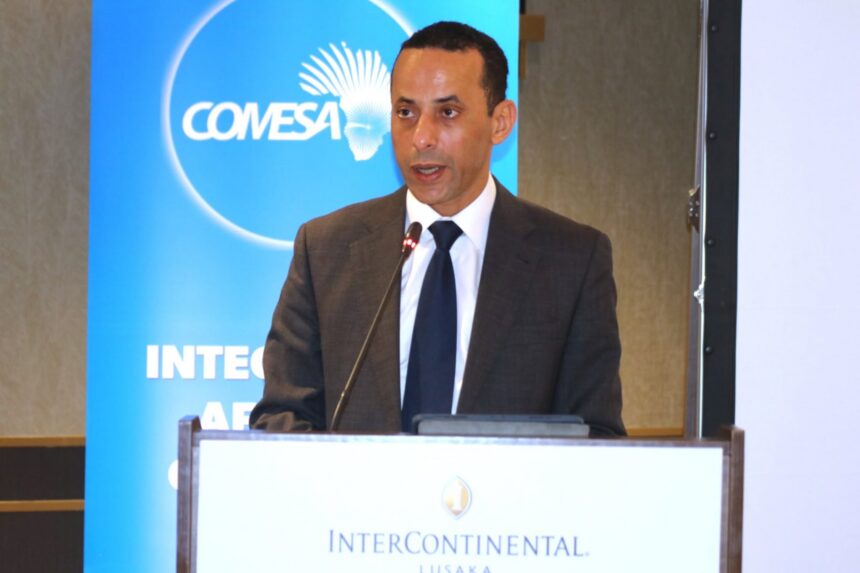
Opening the meeting, COMESA Assistant Secretary General for Programmes, Ambassador Dr. Mohamed Kadah, highlighted the urgent need for stronger investment, greater regional cooperation and accelerated industrial transformation. He emphasized that industrial development remains one of the most effective ways to increase productivity, create jobs and stimulate long-term economic growth. According to Dr. Kadah, the COMESA region possesses significant potential due to its large consumer market, abundant natural resources and growing workforce. However, realizing this potential requires coordinated policies that encourage manufacturing, innovation and cross-border trade. He stressed that stronger collaboration among Member States will help position COMESA as a globally competitive destination for manufacturing, investment and industrial production.
Representing the Government of Zambia, Permanent Secretary Mrs. Lilian Bwalya called on Member States to move beyond policy discussions and focus on practical implementation. She emphasized that governments must create an enabling business environment capable of attracting both domestic and foreign investment. Such an environment includes reliable infrastructure, supportive regulations, efficient institutions and investment-friendly policies that encourage private sector participation. Mrs. Bwalya noted that expanding productive capacity across the region would strengthen industries while generating quality employment opportunities for millions of people. She added that coordinated regional action remains essential if African economies are to compete effectively in an increasingly interconnected global marketplace.
One of the major priorities of the meeting is improving industrial competitiveness across COMESA Member States. Delegates are examining strategies that can increase productivity, encourage technological innovation and strengthen manufacturing sectors throughout the region. Industrial competitiveness allows businesses to produce higher-quality goods at competitive prices while expanding their presence in regional and international markets. Strengthening industries also reduces dependence on imported manufactured products and supports local value creation. By improving competitiveness, COMESA aims to build stronger economies that can withstand global economic challenges while delivering sustainable benefits to citizens.
Regional value chains are another important topic being discussed during the meeting. Rather than relying on individual countries to complete every stage of production, regional value chains allow different Member States to specialize in areas where they have competitive advantages. This approach encourages greater trade among neighboring countries while improving efficiency and reducing production costs. Stronger value chains also create opportunities for small and medium-sized enterprises to participate in regional manufacturing networks. As a result, businesses gain access to larger markets while consumers benefit from increased availability of competitively priced products produced within Africa.
The development of pharmaceutical manufacturing has also received significant attention during the discussions. Strengthening Africa’s pharmaceutical industry has become increasingly important following recent global health emergencies that exposed vulnerabilities in international supply chains. Expanding local pharmaceutical production can improve access to essential medicines while reducing dependence on imports from outside the continent. It also supports scientific research, technology transfer and the development of specialized manufacturing skills. COMESA leaders recognize that investing in pharmaceutical manufacturing will improve health security while creating new industrial and economic opportunities for Member States.
Investment promotion remains another central focus of the Technical Committee Meeting. Delegates are exploring policies that can attract greater levels of investment into strategic sectors such as manufacturing, infrastructure, technology and industrial development. Investors often seek stable regulatory environments, efficient administrative processes and strong regional markets before committing long-term capital. By harmonizing investment policies across Member States, COMESA hopes to create a more attractive destination for both regional and international investors. Increased investment will provide businesses with the resources needed to expand production, adopt modern technologies and generate employment throughout the region.
The implementation of the African Continental Free Trade Area, commonly known as AfCFTA, is also playing a major role in the discussions. The AfCFTA represents one of Africa’s most ambitious economic integration initiatives by creating a single market for goods and services across the continent. Successful implementation offers enormous opportunities for COMESA countries to expand exports, strengthen regional industries and access larger consumer markets. Delegates are discussing how industrial policies can support businesses in taking full advantage of the trade agreement. Greater alignment between COMESA strategies and AfCFTA objectives will help ensure that regional industries remain competitive while contributing to continental economic integration.
The meeting also recognizes the importance of value addition in transforming African economies. Many COMESA Member States possess abundant natural resources, but exporting raw materials often limits economic returns and employment creation. By processing agricultural products, minerals and other raw materials within the region, countries can generate higher incomes while developing stronger manufacturing industries. Value addition also encourages innovation, skills development and the growth of supporting industries such as logistics, packaging and technology services. These improvements contribute to more diversified economies that are better equipped to respond to changing global market conditions.
The outcomes of the 5th Technical Committee Meeting on Industry are expected to strengthen regional production systems and provide a clear roadmap for future industrial development across COMESA. Through coordinated policies, strategic partnerships and stronger cooperation among Member States, the organization continues to promote industrialization as a key driver of inclusive economic growth. The discussions in Lusaka demonstrate a shared commitment to building competitive industries that create jobs, attract investment and improve living standards across Eastern and Southern Africa. As delegates finalize their recommendations, the meeting reinforces the importance of regional collaboration in achieving sustainable development and economic resilience. By advancing industrial competitiveness and supporting the goals of Agenda 2063, COMESA continues to lay the foundation for a more prosperous, integrated and economically resilient Africa.