






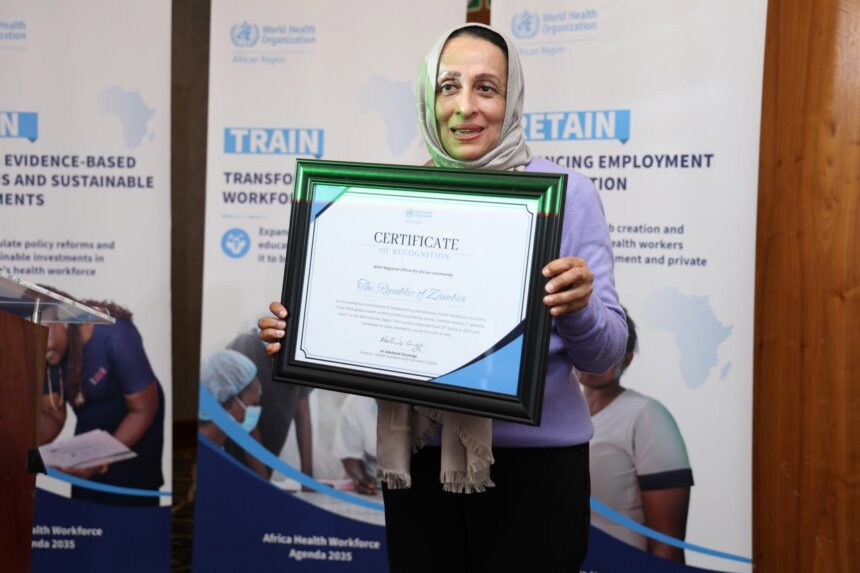
Zambia has received international recognition for its outstanding progress in implementing the National Health Workforce Accounts, strengthening the country’s position as a leader in health workforce information management. The recognition from the World Health Organization African Region highlights Zambia’s ability to collect, manage and report critical information about its health workforce. Zambia currently ranks first in the WHO African Region and third globally for health workforce data availability and reporting. The achievement reflects growing recognition of the importance of reliable data in strengthening national health systems and improving healthcare delivery. It also demonstrates the value of coordinated efforts between the Ministry of Health and health sector partners in building systems that support evidence-based decision-making.
The recognition focuses on Zambia’s implementation of the National Health Workforce Accounts, a system that supports countries in collecting and analysing information about their health workers. Reliable health workforce data can help authorities understand how many health workers are available, where they are deployed and what skills are needed across different parts of the country. This information can support decisions on recruitment, training, deployment and retention of healthcare professionals. It can also help policymakers identify gaps in staffing and develop strategies to address shortages in underserved areas. Zambia’s strong performance in health workforce data reporting therefore provides an important foundation for improving the planning and management of the country’s healthcare system.
Zambia’s first-place ranking in the WHO African Region and third-place position globally represent a significant achievement in health information management. The rankings indicate that the country has developed systems capable of providing a high level of health workforce information and reporting. Such information becomes particularly important as governments seek to expand access to quality healthcare and achieve Universal Health Coverage. Without accurate data, health authorities can struggle to determine where healthcare workers are most needed or how workforce policies are affecting service delivery. Zambia’s progress demonstrates how investment in information systems can support more informed decisions across the health sector.
The achievement also reflects the leadership and commitment of the Ministry of Health Zambia, alongside the contribution of partners supporting health workforce information systems. Maintaining reliable workforce data requires regular collection, verification, updating and reporting across different levels of the health system. It also requires cooperation between government departments, healthcare institutions and development partners. The recognition suggests that these efforts have produced measurable results and strengthened Zambia’s capacity to manage information about its health workforce. Continued collaboration will be important to ensure that the systems responsible for this achievement remain accurate, useful and sustainable.
The award was presented in absentia during a regional meeting held in Johannesburg, where WHO AFRO extended its congratulations to Zambia for reaching the milestone. Although representatives from Zambia were not present to receive the recognition physically, the achievement was formally acknowledged at the regional level. The physical certificate is expected to be officially handed over to the Ministry of Health through the World Health Organization Zambia. The planned handover will provide an opportunity to formally recognise the institutions and individuals who contributed to Zambia’s progress. It will also highlight the country’s growing role in strengthening health workforce information management within the African region.
Accurate and timely health workforce data play an important role in determining whether health systems can meet the needs of growing populations. Governments need reliable information to plan how many doctors, nurses, midwives, clinical officers and other healthcare professionals are required in different areas. Data can also help authorities identify workforce imbalances, monitor staff movements and develop appropriate strategies for recruitment and retention. When this information is regularly updated, policymakers can make decisions based on evidence rather than incomplete estimates. Zambia’s progress with NHWA therefore has implications that extend beyond data reporting because it can directly support better health workforce planning.
Health workforce information is also closely linked to efforts to achieve Universal Health Coverage. Expanding access to healthcare requires sufficient numbers of appropriately trained health workers who are available where communities need them. A country may have adequate numbers of healthcare professionals overall but still experience shortages in rural areas or other underserved communities. Detailed workforce data can help identify these gaps and support more targeted deployment and investment. Zambia’s strong performance in health workforce data management could therefore contribute to more effective planning as the country works to improve access to essential health services.
The recognition also demonstrates the importance of evidence-based decision-making in healthcare. Health policies and workforce strategies can have significant financial and operational consequences, making accurate information essential for determining where resources should be directed. Reliable data can help authorities assess whether investments in training, recruitment and deployment are producing the desired results. It can also support long-term planning by showing how workforce needs are changing as population patterns, disease burdens and healthcare demands evolve. By strengthening the systems used to generate this information, Zambia is improving the evidence available to decision-makers across the health sector.
Maintaining the country’s strong position will require continued investment in health information systems and the people responsible for managing them. Health workforce data must remain accurate, regularly updated and accessible to authorised decision-makers if it is to remain useful for planning. Changes in the size and distribution of the population, healthcare demands and workforce patterns will require ongoing monitoring. Zambia will also need to continue working with health sector partners to strengthen technical capacity and maintain reporting standards. Sustaining the achievement could help ensure that the country’s health workforce planning remains responsive to changing healthcare needs.
Zambia’s recognition for its implementation of the National Health Workforce Accounts represents an important milestone in the country’s efforts to strengthen its health system through quality data. Ranking first in the WHO African Region and third globally for health workforce data availability and reporting places Zambia among the leading countries in this area. The achievement reflects the work of the Ministry of Health, WHO and other health sector partners that have contributed to the development and maintenance of reliable workforce information systems. Accurate data will remain essential for planning, deploying and retaining the health workers needed to improve healthcare access and outcomes. By continuing to strengthen evidence-based planning and health workforce management, Zambia can build on this achievement and contribute to a stronger and more responsive health system for its people.