





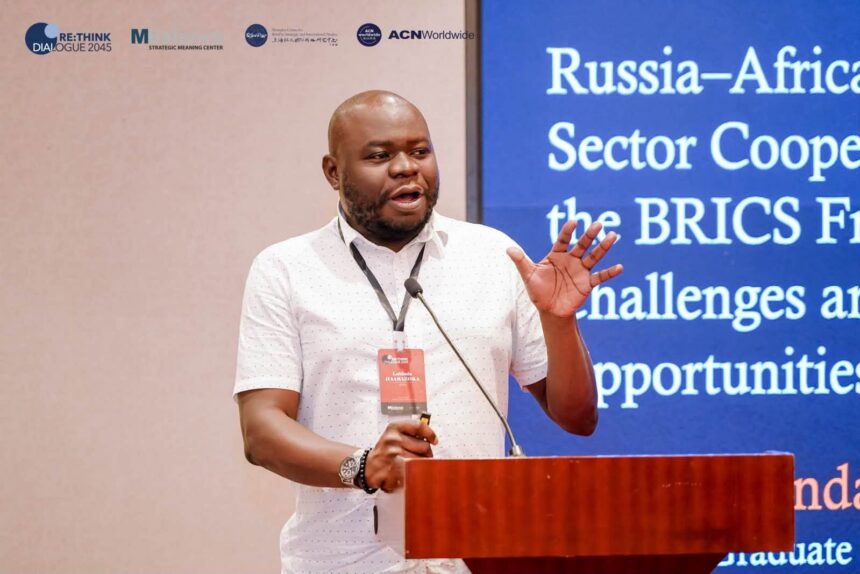
Economist Professor Lubinda Haabazoka has projected that Zambia’s economy could average six percent growth during the United Party for National Development’s second term in office. He believes the country has an opportunity to build on recent economic progress if the government maintains fiscal discipline and makes strategic investments in infrastructure. Prof Haabazoka says the next five years will be important for translating economic reforms into stronger growth and improved conditions for citizens. He has also urged the government to prioritise liquidity in the economy so that businesses and households can participate more effectively in economic activity. His assessment comes as President Hakainde Hichilema’s administration begins its second term with expectations of faster economic development and greater benefits for ordinary Zambians.
Prof Haabazoka believes the government’s economic decisions during its first term could become more evident to citizens as the benefits of those policies begin to emerge. He argued that President Hichilema chose to avoid short-term measures designed simply to please voters and instead pursued difficult decisions aimed at addressing deeper economic problems. According to the economist, some of these decisions may have been unpopular because their benefits were not immediately visible to the public. He believes, however, that Zambia’s economy is now moving closer to a more stable path. The second term could therefore provide an opportunity for the government to build on those foundations and translate economic stability into stronger growth.
The projected six percent average growth rate would represent an important expansion of economic activity if sustained over the full five-year period. Stronger growth could support increased investment, business expansion and job creation across different sectors of the economy. However, achieving and maintaining that rate would require consistent economic policies and effective implementation of development programmes. The government would also need to manage fiscal pressures carefully to avoid undermining the stability that Prof Haabazoka believes has been established. Economic growth will need to translate into wider opportunities for citizens rather than remaining concentrated in a limited number of sectors or regions.
Fiscal discipline will be particularly important during the second term because government spending decisions can have a significant impact on economic stability. Prof Haabazoka has called on the UPND administration to maintain discipline while ensuring that public resources are directed towards areas that support long-term growth. Careful management of government finances can help create greater confidence among investors and reduce the risk of renewed fiscal pressures. At the same time, excessive caution could limit the investment needed to address infrastructure gaps and support economic expansion. The challenge will be finding a balance between maintaining financial stability and spending strategically on projects that can increase Zambia’s productive capacity.
Infrastructure development is another major priority identified by Prof Haabazoka as Zambia prepares for the next phase of economic growth. He believes infrastructure investment needs to match the demands created by a growing population and expanding economy. Roads, electricity, water systems, digital infrastructure and other public facilities play a direct role in determining how easily businesses can operate and communities can access economic opportunities. Infrastructure shortages can increase business costs and limit investment, particularly in rapidly growing areas. Strategic infrastructure development could therefore support the six percent growth target while improving the country’s ability to accommodate future economic and population growth.
Prof Haabazoka has also urged the government to prioritise liquidity in the economy during its second term. Liquidity affects the ability of businesses and consumers to access money for transactions, investment and economic activity. When businesses have greater access to working capital, they can purchase stock, pay workers, expand operations and invest in new opportunities. Improved liquidity can also support small and medium-sized businesses that often depend heavily on access to finance to maintain their operations. Ensuring that the financial system supports productive economic activity will therefore be an important part of efforts to achieve stronger and more inclusive growth.
The economist’s comments also highlight the relationship between economic stability and public expectations. Citizens typically want improvements in employment, incomes, prices and access to services, while governments must also manage broader economic pressures that may not produce immediate results. Prof Haabazoka believes some of the difficult decisions taken during the first term were necessary to put Zambia’s economy on a stronger footing. The next challenge will be demonstrating that the resulting stability can support tangible improvements in people’s daily lives. Stronger growth, combined with responsible public spending and investment, could help bridge the gap between macroeconomic progress and household-level economic benefits.
Zambia’s growing population makes infrastructure and economic planning even more important over the coming years. More people require additional housing, transport networks, energy, water, healthcare, education and employment opportunities. If infrastructure investment fails to keep pace with population growth, economic expansion could be constrained and pressure on public services could increase. Prof Haabazoka’s call for infrastructure development therefore extends beyond economic growth and addresses the country’s long-term development requirements. Planning infrastructure around future population and economic needs could help Zambia avoid bottlenecks that limit productivity and investment.
The projected six percent growth rate also creates an opportunity to strengthen economic diversification. Zambia has historically relied heavily on sectors such as mining, particularly copper, while agriculture, tourism, manufacturing and other industries offer opportunities for broader economic participation. Growth in multiple sectors could reduce the risks associated with dependence on a narrow economic base and create more employment opportunities. Government policies that encourage investment, improve infrastructure and strengthen access to finance could help businesses in these sectors expand. Diversification would also make it easier for economic growth to reach communities that may not directly benefit from mining-related activity.
Prof Haabazoka’s assessment presents Zambia’s second term as a period in which economic stability must be converted into stronger and more inclusive growth. His six percent projection will depend on the government’s ability to maintain fiscal discipline, improve liquidity and invest in infrastructure that supports a growing population. The difficult policy decisions of the first term will need to be followed by measures that expand economic opportunities and improve household welfare. Sustained growth will also require cooperation between government, businesses, investors and citizens as the country works to increase productive capacity. If the administration can maintain economic discipline while investing strategically, Zambia could use its second term to strengthen the foundations of long-term economic prosperity.