




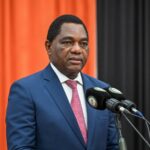


Special Assistant to the President for Finance and Investment Jito Kayumba says the government will take a more aggressive approach to implementing its development programmes during the United Party for National Development’s second term in office. He says the renewed mandate provides President Hakainde Hichilema’s administration with an opportunity to accelerate efforts aimed at transforming Zambia and improving the lives of citizens across the country. According to Mr Kayumba, the government intends to perform “a lot better” during its second term, with the President’s vision for national development clearly outlined in the UPND manifesto. His comments come as the government prepares to move beyond the election period and focus on delivering its economic and development priorities. The administration’s next phase will place emphasis on production, infrastructure, employment, investment and reducing poverty.
Mr Kayumba said the government’s 10-10-5-3-3-1-1 economic growth and development framework remains on course and will continue to guide efforts to expand Zambia’s productive capacity. The framework is designed around ambitious targets that cover electricity generation, agriculture, tourism, copper production and exports. Its broader objective is to strengthen the national economy by increasing production and creating conditions for sustainable economic growth. Achieving these targets would require significant investment in infrastructure, energy, agriculture, mining, tourism and human capital. The government’s ability to translate the framework into measurable results will therefore be closely watched during the second term.
One of the key ambitions under the framework is to increase electricity generation capacity to 10,000 megawatts. Reliable and sufficient electricity remains important for industrial development, mining, agriculture, manufacturing and small businesses because energy shortages can limit production and investment. Expanding generation capacity could help Zambia support a larger economy while improving the reliability of power for households and businesses. Increased electricity availability would also provide opportunities for industries to expand their operations and create additional employment. The energy target therefore forms an important part of the government’s wider strategy to increase production and strengthen economic activity.
Agriculture is another major component of the government’s economic growth framework, with targets that include producing 10 million tonnes of maize annually. The plan also targets three million tonnes of soya beans and one million tonnes of wheat, reflecting an ambition to increase agricultural production and strengthen food security. Higher production could create opportunities for farmers, agro-processors, transport companies and other businesses connected to the agricultural value chain. Expanding local production could also help reduce reliance on imports while creating opportunities to develop agricultural exports. Reaching these targets will require investment in farming inputs, irrigation, storage, transport infrastructure, technology and access to markets.
Tourism and mining also feature prominently in the framework, with the government targeting five million international tourist arrivals and three million tonnes of copper production. Zambia has significant natural attractions that can support tourism growth, while copper remains central to the country’s mining industry and export earnings. Increasing tourist arrivals could create jobs and support businesses in accommodation, transport, hospitality, entertainment and related services. Higher copper production could strengthen the mining sector and contribute to government revenues and foreign exchange earnings. The challenge will be ensuring that growth in these sectors creates wider economic benefits and contributes to communities across the country.
The framework also includes an ambitious target of generating US$1 billion in annual beef exports. Expanding the beef industry could provide opportunities for livestock farmers, processors, transporters and businesses involved in agricultural supply chains. Greater export capacity would require improvements in livestock production, animal health, processing facilities, cold-chain infrastructure and access to international markets. Developing the sector could also contribute to rural employment and provide farmers with additional income opportunities. The beef export target therefore forms part of a broader effort to diversify Zambia’s productive economy and increase the value of its agricultural sector.
Mr Kayumba said the New Dawn administration remains focused on taking people out of poverty while developing human capacity and skills needed to support Zambia’s long-term economic ambitions. Economic growth alone does not automatically improve living standards unless citizens can participate in and benefit from new opportunities. Skills development can help prepare Zambians for employment in sectors such as mining, agriculture, tourism, manufacturing, energy and technology. Strengthening human capital can also support entrepreneurship and enable more citizens to participate in the private sector. The government’s development agenda will therefore need to connect economic investment with education, skills development and employment opportunities.
The renewed mandate also provides the government with an opportunity to build on programmes already underway and increase the pace of implementation. Mr Kayumba said measures are already being introduced to make Zambia a stronger and more prosperous country, while acknowledging that the second term should deliver improved performance. This creates expectations among citizens who will want to see development commitments translated into practical improvements in their communities. Roads, energy infrastructure, economic opportunities, public services and employment will remain important indicators of progress. The government’s success will ultimately be judged by the extent to which its policies improve economic conditions and create opportunities for ordinary Zambians.
Mr Kayumba also used his remarks to encourage political maturity following the general election, particularly among UPND supporters. He acknowledged that political jokes and exchanges had taken place on social media after the election but urged citizens not to allow the mockery to become excessive. Supporters of unsuccessful candidates remain part of Zambia and continue to have a role in the country’s development. Political differences should therefore not become a reason for citizens to be excluded from economic opportunities or public services. His appeal highlights the importance of maintaining national unity after a competitive election and ensuring that political divisions do not interfere with the country’s development objectives.
The assurance that government development programmes will be distributed equitably is particularly significant as Zambia enters another term under the UPND administration. Mr Kayumba said citizens would not be discriminated against because of how they voted and stressed that government offices should remain accessible to everyone. This message is intended to reassure citizens who supported opposition parties that they remain part of the national development process. Equal access to development and public institutions is essential for building trust and strengthening social cohesion after an election. Ensuring that communities receive development regardless of their political affiliations will also be important in demonstrating the government’s commitment to inclusive governance.
Jito Kayumba’s remarks point to an ambitious second-term agenda focused on accelerating economic development, increasing production and expanding opportunities across Zambia. The 10-10-5-3-3-1-1 framework sets out targets that cover energy, agriculture, tourism, mining and exports, while the government has also placed poverty reduction and skills development among its priorities. Achieving these ambitions will require sustained investment, effective implementation and cooperation between government, businesses, communities and other stakeholders. At the same time, the administration faces the responsibility of ensuring that development reaches citizens regardless of their political choices. If the government can translate its renewed mandate into measurable progress while maintaining an inclusive approach, the second term could become an important period in Zambia’s economic transformation.