







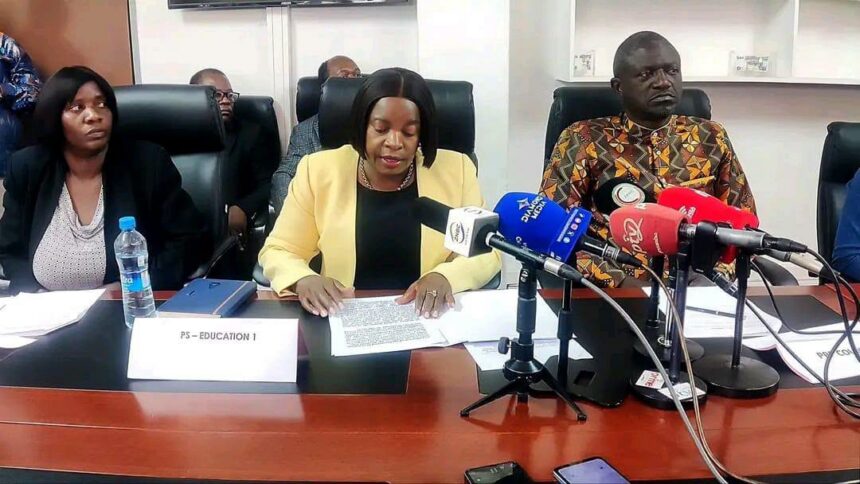
The Zambian Government has reaffirmed its commitment to supporting former public university employees by releasing K450 million to settle outstanding pension and gratuity obligations for retirees from the University of Zambia (UNZA) and the Copperbelt University (CBU). The funding, provided through the Ministry of Education, represents a significant step toward addressing long-standing financial obligations owed to retired members of staff who dedicated many years of service to the country’s higher education sector. The announcement was made by Permanent Secretary for Administration Noriana Muneku during a media briefing in Lusaka. The intervention reflects the Government’s determination to honour the contributions of university employees while strengthening confidence in Zambia’s public education system. It also demonstrates a broader commitment to improving the welfare of both retired workers and public institutions.
According to Ms. Muneku, K88 million has been allocated to clear outstanding pension and gratuity obligations for retirees at the Copperbelt University. This allocation is expected to benefit many former employees who have been waiting for the settlement of their retirement benefits. Timely payment of pensions and gratuities provides financial security for retirees, allowing them to meet their daily needs after years of dedicated public service. It also reflects the Government’s recognition of the important role that university employees have played in educating generations of Zambians. By addressing these obligations, the Government is reinforcing its responsibility to honour commitments made to public servants.
The University of Zambia will receive a substantial share of the released funds to settle outstanding retirement obligations accumulated over several years. A total of K225 million has been allocated to settle pension obligations for UNZA retirees covering the period from 2021 to 2023. In addition, K137 million has been released to clear gratuity obligations for retirees covering the period from 2016 to 2020. These payments are expected to bring significant relief to former employees who have been awaiting the settlement of their benefits. Clearing these historical obligations demonstrates the Government’s intention to restore confidence in the administration of retirement benefits within public institutions.
The settlement of pension and gratuity obligations is more than a financial exercise because it acknowledges the lifelong dedication of university staff who contributed to Zambia’s education system. Lecturers, researchers, administrators and support staff have all played essential roles in shaping the country’s skilled workforce and advancing higher education. Their efforts have helped produce graduates who continue to contribute to national development across various sectors of the economy. Recognising these contributions through the timely payment of retirement benefits reflects respect for public service and reinforces the value of long-term commitment to education. Such actions also strengthen morale among current employees by demonstrating that their future welfare remains an important priority.
Beyond addressing retirement obligations, the Government has also increased operational funding for public universities through the 2026 National Budget. The University of Zambia has received an additional K90 million to strengthen institutional operations and improve service delivery. Meanwhile, the Copperbelt University has been allocated an additional K50 million to support its operational requirements. These additional resources are intended to enhance teaching, research, innovation and the overall quality of higher education offered by both institutions. Increased financial support allows universities to better respond to academic demands while maintaining essential services for students and staff.
Investment in public universities extends beyond operational funding, with the Government also committing K78 million toward the rehabilitation of sewer and sanitation infrastructure at the University of Zambia. Improving sanitation facilities is expected to enhance student welfare while creating a healthier and safer learning environment. Modern and reliable infrastructure is essential for maintaining high standards of public health within university campuses. Better sanitation systems also contribute to improved living conditions for students residing on campus while supporting efficient institutional operations. This investment demonstrates that educational development involves both academic excellence and quality infrastructure.
Ms. Muneku noted that the Government’s overall investment in public universities has reached significant levels through various interventions aimed at strengthening the higher education sector. She explained that a total of K1 billion has now been committed toward settling historical obligations affecting public universities. This investment comes in addition to the K2.1 billion debt restructuring exercise undertaken between the University of Zambia and the Zambia Revenue Authority. These financial interventions are designed to restore institutional stability while creating a stronger foundation for sustainable university management. Addressing historical financial challenges enables universities to focus more effectively on their core responsibilities of teaching, research and community service.
The Government’s continued support for public universities reflects a long-term vision of building resilient and globally competitive higher education institutions. Well-funded universities are better positioned to attract qualified academic staff, improve research capacity and provide students with high-quality education. Strong institutions also contribute to national development by producing graduates equipped with the knowledge and skills required in an increasingly competitive global economy. Continued investment in higher education strengthens innovation while supporting Zambia’s broader economic and social development goals. These efforts highlight the importance of education as a key driver of national progress.
During the media briefing, Ms. Muneku also called upon university councils, vice-chancellors and management teams to uphold accountability, transparency and sound financial management. Responsible governance remains essential to ensuring that public resources are managed effectively and deliver meaningful benefits for students, staff and the wider community. Strong financial oversight helps institutions avoid future financial challenges while promoting public confidence in higher education management. Transparent leadership also creates an environment where academic excellence and institutional sustainability can flourish. Effective governance therefore remains a critical component of long-term university success.
The release of K450 million to settle pension and gratuity obligations represents another important milestone in the Government’s ongoing efforts to strengthen Zambia’s higher education sector. By honouring retired university employees, increasing operational funding, investing in campus infrastructure and addressing historical financial obligations, the Government is demonstrating a comprehensive approach to improving public universities. These measures provide immediate support for retirees while laying the foundation for stronger and more sustainable institutions. As public universities continue to benefit from increased investment and improved financial management, they will be better equipped to deliver quality education, advance research and contribute to national development. The Government’s continued commitment to higher education reflects its recognition that strong universities remain essential to Zambia’s long-term social and economic growth.