





The Government of the Republic of Zambia has renewed its call for stronger global solidarity, sustainable financing and deeper international cooperation in the global fight against HIV/AIDS. The appeal was made during the 2026 High-Level Meeting on HIV/AIDS, where countries gathered to review progress and strengthen commitments toward ending AIDS as a public health threat by 2030. Zambia’s position reflects growing concern that while significant progress has been achieved, sustained global effort is still required to protect gains made over the past two decades. The meeting serves as a key global platform for accountability, policy direction and coordination in the HIV response. It also highlights the importance of maintaining momentum in public health cooperation across nations.
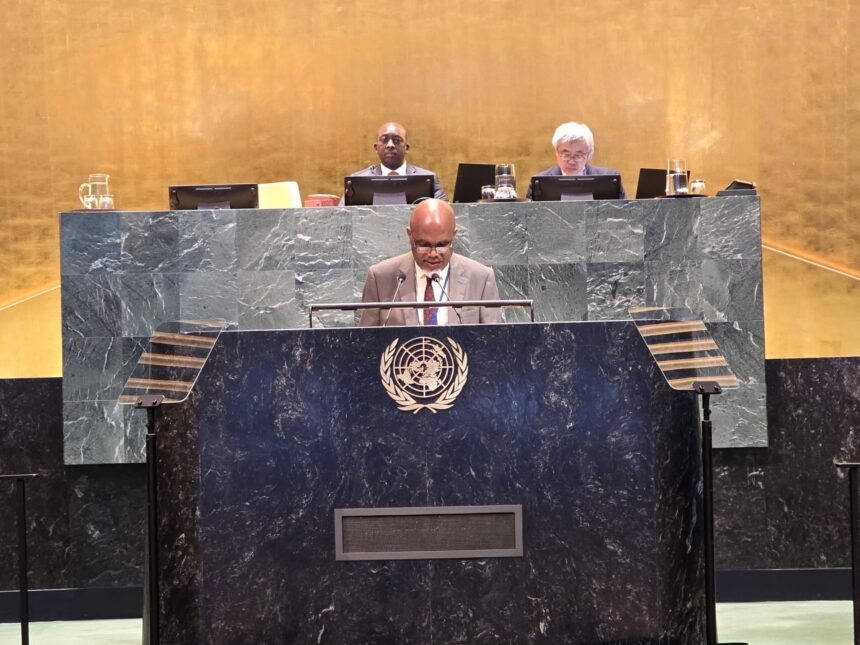
Delivering Zambia’s national statement, Ministry of Health Permanent Secretary Dr. George Sinyangwe reaffirmed the country’s commitment to working closely with the international community to reduce HIV to levels where it is no longer a public health threat. He emphasized that Zambia remains focused on achieving the 2030 global target through strengthened health systems and continued collaboration. He noted that Zambia has already reached the UNAIDS 98,98,97 epidemiological targets, reflecting strong performance in HIV diagnosis, treatment coverage and viral suppression. These achievements demonstrate the effectiveness of sustained investment in public health interventions. However, he stressed that continued progress depends on consistent global support.
Despite these gains, Dr. Sinyangwe highlighted several ongoing challenges affecting the HIV response in Zambia and other countries. These include rising HIV incidence among young people, the emergence of drug resistance and the increasing burden of non-communicable diseases among people living with HIV. He also pointed to shrinking external financing as a major concern that could affect service delivery and treatment continuity. The Permanent Secretary warned that without renewed global commitment, progress could slow or reverse in some areas. He called for a unified international response similar to the one that mobilised funding and action two decades ago.
Dr. Sinyangwe further emphasized that failure to sustain global investment in HIV programmes could result in serious public health consequences. These include increased drug resistance, higher rates of premature deaths, reduced life expectancy and lower productivity levels in affected populations. He stressed the importance of maintaining strong international partnerships to prevent such outcomes. The Permanent Secretary also highlighted Zambia’s growing capacity in training healthcare professionals, including doctors and nurses, to strengthen the national health workforce. He expressed Zambia’s readiness to collaborate with other countries in building resilient health systems.
The opening of the High-Level Meeting was addressed by the President of the United Nations General Assembly, H.E. Annalena Baerbock, who noted that global solidarity and multilateral action have transformed HIV from a fatal disease into a manageable condition. She warned, however, that progress is now under threat due to declining funding levels across the global health sector. Her remarks underscored the need to protect past gains while addressing emerging risks. The meeting also brought together senior international leaders to assess global progress and outline future priorities. It reaffirmed the importance of coordinated action in achieving global health targets.
United Nations Deputy Secretary-General Amina Mohammed highlighted the need to close treatment gaps, strengthen human rights protections and enhance community leadership in the HIV response. She stressed that sustainable financing remains essential to maintaining progress and ensuring equitable access to treatment. She also called for renewed global commitment to protect vulnerable populations and strengthen health systems. Her remarks reflected growing concern about inequalities in access to healthcare services. The message reinforced the need for inclusive approaches in global health strategies.
UNAIDS Executive Director Winnie Byanyima warned that declining development assistance and shrinking civic space could undermine global efforts to end AIDS by 2030. She emphasized that community-led responses remain critical to reaching affected populations and sustaining progress. She also highlighted the risk of reversing gains if funding and political commitment continue to decline. Her statement reinforced the urgency of maintaining global cooperation and investment in HIV programmes. The overall message from global leaders reflected concern but also determination to stay on track toward the 2030 target.
The Zambian delegation to the meeting is led by Dr. Sinyangwe and includes Zambia’s Permanent Representative Dr. Chola Milambo, National AIDS Council Director General Dr. Kebby Musokotwane and other senior officials. The High-Level Meeting is convened every five years and serves as the main global platform for reviewing progress in the HIV response and setting new commitments. It is currently reviewing the 2021 Political Declaration on HIV/AIDS and preparing a new declaration to guide international action over the next five years. Zambia’s participation reflects its continued commitment to global cooperation and national health system strengthening. The meeting is expected to shape the next phase of global efforts to end AIDS as a public health threat by 2030.