






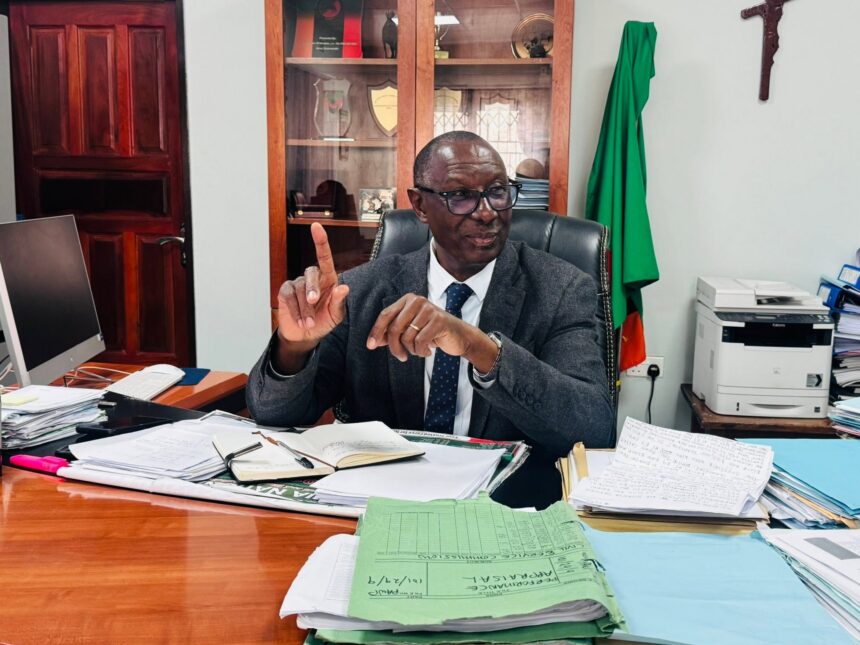
The Ministry of Health has continued its drive to improve healthcare delivery in Zambia through major infrastructure rehabilitation projects in Western Province, highlighted by a courtesy call by Ministry of Health Permanent Secretary for Technical Services, Dr. Kennedy Lishimpi, on Western Province Permanent Secretary Simomo Akapelwa in Mongu District. The meeting took place ahead of the official handover ceremony for newly rehabilitated health infrastructure supported by development partners. The engagement underscored the importance of coordination between central government and provincial leadership in delivering quality health services. It also reflected ongoing efforts to strengthen health systems in regions that face both geographic and logistical challenges. The discussions focused on improving service delivery, infrastructure readiness and sustainability of health investments. The visit set the tone for a key milestone in the province’s health sector development.
During the courtesy call, Western Province Permanent Secretary Simomo Akapelwa welcomed the continued investment in the health sector and emphasized the importance of the newly completed projects. He noted that the rehabilitation work would significantly improve the quality of healthcare services provided to residents across the province. Special attention was given to Lewanika General Hospital, which is recognized as the second oldest hospital in Zambia. The upgrades were described as timely and essential for strengthening service delivery in a facility that serves a large population. He highlighted that improved infrastructure directly contributes to better patient care, safer procedures and more efficient hospital operations. His remarks reflected the province’s strong appreciation for collaborative development efforts in the health sector.
Dr. Kennedy Lishimpi expressed gratitude to the Provincial Administration and the Provincial Health Office for their continued partnership with cooperating partners. He acknowledged the role played by organizations such as Save the Children in supporting health infrastructure development in Western Province. He also recognized funding support from The Church of Jesus Christ of Latter-day Saints, which has contributed to the implementation of the Integrated Maternal, Newborn, Child Health and Nutrition Systems Strengthening Project. Dr. Lishimpi emphasized that these partnerships are critical in addressing gaps in health service delivery. He noted that collaboration between government and partners ensures that resources are used effectively to reach communities in need. His remarks highlighted the importance of coordinated efforts in strengthening the health system.
The Permanent Secretary further pointed out that Western Province holds strategic importance in Zambia’s health sector due to its long international borders. These borders increase the need for cross-border health coordination and preparedness for public health challenges. The province plays a key role in managing health services for both local populations and cross-border movement. Dr. Lishimpi stressed that improved infrastructure in such areas strengthens national health security. He also noted that investments in border provinces help improve surveillance, emergency response and access to essential services. This strategic perspective places Western Province at the centre of broader health planning and regional cooperation.
The handover ceremony will officially mark the completion of several key health infrastructure projects across Mongu District. These include the rehabilitation of operating theatres at both Lewanika General Hospital and Mongu District Hospital, as well as the rehabilitation of the maternity annex at Mongu District Hospital. The projects also include the installation of solar power systems at Litawa Rural Health Centre, Lukalanya Rural Health Centre and Mongu District Hospital. In addition, upgrades to water reticulation systems have been completed at Kama Rural Health Centre and Namusheshe Rural Health Post. These improvements are designed to strengthen service delivery, improve reliability of utilities and enhance patient care across facilities. The combined projects represent a significant investment in maternal, newborn and general healthcare services.
The rehabilitation of operating theatres is expected to improve surgical capacity and reduce delays in critical procedures. Upgraded maternity services will support safer childbirth and better outcomes for mothers and newborns. The installation of solar systems will ensure reliable power supply, especially in rural health centres where electricity challenges have affected service delivery. Improved water systems will enhance hygiene standards and support infection prevention in healthcare facilities. These upgrades collectively strengthen the functionality of health facilities and improve working conditions for healthcare workers. They also ensure that essential services remain available even in remote areas with limited infrastructure.
The Ministry of Health’s engagement in Western Province reflects a broader national commitment to improving healthcare infrastructure and service delivery across Zambia. The collaboration between government, provincial leadership and development partners demonstrates a coordinated approach to addressing health system challenges. The completed projects in Mongu District highlight the impact of targeted investments in critical health infrastructure. They also show the importance of sustainable partnerships in achieving long-term improvements in healthcare delivery. As the official handover proceeds, the upgraded facilities are expected to play a key role in improving access to quality health services for communities across Western Province.