






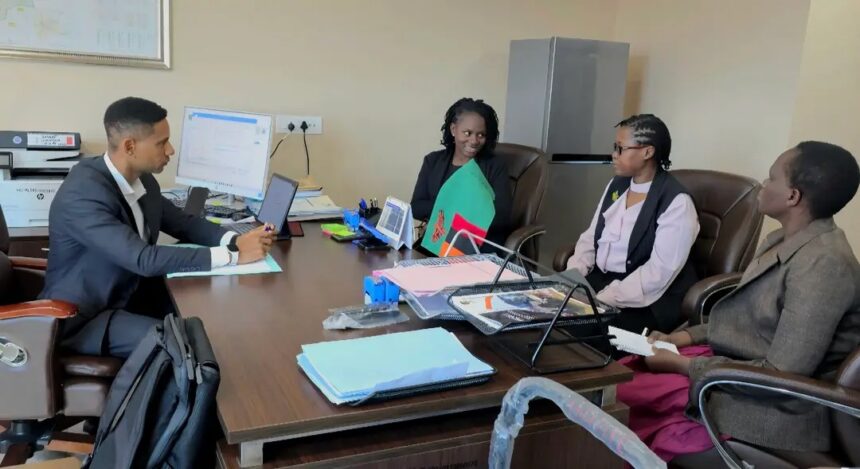
Zambia’s Constituency Development Fund (CDF) continues to attract regional attention as countries seek effective strategies to drive local development and reduce poverty. Yesterday, a delegation from the Parliamentary Budget Office of the Parliament of Uganda visited Zambia’s Ministry of Local Government and Rural Development to undertake a comprehensive study tour on the implementation of the CDF. The visit reflects growing recognition of Zambia’s decentralized development model, which empowers communities to identify and prioritize projects that directly address local needs. Through the benchmarking exercise, the Ugandan delegation aims to gain practical insights into how Zambia has successfully used the fund to stimulate economic growth, improve infrastructure, and uplift rural communities. The study tour also highlights the increasing collaboration between African nations in sharing development experiences and policy innovations.
The delegation is examining Zambia’s approach to decentralized funding, which has undergone significant transformation in recent years. The enhanced CDF has become one of the government’s flagship tools for grassroots development, enabling communities to play a direct role in determining their development priorities. By increasing funding allocations to constituencies, the government has expanded opportunities for local authorities and residents to implement projects that improve living standards and create economic opportunities. The model has been praised for strengthening community participation and ensuring that development initiatives are driven by local needs rather than centralized planning. As a result, many communities have benefited from projects in education, healthcare, infrastructure, entrepreneurship, and skills development.
During a courtesy call on the Ministry’s Permanent Secretary for Administration, Dr. Gabriel Pollen, the Ugandan delegation expressed keen interest in understanding how Zambia has managed to make the CDF such an effective instrument for poverty reduction and local empowerment. Delegation leader Ms. Janet Mataka Gladys noted that Uganda is eager to learn from Zambia’s experience in utilizing the fund to support community-led development. She emphasized that Zambia’s model has gained attention because it allows citizens to access resources that directly contribute to economic empowerment and improved livelihoods. According to her, the delegation seeks to study best practices in project selection, fund utilization, accountability mechanisms, and the measurable impact of CDF-supported initiatives. The knowledge gained from the visit could help inform future policy discussions and development strategies within Uganda.
Ms. Gladys further explained that the delegation is particularly interested in understanding how the fund contributes to youth empowerment, education, entrepreneurship, and job creation. These areas are critical for sustainable development and poverty eradication across the African continent. She stated that studying Zambia’s implementation model would provide valuable lessons on how decentralized funding can translate into tangible development outcomes at both ward and constituency levels. The delegation believes that practical evidence from Zambia’s experience can support efforts to strengthen local development frameworks in Uganda. Her remarks underscored the importance of collaboration among African countries in addressing shared economic and social challenges.
In response, Dr. Pollen highlighted the significant achievements recorded under the enhanced Constituency Development Fund. He explained that the government increased the allocation from K1.6 million per constituency in 2021 to K40 million, representing a major shift in support for grassroots development. According to Dr. Pollen, this increase has enabled communities to undertake transformative projects that create employment, promote entrepreneurship, and improve access to education and other essential services. He noted that decentralizing resources has empowered local communities to make decisions that directly affect their development priorities. This approach has contributed to meaningful improvements in poverty reduction efforts across the country.
The Permanent Secretary also provided concrete examples of the programme’s impact. He revealed that a total of 2,985 community projects were implemented in 2025 at a cost of K2.9 billion. This marked an increase from the 2,974 projects implemented in 2024 at a cost of K2.4 billion. These projects have covered a wide range of sectors, including infrastructure development, education facilities, community services, and economic empowerment initiatives. The figures demonstrate the scale of investment being directed toward local development and the government’s commitment to ensuring that resources reach communities where they are most needed. Such achievements have positioned Zambia’s CDF as a notable example of successful decentralization within the region.
The visit by the Ugandan delegation, hosted by the National Assembly of Zambia, serves as a strong indication of the growing interest in Zambia’s development model. It also reflects the strengthening relationship between Zambia and Uganda as the two countries continue to exchange ideas and experiences on governance and economic development. The benchmarking exercise provides an opportunity for both nations to deepen cooperation while exploring practical solutions to poverty and underdevelopment. As Zambia continues to expand the reach and impact of the Constituency Development Fund, its experience is increasingly becoming a reference point for other countries seeking effective grassroots development strategies. The study tour ultimately reinforces the value of regional collaboration in advancing sustainable development and improving the lives of citizens across Africa.