





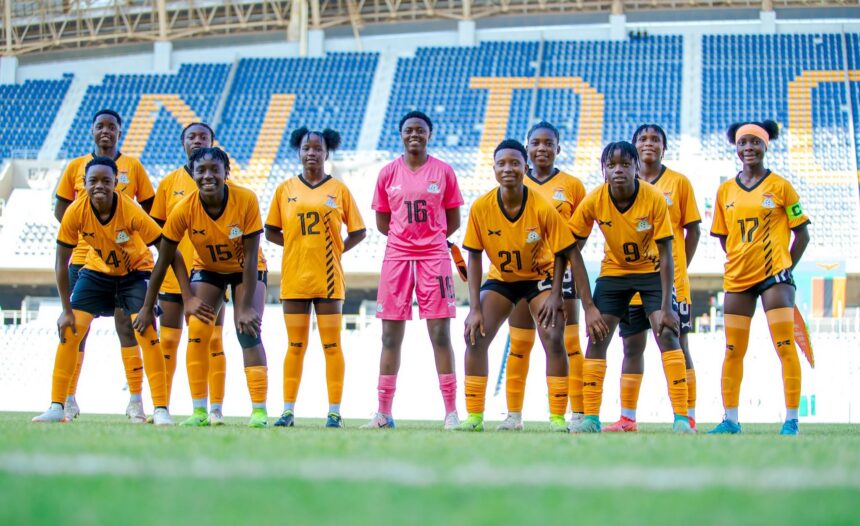
Zambia’s Under-17 Women’s National Team has entered a decisive phase in its 2026 FIFA Women’s World Cup qualification campaign after head coach Carol Kanyemba announced a 35-member provisional squad for the final round of qualifiers against Ethiopia. The announcement signals a major step in the team’s preparation as they aim to secure a place at the global tournament in Morocco. The squad combines continuity from earlier qualification rounds with new talent aimed at strengthening key areas of the team. Among the most notable inclusions is a debut call-up for England-based midfielder Asher Mwamba, who plays for Brighton & Hove Albion. The selection reflects Zambia’s growing commitment to blending local development with international experience to compete at the highest level.
The upcoming two-legged tie against Ethiopia carries significant weight, as the winner will book a spot at the 2026 FIFA U-17 Women’s World Cup scheduled to take place in Morocco from 17 October to 7 November 2026. Zambia will host the first leg on 4 July at the Levy Mwanawasa Stadium in Ndola before traveling to Addis Ababa for the return fixture a week later. The team will enter a residential camp in Ndola on Tuesday to maximise preparation time and ensure tactical cohesion ahead of the high-pressure encounters. The Football Association of Zambia has prioritised early camping to allow the coaching staff sufficient time to refine match strategies and build team chemistry. With qualification at stake, both fixtures are expected to test Zambia’s discipline, endurance, and tactical maturity.
Coach Carol Kanyemba has retained the core of the squad that progressed through the earlier qualification rounds, showing confidence in the group’s consistency and development. The selection also highlights the depth of youth talent emerging across Zambia’s women’s football structures. Players have been drawn from various clubs and academies, reflecting a wide national scouting network that continues to identify and nurture promising athletes. The inclusion of Asher Mwamba adds an international dimension to the squad, bringing experience from a competitive European football environment. This balance between established players and new additions is intended to enhance competitiveness while maintaining stability within the team structure.
Zambia’s recent history in youth women’s football adds further significance to this qualification campaign. The team has qualified for the last two FIFA U-17 Women’s World Cup tournaments, featuring in the 2024 edition in the Dominican Republic and the 2025 edition in Morocco. These achievements have positioned Zambia as one of the stronger emerging teams in African women’s youth football. A third consecutive qualification would reinforce the country’s growing reputation on the global stage and demonstrate sustained development within the women’s football programme. The current squad therefore carries both expectation and opportunity as they aim to continue this upward trajectory.
The provisional squad includes players across all departments, with a strong representation in goalkeeping, defence, midfield, and attack. In goal, options include Mary Nyangu of Yassa Queens, Decent Mbewe of National Assembly, Bukata Kakumbi of Police DOVES, Carol Mweetwa of Barts Queens, and Deborah Phiri of Canaan Sports Foundation. The defensive line features players such as Josephine Change of Nchanga Queens, Faith Kaunda of ZedPro Academy, Esther Ngabwe and Gift Mazimba of Elite Ladies, and Tabitha Nyirenda of Driven Queens. Others include Susan Mulungwa of Green Eagles, Chricencia Phiri of Radar Queens, Hope Makwaza of Victorious United, Ethel Njobvu of Young Buffaloes, and Salome Nalwimba of Sporting Doves, forming a broad defensive pool with varied club experience.
In midfield, the squad includes Natasha Kasema of Green Buffaloes, Taonga Mubanga of Yassa Queens, and Asher Mwamba of Brighton & Hove Albion in England. Additional midfield options include Fridah Ndashe of Power Dynamos Queens, Precious Mwewa and Dorcas Mulosha of Candice Girls Academy, and Christina Mwale of Misisi Academy. Others such as Faith Kapilingo, Agness Mwaka, and Lillian Mwenda of Elite Ladies, along with Astridah Musonda of Lunchu Queens and Fatima Chulu of Nampundwe Queens, add further depth and creativity. This midfield group is expected to play a key role in controlling possession and linking defensive and attacking phases during the qualifiers.
The attacking department features a strong group of forwards led by Grace Phiri of Indeni Roses, Prodia Mwiinga of Choma Warriors, and Phidah Mazuwa of Elite Ladies. Elizabeth Mofya of Green Buffaloes, Melody Yeenga of Zesco Ndola Girls, Sharon Lweendo of Ingwe Girls, Beatrice Chipupula of Aguila Stars, and Agness Ondya of Young Green Buffaloes complete the striking options. This group will be responsible for converting chances and applying pressure on Ethiopia’s defensive setup across both legs. Their performance will be crucial in determining Zambia’s chances of progressing to the World Cup.
Zambia’s preparation strategy reflects a structured and focused approach aimed at maximising performance in a high-stakes qualification scenario. The extended camp in Ndola provides an opportunity for tactical drills, fitness conditioning, and team bonding before the first leg. With a blend of domestic talent and international exposure, the squad enters the qualifiers with both experience and ambition. The coaching staff will be focused on maintaining consistency while ensuring tactical flexibility across both matches. The outcome of this tie will determine whether Zambia continues its strong presence on the global youth stage.
A successful qualification would mark a third consecutive appearance at the FIFA U-17 Women’s World Cup, reinforcing Zambia’s position as a rising force in women’s football. The team’s development over recent years has been driven by structured investment in youth programmes and increased exposure to international competition. As the qualifiers approach, attention will be firmly on execution, discipline, and composure under pressure. The matches against Ethiopia will serve as a defining test of the team’s progress and resilience. For Zambia, the path to Morocco runs through Ndola and Addis Ababa, with a World Cup place on the line.