




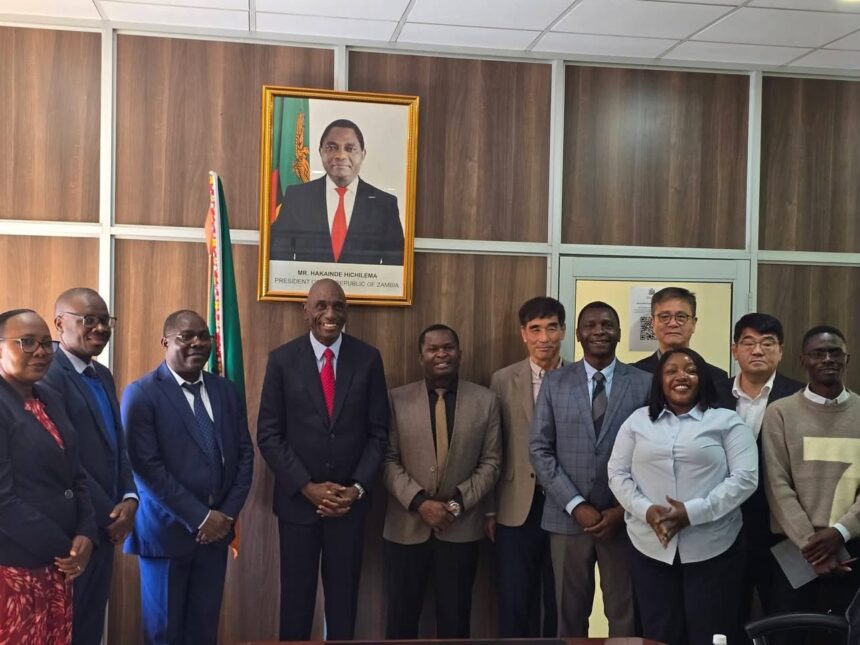
A Korean delegation from KS Eco Solutions Holdings Limited has shown strong interest in investing in Zambia’s energy sector, with proposals focusing on both nuclear and solar power development. The discussions mark a growing phase of international cooperation aimed at strengthening Zambia’s long-term energy security and expanding electricity generation capacity. The delegation engaged with senior officials at the Ministry of Energy, including Energy Permanent Secretary for Electricity Arnold Simwaba, alongside technical energy experts. The talks were facilitated by Zambia’s Ambassador to South Korea, Andrew Banda, who has been central in advancing energy investment discussions between the two countries. The proposed partnership reflects Zambia’s strategic push to diversify its energy mix and attract high-impact foreign investment.
The core of the discussions centred on the possibility of establishing nuclear power stations in Zambia, alongside expanded solar energy projects. Government officials welcomed the proposals, noting that Zambia’s growing economy requires a significant increase in stable and reliable power supply. The country currently generates about 4,000 megawatts of electricity, but national development plans aim to raise this capacity to 10,000 megawatts. This expansion is seen as essential to support industrial growth, particularly in the mining sector, which remains a key driver of the economy. The proposed investments are therefore aligned with Zambia’s broader economic transformation agenda.
A major driver behind the push for increased electricity generation is Zambia’s ambition to produce three million tonnes of copper annually by 2030. Achieving this target requires a stable and expanded power supply to support mining operations, processing plants, and related industrial activities. Energy officials emphasised that consistent electricity availability is critical for sustaining productivity and attracting further investment into the mining sector. The introduction of nuclear energy, alongside renewable sources such as solar, is being explored as a way to ensure baseload stability while reducing dependence on hydroelectric power, which is vulnerable to climate variability. This diversified approach is intended to create a more resilient national energy system.
Energy Permanent Secretary Arnold Simwaba highlighted that while Zambia has prioritised solar energy development in recent years, the government remains open to a wide range of energy technologies. He noted that solar power continues to be a key focus due to its scalability and alignment with Zambia’s climatic conditions. However, he also stressed the importance of balancing renewable energy expansion with other reliable generation sources to meet rising demand. The potential introduction of nuclear power is being considered as part of a long-term strategy to strengthen energy security and ensure consistent supply for industrial and domestic use. This approach reflects a broader shift toward integrated energy planning.
Zambia’s Ambassador to South Korea, Andrew Banda, said discussions on Korean investment in Zambia’s energy sector have been ongoing for some time and are now beginning to produce tangible outcomes. He described South Korea as a dependable development partner with strong technical expertise and the capacity to deliver large-scale infrastructure projects. According to him, the engagement with KS Eco Solutions Holdings Limited represents a significant step forward in strengthening bilateral cooperation. The ambassador emphasised that such partnerships are essential for accelerating Zambia’s infrastructure development and achieving its energy expansion goals. He also highlighted the importance of maintaining sustained dialogue to translate proposals into concrete projects.
The proposed investments are expected to play a key role in diversifying Zambia’s energy generation mix and reducing reliance on a single power source. By integrating nuclear, solar, and other energy technologies, the country aims to build a more stable and flexible electricity system capable of meeting future demand. This diversification is also expected to improve energy reliability for both households and industries, reducing disruptions caused by supply constraints. Increased generation capacity would further support Zambia’s industrialisation agenda and strengthen its position as a regional economic hub. The collaboration with Korean investors reflects growing international confidence in Zambia’s energy sector potential.
Overall, the engagement between Zambia and KS Eco Solutions Holdings Limited represents a strategic opportunity to accelerate energy sector development through advanced technology and foreign investment. The discussions highlight a shared interest in building long-term infrastructure that supports economic growth and sustainability. With plans to significantly expand electricity generation capacity, Zambia is positioning itself for a more industrialised and energy-secure future. The potential inclusion of nuclear power marks a notable shift in energy planning, signalling openness to diverse solutions that meet national needs. If successfully implemented, these investments could transform Zambia’s energy landscape and strengthen cooperation between Zambia and South Korea for years to come.