






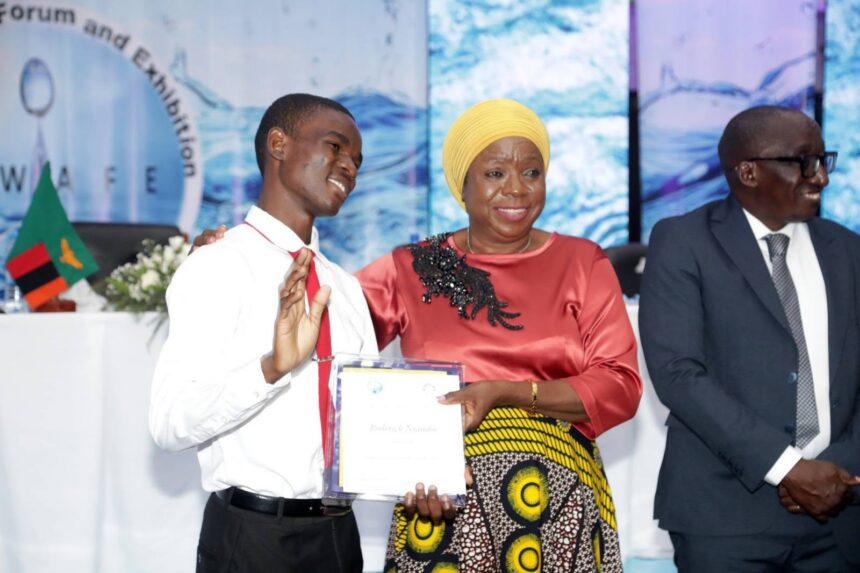
The 14th Zambia Water Forum and Exhibition (ZAWAFE) opened in Lusaka at the Mulungushi International Conference Centre with a strong focus on turning policy into real action. The Vice President of the Republic of Zambia, Dr. W.K. Mutale-Nalumango, officially opened the event and used her address to stress the urgency of addressing water and sanitation challenges across the country. She highlighted that water security remains central to Zambia’s long-term development goals and directly supports Vision 2030. Her message focused on moving away from repeated commitments that do not produce measurable results. She called for immediate, coordinated implementation across all levels of the water sector.
The forum brought together a wide range of stakeholders including government representatives, water utilities, cooperating partners, academia, civil society, and private sector players. This broad participation reflects the complexity of Zambia’s water challenges and the need for shared responsibility. Dr. Nalumango emphasized that no single institution can solve these issues alone, especially under increasing pressure from population growth and climate change. She noted that integrated solutions must be designed to strengthen both urban and rural water systems. The aim is to improve access to clean water and reliable sanitation services for all communities.
A key message from the opening address was the need for practical and measurable outcomes rather than policy discussions that remain on paper. The Vice President urged stakeholders to focus on implementation strategies that deliver visible improvements in households, schools, and health facilities. She pointed out that water and sanitation systems must be resilient enough to withstand environmental shocks and long-term climate variability. This includes investing in infrastructure, strengthening governance systems, and improving maintenance capacity across utilities. The call to action reflects growing concern about gaps between planning and execution in the sector.
The theme of this year’s forum, “From Commitment to Action: Accelerating Integrated Resilience Solutions for Vision 2030 and the Sustainable Development Goals,” set the tone for the discussions. It highlights the need to link national development priorities with global sustainability targets in a practical way. Dr. Nalumango stressed that this alignment should not remain theoretical but must translate into tangible improvements in service delivery. She also encouraged innovation and knowledge sharing as key drivers of progress. By adopting modern technologies and data-driven approaches, Zambia can improve efficiency and expand access more effectively.
The Vice President also expressed encouragement at the level of collaboration visible at the forum. She noted that bringing together diverse stakeholders creates opportunities for shared learning and coordinated planning. This cooperation is essential for strengthening water security and addressing sanitation gaps that affect public health and economic productivity. She reaffirmed government commitment to supporting initiatives that promote sustainable water resource management. The focus remains on ensuring inclusive development where no citizen is left behind in access to basic services.
Zambia continues to face significant challenges in water distribution, infrastructure development, and climate resilience, but the forum signals a renewed push for change. Dr. Nalumango’s message underscored that achieving Vision 2030 will require disciplined execution, accountability, and sustained investment. The discussions at ZAWAFE are expected to shape future policies and partnerships within the sector. As the country moves forward, the emphasis will remain on turning strategies into action that delivers real impact for communities.