


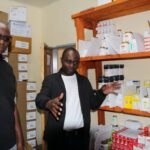

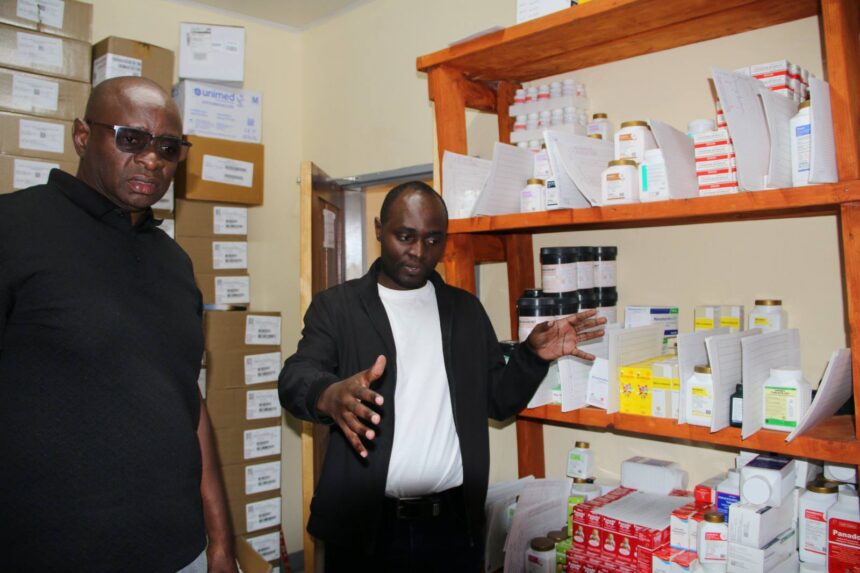
The Government has intensified its drive to improve healthcare delivery in Zambia with the commissioning and inspection of new health infrastructure in Kabwe District. Ministry of Information and Media Principal Public Relations Officer Shamwinda Tembo recently toured the newly commissioned Maganda Nyama Health Centre, a modern primary healthcare facility that reflects ongoing national efforts to strengthen public health systems. The facility, located in Central Province, was built at a cost exceeding K2.5 million through the Constituency Development Fund. It stands as one of several strategic investments aimed at improving access to quality healthcare services at community level. The visit highlighted government progress in expanding essential health infrastructure closer to the people.
The Maganda Nyama Health Centre includes one of ten modern maternity annexes constructed and commissioned across the country as part of a broader healthcare transformation programme. These annexes are designed to improve maternal and child health outcomes by providing safe, equipped, and accessible delivery services. Government has emphasised that the facility directly addresses long standing challenges in maternal healthcare, especially in rural and underserved communities. In the past, expectant mothers in the area faced significant barriers in accessing skilled delivery services, often travelling long distances under difficult conditions. The new infrastructure is expected to reduce maternal risks and improve survival rates for both mothers and newborns.
District Health Director Dr. Evaristo Chanda provided an update on the wider implementation of maternity annex projects across Kabwe District. He confirmed that four annexes in Chowa Urban, Nakoli, Bwacha, and Maganda Nyama have already been completed and are fully operational. These facilities are now actively serving surrounding communities and easing pressure on central hospitals. He further noted that three additional annexes in Katondo Urban, Mpima, and Mukobeko Medium Correctional Facility are scheduled for commissioning in the near future. Plans are also underway for new construction in Wire, Ngungu, and Caleb Munzele Level One Hospital, expanding the reach of maternal healthcare services even further.
Before these developments, many communities in Kabwe lacked dedicated maternal health facilities, a gap that contributed to preventable complications during pregnancy and childbirth. Expectant mothers were often forced to travel long distances to access care, exposing them to health risks and delays in receiving emergency treatment. The introduction of maternity annexes is designed to eliminate these barriers and decentralise access to skilled medical support. The government’s approach focuses on placing essential services within reach of local populations to ensure timely care. This strategy is expected to significantly reduce maternal and infant mortality rates in the district.
In addition to maternal healthcare improvements, Kabwe District has also commissioned the largest relatives’ shelter at Kabwe Central Hospital. The facility provides safe and dignified accommodation for family members who support hospitalised patients during treatment. This development helps reduce financial strain on caregivers who previously had limited or no shelter options while attending to loved ones. It also improves the overall hospital environment by offering structured support spaces for families. The initiative reflects a broader understanding of healthcare that includes patient support systems beyond clinical treatment.
The district is also preparing to establish a Zambia Medicines and Medical Supplies Agency hub in Kabwe, a development expected to improve the supply chain for essential medicines. The hub will ensure faster and more reliable distribution of medical supplies to local health facilities. It will also remove the need for district health offices to travel to Lusaka to collect consignments, reducing delays and operational costs. This improvement is expected to strengthen efficiency within the healthcare system and enhance service delivery at all levels. It represents a significant step toward decentralised health logistics management.
Taken together, these healthcare investments in Kabwe District demonstrate a coordinated effort to strengthen public health infrastructure and improve service accessibility. The combination of new health centres, maternity annexes, caregiver facilities, and supply chain improvements is expected to deliver long term benefits to residents. Women, children, and other vulnerable groups stand to gain the most from these developments due to improved access to timely and quality care. The government’s continued focus on community level healthcare delivery highlights its commitment to building a stronger and more inclusive health system. These projects mark a clear shift toward sustainable, locally accessible healthcare services that respond directly to community needs.