







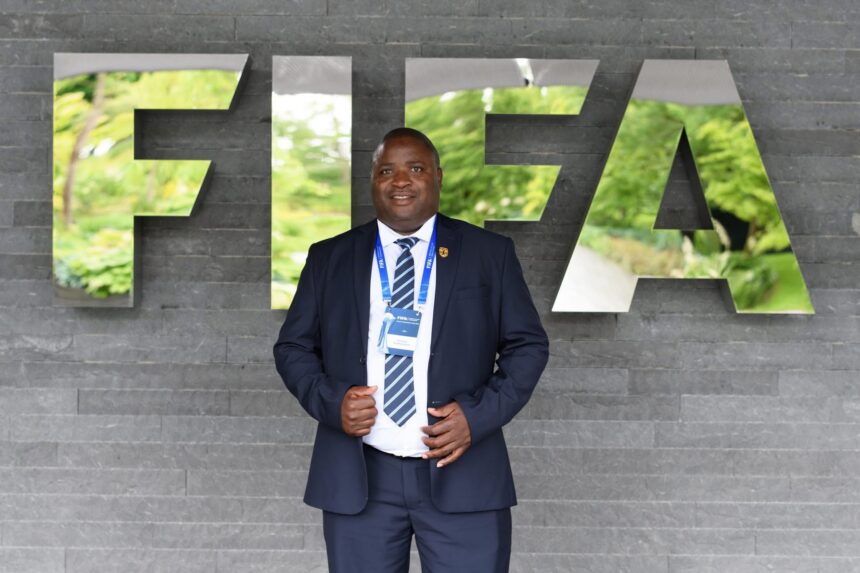
Newly appointed Football Association of Zambia (FAZ) General Secretary Charles Chakatazya has outlined a clear vision focused on professionalism, teamwork, and good governance as he begins his leadership role at Football House in Lusaka. His appointment has been met with expectations of renewed structure and improved efficiency within Zambian football administration. Speaking during his first official engagement with staff on Tuesday, Chakatazya expressed gratitude to the FAZ executive committee for entrusting him with the responsibility. He emphasized that his leadership will prioritize unity and accountability across all levels of the organisation. His message set the tone for what he described as a new phase of collaboration and performance-driven management within FAZ.
Chakatazya stressed the importance of teamwork and mutual respect, noting that every employee at Football House plays a critical role in the success of the association. He called for a working culture built on professionalism, open communication, and shared responsibility. According to him, no position within the organisation is insignificant, as each contributes to the broader goal of developing Zambian football. He encouraged staff to embrace a collective mindset that supports efficiency and consistency in service delivery. His approach aims to strengthen internal coordination and ensure that all departments work toward unified objectives.
In his remarks, the new General Secretary also paid tribute to Deputy General Secretary Iva Lengwe for his leadership during the transition period. He acknowledged that Lengwe’s stewardship helped maintain stability and continuity within the secretariat at a crucial time. Chakatazya noted that such continuity was essential in preventing operational disruptions and ensuring that FAZ activities remained on track. He described Lengwe’s contribution as valuable to the organisation’s administrative strength. This recognition highlighted his intention to build on existing structures rather than disrupt established systems.
Chakatazya further outlined his immediate priorities, which include improving operational efficiency, strengthening governance structures, and enhancing service delivery across all FAZ stakeholders. These stakeholders include members, clubs, players, coaches, referees, and sponsors who depend on effective administration for the growth of the game. He emphasized that good governance remains central to restoring trust and improving performance within football administration. He also pointed out that transparency and accountability will be key pillars of his leadership. His focus is to ensure that Football House operates in a manner that reflects professionalism and integrity.
Speaking on future challenges and opportunities, Chakatazya acknowledged that the role comes with both expectations and pressure. However, he expressed confidence that collective effort would help overcome obstacles and drive progress. He encouraged staff to remain committed to excellence and to support one another in delivering results. His message reflected a leadership style grounded in cooperation and shared purpose. He added that sustained commitment from all stakeholders would be essential in achieving long-term success for Zambian football.
On behalf of the staff, Anne Namukanga welcomed Chakatazya to Football House and described his appointment as the beginning of a new chapter for football administration in Zambia. She expressed confidence that his experience and leadership vision would guide the organisation toward improved performance and growth. Namukanga assured him of the workforce’s full support, emphasizing their readiness to work professionally and uphold the values of teamwork, accountability, and excellence. Her remarks reflected optimism among employees regarding the new leadership direction. The staff commitment signaled readiness to align with the General Secretary’s vision for reform and progress.
Chakatazya’s appointment comes at a time when expectations are high for improved governance and stronger institutional performance within FAZ. His emphasis on collaboration, structure, and accountability sets a foundation for potential transformation within the organisation. The early engagement with staff suggests a leadership approach focused on inclusion and dialogue. As he begins his tenure, attention will be on how these principles translate into practical improvements in football administration. His leadership will be closely watched by stakeholders across Zambian football as they anticipate measurable progress in the coming months.