






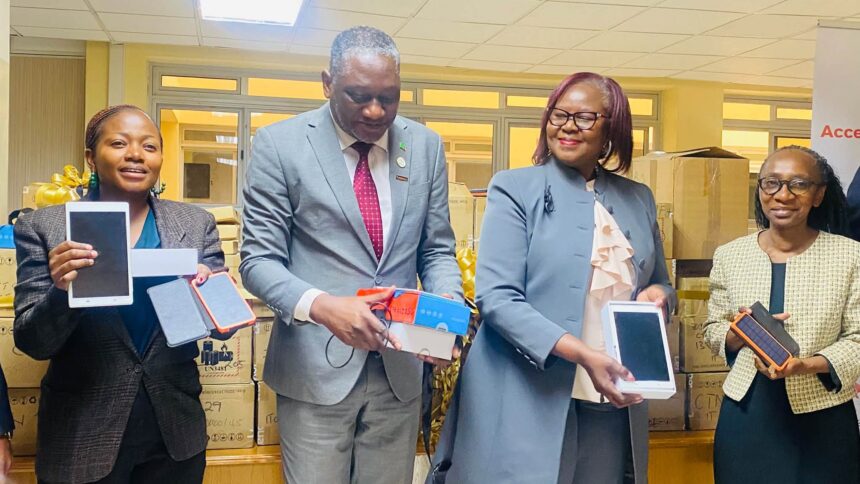
The Ministry of Health has received tablets previously used during Zambia’s 2022 Census of Population and Housing as part of efforts to strengthen the country’s digital health systems. The devices were handed over by the Zambia Statistics Agency, commonly known as ZamStats, with support from the United Nations Population Fund, UNFPA. The tablets will now be repurposed to support digital health information systems and improve the collection, management and reporting of health data. The development highlights how technology and existing public resources can be used across government sectors to improve service delivery. Zambia conducted its first fully digital census in 2022, with tablets forming an important part of the data collection process.
The Ministry of Health will use the tablets to support several important digital platforms, including SmartCare, DHIS2 and the electronic Logistics Management Information System, known as eLMIS. These systems play important roles in the collection and management of information needed to plan and monitor health services. Having additional digital devices available can help health workers capture information more efficiently and reduce reliance on manual processes where digital systems are available. Better access to suitable equipment can also support more consistent reporting from health facilities and other points where health information is collected. The wider goal is to strengthen the quality and availability of information that health authorities use when making decisions about healthcare delivery.
The repurposing of the census tablets also demonstrates the value of extending the useful life of government-funded technology. Zambia’s 2022 Census of Population and Housing was the country’s first e-census, marking a major shift towards digital data collection. ZamStats has described the census as a highly technological exercise that used tablets, satellite-based mapping and GPS tracking to support accurate and efficient enumeration across the country. More than 40,000 enumerators and 6,000 supervisors were involved in the national exercise, demonstrating the scale of the technology deployed. With the census completed, transferring suitable devices to the health sector provides an opportunity to ensure that this digital infrastructure continues to deliver public value.
The tablets could make a practical difference to health information collection, particularly where health workers need reliable digital equipment to enter or access information. Accurate health data is essential for understanding disease patterns, monitoring services and identifying areas where additional resources may be required. Digital platforms can also help reduce delays between the collection of information and its use by health managers and policymakers. When data reaches decision-makers in a timely and usable form, authorities can respond more effectively to changing health needs. Strengthening the equipment available to support these systems is therefore an important part of Zambia’s broader digital health transformation.
SmartCare, DHIS2 and eLMIS each support different aspects of health information management, making reliable technology important to the wider health system. Digital health platforms depend not only on software but also on appropriate devices, connectivity, trained personnel and effective data management processes. Providing tablets to health institutions can help address part of the equipment requirement while allowing existing digital platforms to reach more users. The availability of suitable devices can also support health workers who need to record information during routine service delivery. Over time, stronger digital infrastructure can contribute to more complete and timely health reporting across the country.
The initiative also reinforces the importance of collaboration between government institutions and development partners. ZamStats was responsible for the census process and accumulated significant experience in large-scale digital data collection through the 2022 exercise. UNFPA was among the partners that supported Zambia during the census process, alongside other organisations and institutions. The continued use of equipment from that exercise in the health sector demonstrates how partnerships can produce benefits beyond the original programme for which resources were provided. It also shows how government agencies can work together to maximise the value of public investments in technology.
The handover comes at a time when data is becoming increasingly important to health planning and service delivery. Health authorities need reliable information to understand the needs of different communities and to determine where resources, medicines, personnel and services should be directed. Zambia Statistics Agency has emphasised the broader importance of statistical evidence in supporting government planning and decision-making. The agency’s census information is designed to provide a foundation for planning programmes and measuring development outcomes. Applying the same emphasis on reliable information within the health sector can help strengthen evidence-based decisions and improve the monitoring of health programmes.
The initiative could also contribute to more efficient use of public resources by giving existing equipment a new purpose instead of allowing it to remain unused after the census. Repurposing technology can help government institutions obtain additional value from investments that have already been made. It can also support continuity between different areas of public administration, particularly where several sectors depend on digital information systems. For the health sector, access to more devices can strengthen the ability of facilities and officials to participate in digital reporting. The success of this approach will ultimately depend on proper maintenance, connectivity, training and effective management of the tablets once they are deployed.
For Zambia, the transfer of the census tablets represents more than a simple handover of equipment. It connects the country’s investment in digital census technology with its ongoing efforts to modernise healthcare information systems. The move also highlights the potential for government institutions to share resources and build on existing digital infrastructure rather than working in isolation. By supporting SmartCare, DHIS2 and eLMIS, the devices can contribute to stronger data collection, reporting and evidence-based decision-making across the health sector. The Ministry of Health’s appreciation of UNFPA and ZamStats reflects the value of cooperation in advancing Zambia’s digital health transformation and ensuring that technology continues to support better public services.