





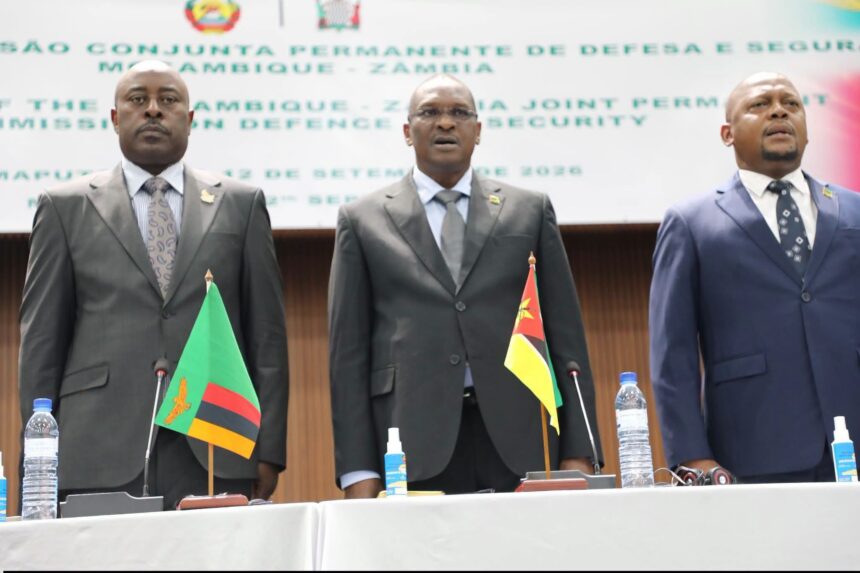
Zambia and Mozambique have reaffirmed their commitment to strengthening bilateral cooperation as both countries work to address transnational organised crime and emerging security threats along their shared border. The commitment was highlighted on Friday during the official opening of the 14th Session of the Mozambique-Zambia Joint Permanent Commission on Defence and Security in Maputo, Mozambique. Zambia’s Ministry of Defence Permanent Secretary, Mr Maambo Haamaundu, called for stronger and more coordinated efforts between the two countries to respond to threats that could affect national and regional stability. The discussions focused on the need for defence and security institutions to work closely together as criminal networks and other security challenges become increasingly complex. The renewed commitment also reflects the broader importance of maintaining strong relations between Zambia and Mozambique in areas that include defence, security and trade.
Haamaundu highlighted several threats that require closer cooperation between the two countries, including poaching, irregular migration, terrorism and cybercrime. These forms of transnational organised crime often extend beyond national borders, making it difficult for one country to address them without support from neighbouring states. He stressed that the prevalence of such threats in both Zambia and Mozambique requires strengthened collaboration and coordinated interventions among defence and security institutions. Effective cooperation can help authorities improve information sharing, coordinate responses and identify emerging threats before they become more serious. The call for joint action also recognises that security along the border is closely connected to the safety and economic wellbeing of communities living in both countries.
Poaching remains a significant concern in the region because criminal networks involved in wildlife trafficking can operate across several countries. Zambia and Mozambique share important natural areas and border communities where wildlife protection requires cooperation between authorities on both sides. Irregular migration also presents challenges that require coordinated border management, particularly when criminal groups exploit vulnerable people and weak points in border systems. Terrorism and cybercrime add further complexity because they can affect national security without being limited to traditional border areas. By strengthening cooperation across these areas, Zambia and Mozambique can improve their ability to respond to security threats while supporting safer communities and more secure borders.
The meeting also placed emphasis on the responsibility of senior defence and security officials to strengthen their efforts against threats that could undermine the safety and stability of both nations. Haamaundu urged officials from Zambia and Mozambique to maintain close coordination and develop practical responses to the security challenges facing the two countries. Such cooperation can involve the exchange of information, joint planning, institutional engagement and stronger coordination between relevant agencies. The effectiveness of these measures depends on sustained communication and a shared understanding of the threats affecting the region. Continued engagement through the Joint Permanent Commission provides a platform for both countries to assess security developments and identify areas where cooperation can be improved.
Zambia also reaffirmed the strategic importance of its relationship with Mozambique, particularly in trade facilitation, defence and security. Mozambique was described as a unique strategic partner, reflecting the longstanding connections between the two countries and their shared interests in regional stability. Strong security cooperation can also support trade by helping create safer conditions for the movement of people and goods across borders. This is important for economies that depend on reliable transport routes and cross-border commercial activity. Zambia’s determination to deepen cooperation with Mozambique therefore extends beyond defence and security and forms part of a wider effort to strengthen bilateral relations across multiple sectors.
The discussions in Maputo also carried historical significance for Mozambique and Zambia. Mozambique’s Permanent Secretary in the Ministry of National Defence, Casimiro Augusto Muieo, noted that the meeting was taking place at an important time as Mozambique commemorates the anniversary of the signing of the Lusaka Accord. The accord was signed in Lusaka on 7 September 1974 and represented a major step towards ending Portuguese colonial rule in Mozambique. The agreement paved the way for Mozambique to achieve independence the following year after decades of colonial rule and liberation struggle. Its anniversary provides an opportunity for both countries to reflect on the historical relationship that has connected Zambia and Mozambique for generations.
Muieo expressed gratitude to Zambia for the role it played in advancing Mozambique’s quest for independence. Zambia provided an important platform for peace talks between liberation movements and Portuguese colonial authorities during a critical period in Mozambique’s history. The signing of the Lusaka Accord in Zambia demonstrated the country’s role in supporting the political process that eventually led to Mozambique’s independence. The historical relationship between the two countries continues to influence their diplomatic and political engagement today. The defence and security discussions therefore take place against a background of cooperation that extends well beyond current security challenges.
Muieo also commended the people of Zambia on the re-election of President Hakainde Hichilema. He attributed the electoral outcome to what he described as Hichilema’s strong record during his first term in office and said the result demonstrated public confidence in his leadership. The remarks added a political dimension to the broader discussions on relations between Zambia and Mozambique. Strong diplomatic ties between neighbouring countries can provide an important foundation for cooperation on shared security, economic and regional issues. The acknowledgement also highlighted the close relationship between the governments and people of the two countries.
The 14th Session of the Mozambique-Zambia Joint Permanent Commission on Defence and Security comes at a time when security threats across southern Africa continue to evolve. Criminal organisations can take advantage of porous borders, technological developments and differences in national enforcement systems. Cybercrime has also created new challenges for governments because criminals can target individuals, businesses and institutions from outside the country where the impact occurs. These developments make bilateral and regional cooperation increasingly important for countries that share borders and economic links. Zambia and Mozambique’s renewed commitment suggests that both governments recognise the need to adapt their security strategies to these changing threats.
The focus on coordinated interventions also has implications for communities living near the Zambia-Mozambique border. Border communities often depend on cross-border movement for trade, employment, family connections and access to services. Stronger security measures therefore need to balance effective enforcement with legitimate movement and economic activity. Cooperation between authorities can help distinguish between lawful cross-border activity and criminal activity while improving the overall management of border areas. A safer and better coordinated border environment can support both national security and the economic interests of communities on either side.
The reaffirmation of cooperation between Zambia and Mozambique ultimately demonstrates the importance of strong bilateral relationships in addressing shared security challenges. Both countries face threats that cannot always be contained within national boundaries, making coordinated action essential. The Joint Permanent Commission on Defence and Security provides an important mechanism for senior officials to discuss these challenges and strengthen institutional cooperation. Zambia’s emphasis on combating organised crime, poaching, irregular migration, terrorism and cybercrime shows the broad range of issues requiring attention. As the two countries build on their historical partnership, sustained cooperation in defence, security and trade will remain important to protecting their people and supporting stability in the region.