




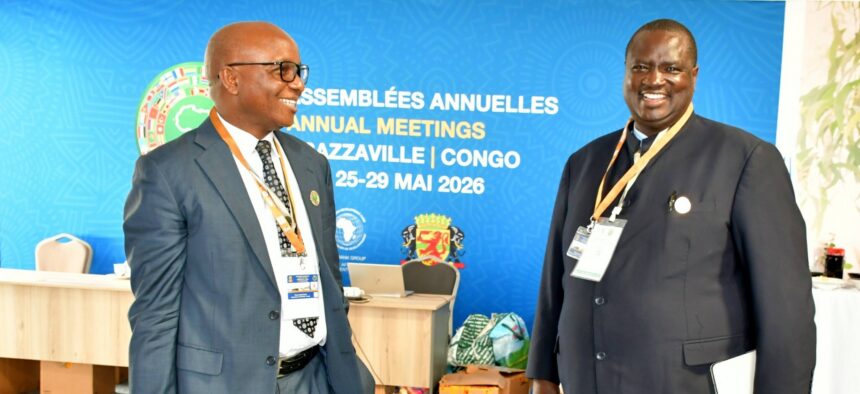
Zambia is using the 2026 Annual Meetings of the African Development Bank Group as a strategic platform to strengthen international partnerships, attract investment and reinforce its long-term economic transformation agenda. The meetings, taking place in Brazzaville in the Republic of Congo from May 25 to 29, have brought together policymakers, financial institutions, investors and development experts from across Africa and beyond. This year’s gathering is being held under the theme “Mobilising Africa’s Development Financing at Scale in a Fragmented World,” a focus that reflects growing concerns around global economic uncertainty and the need for sustainable financing solutions. Leading the Zambian delegation is Secretary to the Treasury Felix Nkulukusa, who says the country is positioning itself at the centre of important discussions on economic resilience, infrastructure financing and development cooperation. Zambia’s participation demonstrates the government’s determination to strengthen economic diplomacy and build confidence among global financial stakeholders.
The Zambian delegation includes senior government and financial sector officials such as Permanent Secretary for Economic Management and Investment Mulele Maketo Mulele, Bank of Zambia Deputy Governor for Operations Dr. Francis Chipimo and Bank of Zambia Director of Research Dr. Jonathan Chipili. Their participation highlights the importance Zambia attaches to coordinated economic management and strategic engagement with international institutions. Speaking at the start of the meetings, Mr. Nkulukusa said the country’s presence reflects a deliberate effort to deepen partnerships that support sustainable development, private sector growth and economic transformation. He explained that Zambia remains focused on strengthening investor confidence through macroeconomic stability, debt sustainability and productive investment. The government also sees these meetings as an opportunity to benchmark against other economies while learning from successful financing and development models. Through these engagements, Zambia aims to position itself as a reform-oriented and investment-ready economy capable of attracting long-term partnerships.
The African Development Bank meetings provide Zambia with an important opportunity to promote its national development priorities on a continental stage. Discussions during the conference are expected to focus on major issues affecting Africa’s economic future, including industrialisation, infrastructure financing, regional integration and financial resilience. Zambia intends to use the platform not only for statutory engagements with the African Development Bank Group but also for high-level bilateral meetings aimed at attracting investment into key sectors of the economy. According to Mr. Nkulukusa, the government’s objective is to create opportunities that translate into employment, productivity and shared prosperity for citizens. He stressed that economic diplomacy remains essential in ensuring that Zambia secures financing and partnerships that align with its long-term development goals. The meetings also allow the country to strengthen relationships with development finance institutions, investors and cooperating partners.
A major focus of Zambia’s investment strategy at the meetings is the promotion of productive sectors with strong growth potential. The government continues to position mining, agriculture and agro-processing, tourism, renewable energy and infrastructure development as critical sectors for expansion and job creation. Public-private partnerships are also being highlighted as an important mechanism for accelerating development while easing pressure on public finances. Zambia believes these sectors can support value addition, improve exports and strengthen economic resilience in the face of global uncertainty. By engaging directly with international investors and financing institutions, the country hopes to mobilise capital that can support sustainable industrial growth. The emphasis on long-term investment reflects the government’s broader strategy of moving beyond short-term economic recovery toward lasting structural transformation.
During the annual meetings, the Zambian delegation participated in the Southern Africa Group Constituency Meeting, where member countries discussed strategic priorities affecting the region and the future direction of the African Development Bank Group. Additional engagements scheduled throughout the conference include policy discussions on Zambia’s economic reform programme, debt restructuring process and infrastructure financing priorities. Climate resilience is also expected to feature prominently in the talks as African countries seek financing solutions to address environmental challenges and strengthen sustainable development. Zambia will further participate in a High-Level Ministerial Dialogue with the International Fund for Agricultural Development on the IFAD-14 replenishment process. This engagement aligns with the country’s continued focus on agricultural transformation, climate-smart farming, rural productivity and food security as central pillars of national development.
The programme also includes Governors’ Dialogues with the President of the African Development Bank, focusing on the institution’s Ten-Year Strategy for 2024 to 2033. These discussions are expected to examine issues such as infrastructure development, energy security, industrialisation and regional integration across the continent. Zambia is also participating in conversations around climate finance mobilisation, biodiversity financing, carbon markets and innovative financing instruments aimed at strengthening financial resilience. Other discussions will address the role of central banks in supporting economic stability and sustainable financing. The delegation is further expected to engage in a high-level dialogue under the Rome Process and Mattei Plan Financing Facility framework, where opportunities linked to strategic partnerships and future project pipelines will be explored. Particular attention is being given to development opportunities associated with the Lobito Corridor, which is increasingly viewed as a major regional infrastructure and trade project with long-term economic significance.
Mr. Nkulukusa concluded by emphasizing that sustained engagement with international financial institutions and global investors remains central to Zambia’s economic strategy. He noted that enhanced economic diplomacy is critical in positioning the country as competitive, reform-driven and ready for investment partnerships that support inclusive growth. Zambia’s participation at the African Development Bank Annual Meetings reflects a broader effort to secure financing, strengthen resilience and accelerate socio-economic transformation. The government believes that deeper cooperation with development partners will create stronger foundations for growth while supporting national priorities such as infrastructure, agriculture, industrialisation and energy development. As the meetings continue in Brazzaville, Zambia is expected to intensify its engagement with financial leaders and investors in pursuit of partnerships that can help shape the country’s long-term future.