





The Ministry of Commerce, Trade and Industry has praised the investment by Ecostream Farms in Kasama as a strong example of how private sector participation can transform rural economies in Zambia. The project, valued at K4.2 million, has been recognized for its contribution to job creation, skills development, food security and community empowerment. Government officials say the initiative reflects the growing impact of targeted investment promotion efforts aimed at attracting both local and international investors. The project has also been linked to Zambia’s broader strategy of expanding trade, increasing exports and strengthening industrial development. It stands as a practical case of how agriculture-based investments can deliver wide economic benefits beyond traditional sectors.
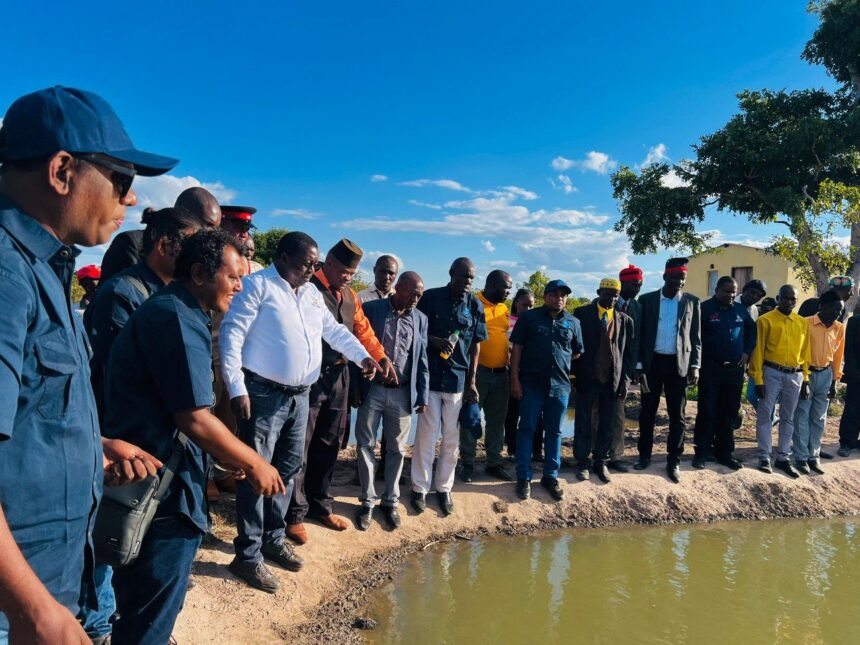
Ecostream Farms Limited has established an integrated farming system in Chifulo Village in Mungwi District, Northern Province, where it has developed more than 360,000 fingerlings alongside rice nurseries across its production fields. The investment covers 116 hectares of land, including 114 hectares of swamp area that has been converted into productive fish ponds. These ponds now number about 80 and are designed to support large-scale aquaculture production while also integrating rice cultivation. The company has positioned its operations as a mixed agricultural model that combines fish farming, rice production and poultry farming. This approach is intended to improve productivity while maximizing the use of available land and water resources in the area.
Permanent Secretary for Investments and Industrialization, Mr. Crusivia C. Hichikumba, highlighted that investments such as Ecostream Farms are essential for driving employment and economic growth. He explained that the government’s focus on investment promotion is rooted in the need to create jobs, generate wealth and increase revenue for public services. According to him, such revenue supports critical national priorities including free education, healthcare services and social protection programs. He emphasized that even though the Ecostream project is not heavily capital intensive like mining, its impact on local communities is significant and far-reaching. The project demonstrates how agriculture-led investments can directly support rural livelihoods while strengthening national food systems.
The Permanent Secretary further noted that the integrated model used by Ecostream Farms contributes directly to food self-sufficiency. The fish ponds are designed to operate alongside rice production systems that are projected to yield over five tons of rice per hectare within 110 days of planting. This combination of aquaculture and crop farming improves efficiency and reduces dependence on external food sources. It also enhances nutritional diversity by supporting both fish and rice production within the same ecosystem. Mr. Hichikumba added that the company’s planned expansion into feed production will further strengthen the agricultural value chain. This will create additional business opportunities and increase participation from local suppliers and small-scale producers.
The success of the investment has also been linked to Zambia’s recent international trade and investment promotion efforts, particularly a business mission to Bangladesh organized by the Ministry of Commerce, Trade and Industry. That mission helped promote Zambia’s investment opportunities abroad and generated international interest that contributed to the establishment of new partnerships. Officials say the Ecostream project is one of the tangible outcomes of these efforts, demonstrating how diplomatic and trade engagements can translate into real economic activity on the ground. The initiative has also strengthened Zambia’s visibility as an emerging destination for agricultural investment. It further highlights the importance of international cooperation in supporting domestic development goals.
Traditional leadership in Kasama has also played a key role in supporting the project’s implementation. Paramount Chief Chitimukulu and other local leaders were acknowledged for their cooperation in facilitating land access and encouraging community acceptance of the investment. A representative of the traditional leadership, Headman Davies Chansa, stated that the chief was pleased with the project and encouraged residents to work closely with the investors. This collaboration has helped create a stable environment for the project to grow and expand its operations. Local support has been identified as a key factor in ensuring the sustainability of agricultural investments in rural areas.
Ecostream Farms Chairman Andrew Mwamba explained that the company, which was incorporated in June last year, is a Zambian-registered entity with 78 percent Bangladeshi ownership and 22 percent Zambian ownership. He noted that the project has made rapid progress due to strong cooperation with local authorities and traditional leadership. During its construction phase, the project employed up to 150 local workers, providing temporary income opportunities for surrounding communities. The company currently maintains 16 permanent employees and six seasonal workers engaged in ongoing operations. Its integrated production model also includes plans for expansion into trading activities to address supply gaps in local markets.
The company has identified Kasama and surrounding districts such as Chinsali, Nakonde and Isoka as its primary markets for fish and rice products. With improved infrastructure, including the Kasama-Mwenda Road connecting to the Democratic Republic of Congo, Ecostream Farms is also preparing to expand into regional export markets. This expansion is expected to begin once production capacity increases in the coming year. The strategic location of the project positions it as a potential supplier for both domestic and cross-border demand. This development is expected to strengthen Zambia’s agricultural export potential while improving regional trade integration.
Local government officials have also welcomed the investment as a model for youth employment and skills transfer. Mungwi District Administrative Officer Mr. Remmy Kawimbe noted that the project is already creating jobs for young people in the area. He emphasized that exposure to modern fish farming and rice production techniques will help build practical agricultural skills among local communities. He further stated that as the project expands, more employment opportunities will be created in both aquaculture and crop farming. This is expected to improve household incomes and contribute to poverty reduction in the district. The project is also seen as a learning platform for future agricultural investments in the region.
The Ecostream Farms investment in Kasama represents a growing shift toward integrated, community-based agricultural development in Zambia. It demonstrates how private sector participation can support national priorities such as job creation, food security and rural industrialization. The collaboration between government, traditional leadership and private investors has been central to the project’s success. As operations continue to expand, the project is expected to deliver even greater economic benefits to surrounding communities and beyond. It stands as a clear example of how targeted investment in agriculture can transform local economies while contributing to Zambia’s long-term development goals.