




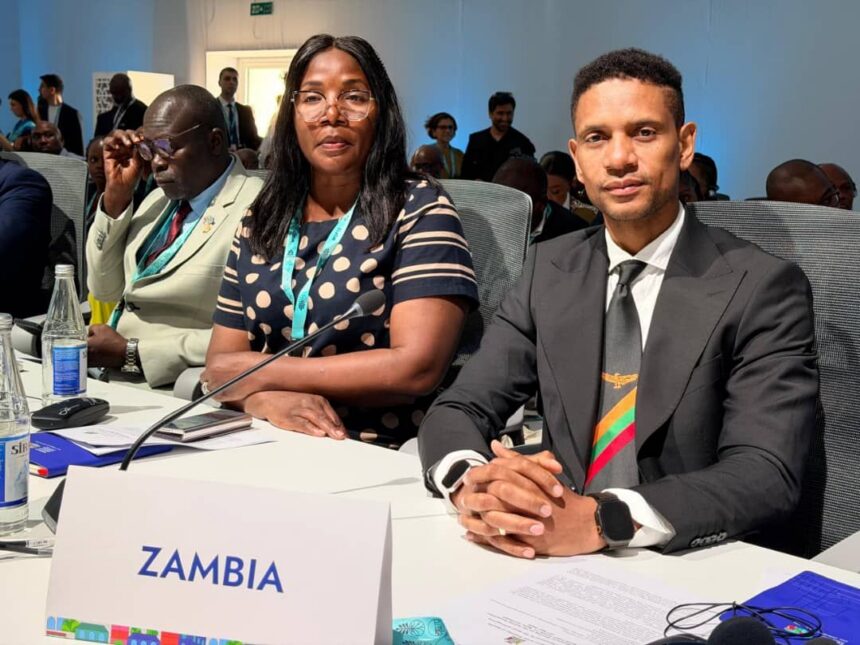
Zambia is taking an active role at the 13th Session of the World Urban Forum (WUF13), using the global platform to present its urban development progress and strengthen international partnerships. The forum is jointly organised by UN-Habitat and the Republic of Azerbaijan, and it is being held at the Baku Olympic Stadium from 17 to 22 May 2026. The event brings together policymakers, urban planners, researchers, private sector leaders and civil society groups from across the world. It focuses on one of the most urgent global challenges, the rising demand for adequate housing in fast growing cities. With nearly three billion people lacking access to affordable shelter, the discussions aim to reshape housing as a foundation for inclusion and sustainable development. The theme “Housing the world: Safe and resilient cities and communities” frames housing as a key driver of long term urban resilience.
The Zambian delegation is led by Ministry of Local Government and Rural Development Permanent Secretary for Administration Dr Gabriel Pollen. The team includes officials from the Ministry of Infrastructure and Housing Development, the Ministry of Finance and National Planning, the National Assembly of Zambia and several parastatal institutions. Their participation reflects a coordinated national effort to engage in global urban policy discussions. The delegation is contributing to sessions focused on housing reform, infrastructure planning and climate responsive urban growth. Zambia is also using the forum to present its ongoing reforms in urban governance and development coordination. The presence of multiple government sectors signals an integrated approach to addressing urban challenges at both policy and implementation levels.
A key focus for Zambia at WUF13 is the upgrading of informal settlements and expanding access to basic municipal services. Dr Pollen highlighted the importance of attracting investment to support projects such as the ongoing improvements in Kanyama Township, which aim to connect communities to structured and well serviced urban systems. The discussions also centre on building climate resilient settlements that can withstand flooding, heat stress and other environmental risks linked to rapid urban expansion. Zambia is exploring public private partnerships as a practical tool for financing infrastructure development and improving service delivery. These efforts reflect a wider strategy to reduce housing deficits while improving living conditions in both urban and peri urban areas.
Speaking during engagements on the sidelines of the forum, Dr Pollen described housing as a core human need that goes beyond physical shelter. He stated that housing represents dignity, health and economic opportunity, and must be treated as a central pillar of national development planning. He also noted that Zambia’s participation in WUF13 aligns with its commitment to the United Nations urban development agenda and the Sustainable Development Goals. The delegation used the platform to emphasise the importance of inclusive planning that ensures vulnerable communities are not left behind. His remarks reinforced Zambia’s position that sustainable urban growth requires both policy commitment and long term investment partnerships.
Zambia is also engaging in knowledge exchange sessions that highlight innovative urban development models from other countries. One example is Azerbaijan’s smart village approach, which integrates infrastructure planning into rural and peri urban development zones to support balanced growth. These discussions provide Zambia with practical insights that can be adapted to its own urbanisation context. The country is also scheduled to host a session on SDGs in Action, where it will showcase community driven initiatives and partnerships that support local implementation of development goals. This platform allows Zambia to demonstrate how national strategies can translate global frameworks into measurable local outcomes.
Zambia’s participation at WUF13 reflects a broader commitment to managing rapid urbanisation through structured planning, investment mobilisation and international cooperation. The engagements in Baku provide opportunities to strengthen partnerships that support housing delivery, infrastructure expansion and climate resilience. The forum also allows Zambia to benchmark its progress against global best practices while contributing its own experiences to the global dialogue. As urban populations continue to grow, the need for coordinated solutions becomes more urgent, especially in developing economies. Zambia’s involvement positions it to benefit from shared knowledge while advancing its national urban development priorities in a practical and targeted way.