




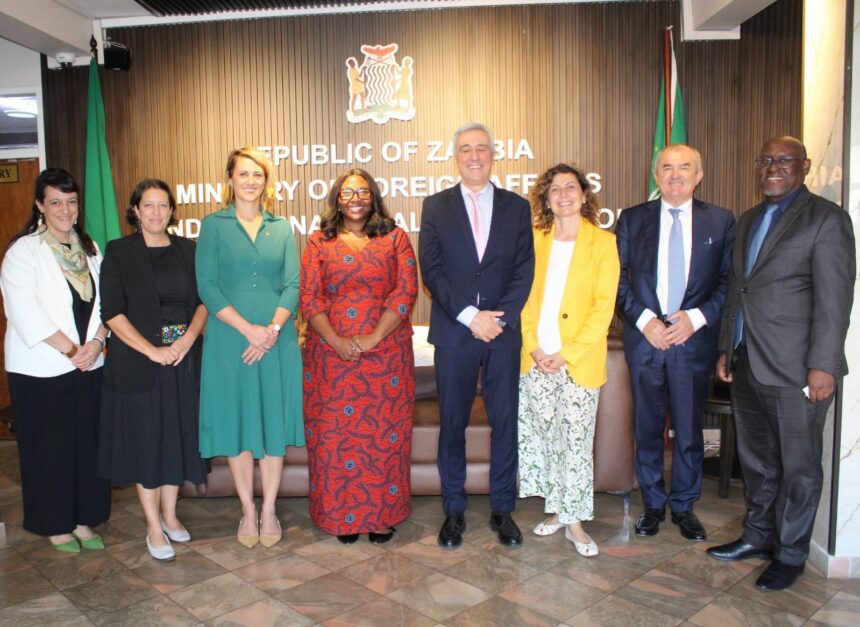
Zambia and the European Union have reaffirmed their commitment to stronger diplomatic and development cooperation during high level discussions held at Charter House. The meeting was hosted by Ms Etambuyu Anamela Gundersen, Permanent Secretary for International Relations and Cooperation, who received His Excellency Javier Niño Perez, Ambassador of the European Union Delegation to the African Union. He was accompanied by the European Union Ambassador to Zambia, Her Excellency Karolina Stasiak. The engagement focused on reinforcing Zambia EU relations through principles of mutual respect, equality and shared values. It also highlighted the importance of maintaining strong multilateral partnerships in a global environment marked by political and economic uncertainty. The discussions reflected a continued effort by both sides to deepen cooperation at regional and continental levels.
The talks placed strong emphasis on the importance of multilateralism as a tool for addressing global geopolitical challenges. Both delegations noted that international cooperation remains essential in responding to issues such as economic instability, security concerns and development inequalities. Zambia and the European Union acknowledged that collaboration between regions is increasingly important in shaping stable global systems. The discussions also highlighted the need for partnerships that go beyond traditional diplomacy and focus on practical outcomes. This includes strengthening economic ties, supporting governance systems and promoting sustainable development initiatives. Both parties expressed interest in ensuring that cooperation remains relevant and responsive to current global realities.
A key outcome of the meeting was the reaffirmation of the European Union’s support for Zambia during its tenure as Chair of the Southern African Development Community (SADC) in 2027. The EU ambassadors emphasized their commitment to supporting Zambia in fulfilling its regional leadership responsibilities. This support is expected to cover areas such as institutional strengthening, policy coordination and regional integration efforts. Zambia welcomed the assurance and expressed appreciation for the continued partnership. The Permanent Secretary noted that such support will be important in advancing regional priorities and ensuring effective leadership within SADC. The commitment reflects the long standing relationship between Zambia and the European Union.
Ms Gundersen used the meeting to highlight Zambia’s appreciation for ongoing cooperation with the European Union across multiple sectors. She emphasized that Zambia values partnerships that are based on equality and shared development goals. The Permanent Secretary also reaffirmed Zambia’s commitment to continued engagement with the EU in addressing regional and global challenges. She noted that collaboration remains essential in advancing economic development and strengthening institutional capacity. Zambia’s approach to international relations continues to prioritize partnerships that deliver tangible benefits for citizens. The discussions reinforced the importance of maintaining open and constructive dialogue between the two sides.
The meeting also focused on advancing broader regional and continental priorities that align with both Zambia’s development agenda and the European Union’s cooperation framework with Africa. These priorities include economic development, governance reform, regional integration and sustainable growth. Both parties agreed that stronger cooperation is needed to address shared challenges such as climate change, trade development and infrastructure gaps. The discussions emphasized the importance of aligning strategies to ensure maximum impact across the continent. Zambia and the EU also recognized the value of coordinated efforts in supporting peace, stability and prosperity in the region. This alignment is expected to strengthen long term collaboration.
Both delegations reaffirmed their commitment to ensuring that Zambia EU relations continue to evolve in response to changing global dynamics. The European Union representatives emphasized their continued willingness to work closely with Zambia on issues of mutual interest. They also highlighted the importance of maintaining strong diplomatic engagement through regular dialogue and cooperation. Zambia, in turn, expressed its readiness to deepen partnerships that contribute to national and regional development goals. The meeting demonstrated a shared understanding that cooperation must remain adaptive and forward looking. This approach is seen as essential in a rapidly changing global environment.
The engagement at Charter House reflects the broader strengthening of Zambia’s international relations strategy, which prioritizes collaboration with key global partners. The discussions between Zambia and the European Union highlight the importance of sustained diplomatic engagement in achieving development objectives. Both sides acknowledged that global challenges require coordinated responses that are grounded in partnership and trust. The meeting also reinforced the value of maintaining strong institutional relationships between Zambia and European diplomatic missions. These relationships continue to play a significant role in supporting Zambia’s development and regional leadership ambitions.
The meeting between Zambia and the European Union marked another step forward in strengthening long standing diplomatic and development ties. The discussions reaffirmed shared commitments to multilateralism, regional cooperation and sustainable development. The EU’s support for Zambia’s upcoming SADC Chairmanship in 2027 underscores the depth of the partnership and its strategic importance. Zambia’s appreciation and commitment to continued engagement reflect a stable and evolving relationship built on mutual interests. As global challenges become more complex, both sides recognize the need for stronger collaboration. The engagement at Charter House sets a clear path for continued cooperation that benefits Zambia, the region and the broader international community.