




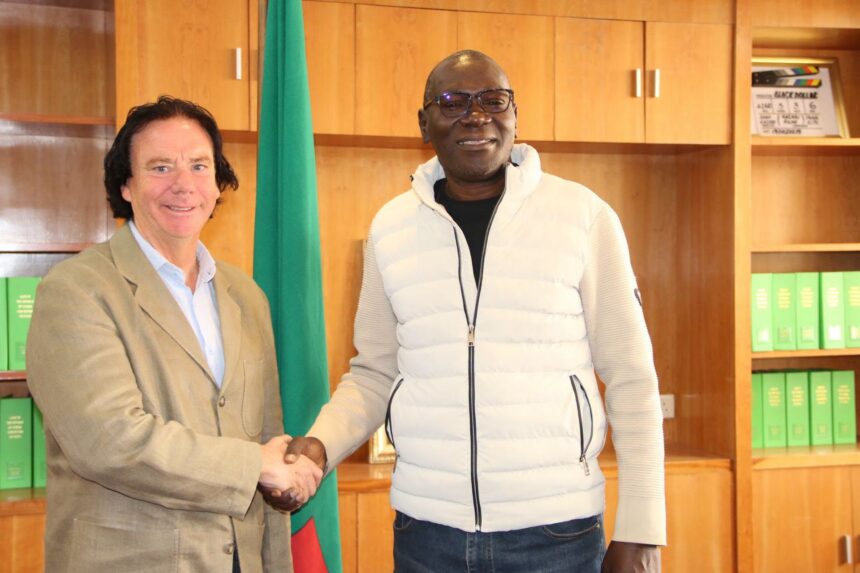
Zambia has been recognised as a global leader in the professionalisation of public relations, with countries around the world looking to learn from its legal and institutional reforms. The recognition was highlighted during a courtesy call by Global Alliance for Public Relations and Communication Management President Professor Justin Green on Information and Media Permanent Secretary Thabo Kawana. The engagement focused on Zambia’s progress in strengthening public relations as a professional discipline and an essential part of effective governance. The international recognition reflects growing confidence in Zambia’s approach to building a structured, transparent and accountable communication system. It also places the country among nations that are influencing the future development of public relations practices globally.
Professor Green described Zambia as a benchmark for public relations development, noting that several countries are studying the country’s approach. He highlighted that nations including Vietnam, Brazil, Canada, the United States, Indonesia, Australia and several European countries are drawing lessons from Zambia’s experience. According to Professor Green, Zambia’s success is linked to its strong legal framework governing public relations and its commitment to professional standards. These reforms have helped create a more organised environment where communication professionals can contribute meaningfully to public institutions and national development. Zambia’s progress demonstrates how effective regulation and professional structures can strengthen trust between governments, organisations and citizens.
The Global Alliance for Public Relations and Communication Management has recognised Zambia’s achievements as an example that can be shared with the international public relations community. The organisation represents more than 360,000 public relations practitioners, academics and students across 126 countries, giving the recognition significant global importance. Zambia has been invited to showcase its success story in professionalising public relations on an international platform. This opportunity will allow the country to share its experiences with communication experts, governments and institutions from around the world. It also provides a chance to highlight the role of public relations in promoting transparency, accountability and effective public engagement.
Zambia will play a prominent role at the World Public Relations Forum scheduled to take place in Abuja, Nigeria, in November. The event is expected to bring together more than 3,000 delegates from governments, international organisations, academic institutions and the global communication industry. President Hakainde Hichilema is expected to deliver a keynote address at the forum, where Zambia’s approach to public relations will receive international attention. Professor Green invited Thabo Kawana to participate in the forum and contribute to discussions on the future of the profession. The invitation reflects Zambia’s growing influence in shaping conversations around communication standards and professional development.
Kawana accepted the invitation and confirmed that the Ministry of Information and Media will participate in the World Public Relations Forum alongside President Hakainde Hichilema. His participation will provide an opportunity for Zambia to demonstrate how strategic communication can support government transparency and public confidence. The ministry has continued to emphasise the importance of professional communication systems that allow citizens to access accurate and timely information. Zambia’s involvement in the forum will also strengthen partnerships with international communication bodies. It will further position the country as a contributor to global discussions on public relations and governance.
Kawana reaffirmed the government’s commitment to strengthening public relations and strategic communication as important tools for transparency, accountability and national development. He explained that professional communication plays a critical role in ensuring that citizens understand government programmes, policies and decisions. Strong public relations systems can also help institutions respond effectively to public concerns and improve engagement with communities. The government’s focus on communication reforms reflects an understanding that access to reliable information is central to democratic participation. These efforts have contributed to Zambia’s growing reputation as a country that values professional and citizen-focused communication.
Among the key milestones highlighted by Kawana was the deployment of Principal Public Relations Officers across government institutions. This move has strengthened communication structures and ensured that public relations professionals have a more defined role within government operations. Another major achievement was the enactment of the Access to Information Act, which has enhanced public access to information and improved government communication practices. The legislation provides a framework for greater openness and supports citizens’ ability to seek information from public institutions. Together, these developments have contributed to a stronger communication environment that aligns with international standards.
The Zambia Institute of Public Relations and Communication (ZIPRC) has also recognised the importance of these reforms in advancing the profession. Former ZIPRC President Irene Chipili commended the government’s continued support for public relations and communication professionals. She noted that Zambia’s progress is attracting international interest, with countries such as Namibia seeking to benchmark their own public relations frameworks against Zambia’s model. This interest highlights the wider impact of Zambia’s reforms beyond its borders. It also demonstrates how improvements in one country’s communication system can provide valuable lessons for others.
The professionalisation of public relations in Zambia represents a broader effort to improve the relationship between institutions and the public. Effective communication allows governments and organisations to explain decisions, share important information and build trust with communities. Zambia’s reforms show the importance of establishing clear professional standards, legal frameworks and institutional support for communication practitioners. As more countries study Zambia’s approach, the country’s experience could contribute to shaping public relations practices across different regions. The recognition from the Global Alliance reinforces the value of Zambia’s continued investment in communication development.
The international attention received by Zambia reflects the progress made in creating a professional, transparent and citizen-centred communication system. Through legal reforms, institutional changes and support for public relations professionals, Zambia has created a model that is gaining recognition worldwide. The country’s participation in the World Public Relations Forum will provide a platform to share its achievements and strengthen global partnerships. Continued collaboration with international organisations will help Zambia further develop its communication sector and promote best practices. Zambia’s growing reputation as a leader in public relations demonstrates the impact of sustained efforts to strengthen transparency, accountability and public engagement.