







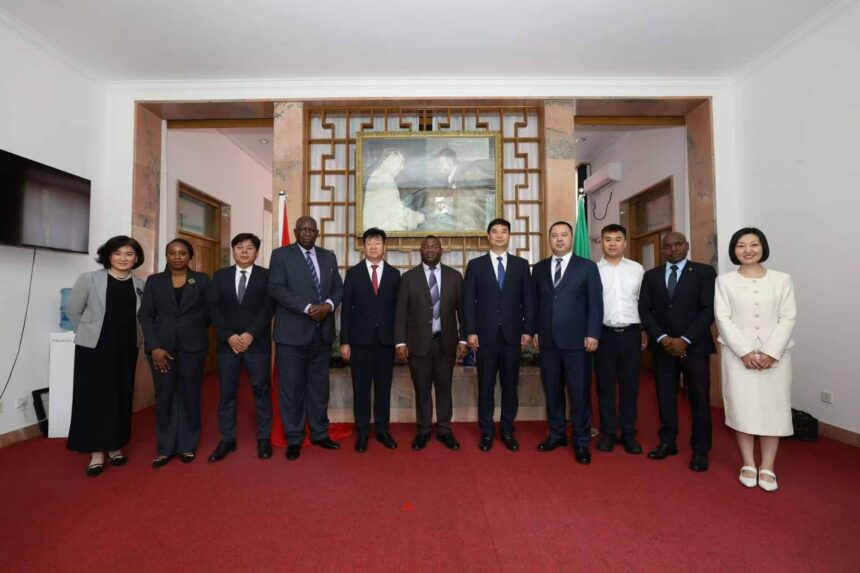
Zambia has reaffirmed its commitment to renewable energy development, industrialisation and strategic investment cooperation with China as part of its broader economic transformation agenda. The engagement took place in Beijing, China, where Zambia’s Ambassador to the People’s Republic of China Ivan Zyuulu held high level discussions aimed at expanding investment flows into key growth sectors. The talks focused on renewable energy, mining and industrial development as priority areas for long term cooperation. The Zambian Government continues to position itself as an investment friendly destination with strong policy support for foreign direct investment. The discussions also reinforced Zambia’s commitment to economic diversification and value addition across its resource base.
During the meeting held at the Embassy of the Republic of Zambia in Beijing, Ambassador Zyuulu engaged representatives of China Pingmei Shenma Holding Group on potential investment opportunities. The company delegation, led by Deputy General Manager Mr. Li Qing Ming, explored areas of cooperation in energy systems, mining development and advanced manufacturing. The Ambassador emphasized Zambia’s strategic location and resource endowment, particularly in copper, lithium and other critical minerals. These minerals are increasingly important in global supply chains for electric vehicles and renewable energy technologies. He also highlighted that Zambia’s policy environment is designed to support long term investor confidence and sustainable industrial growth.
A key highlight of the discussions was Zambia’s growing role in the global clean energy transition. Ambassador Zyuulu noted that the country offers strong potential in renewable energy development, especially solar power, due to its natural conditions and rising domestic demand. He encouraged investors to take advantage of opportunities in energy generation, transmission infrastructure and industrial power solutions. The Zambian Government continues to promote private sector participation in energy projects as part of its national development strategy. This approach aims to increase electricity access while supporting industrial expansion and job creation.
The meeting also underscored the impact of China’s evolving trade policies on African economies. The Ambassador referenced China’s zero tariff policy for African countries, which became effective on 1 May 2026. This policy is expected to enhance market access for Zambian products and stimulate export growth. It also creates new opportunities for manufacturing and agro processing industries within Zambia. Officials noted that improved trade conditions will support industrial development and strengthen bilateral economic ties between the two countries.
China Pingmei Shenma Holding Group outlined its investment plans in renewable energy and new materials, including solar energy systems, lithium batteries, power storage cells and grid technologies. The company confirmed that following a visit to Zambia in January 2026, it signed a Memorandum of Understanding with Zambia’s Ministry of Energy for a 100 megawatt solar power project in Southern Province. This project marks an important step in expanding clean energy infrastructure in Zambia. The company further revealed plans to scale up investment to a larger 1,000 megawatt renewable energy project in the future. These developments signal growing investor confidence in Zambia’s energy sector.
The delegation also expressed interest in expanding cooperation beyond energy into mining and related industrial sectors. Zambia’s rich mineral base continues to attract international investors seeking long term supply chain security for critical resources. The discussions highlighted opportunities for value addition within the mining sector rather than simple raw material export. This aligns with Zambia’s national strategy to promote industrialisation and local processing of minerals. Both sides agreed on the importance of continued engagement to turn investment discussions into concrete projects.
Zambia’s ongoing engagement with Chinese investors reflects a broader strategy to accelerate renewable energy expansion, industrial growth and economic diversification. The country is actively seeking partnerships that support infrastructure development and technological advancement. The proposed large scale renewable energy projects are expected to play a key role in improving electricity supply stability and supporting industrial demand. As investment cooperation deepens, Zambia aims to strengthen its position as a competitive and reliable destination for global capital. The discussions in Beijing mark another step toward building long term economic partnerships that support sustainable development and shared prosperity.