





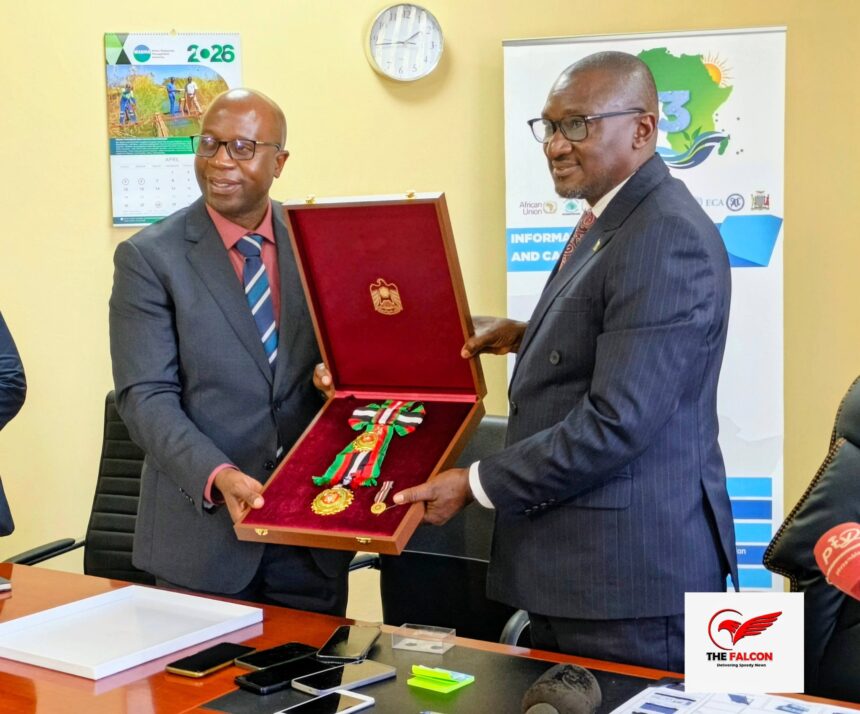
Minister of Water Development and Sanitation Collins Nzovu has been honoured with the First-Class Order of Zayed II, a major international recognition awarded by the President of the United Arab Emirates. The award acknowledges Zambia’s influential role in shaping key outcomes at COP28 in Dubai, particularly in advancing global climate finance mechanisms. This recognition highlights the country’s growing presence in international climate diplomacy and its contribution to addressing the global climate crisis. It also reflects the increasing trust placed in Zambia as a voice for vulnerable nations affected by climate change. The honour marks a significant milestone in Zambia’s environmental and diplomatic engagement on the world stage.
The award is closely linked to Zambia’s contribution to the establishment and operationalisation of the Loss and Damage Fund, a landmark global initiative aimed at supporting countries most affected by climate-related disasters. This fund is designed to provide financial assistance to developing nations that face severe impacts such as droughts, floods, and extreme weather events. Zambia played an active role in negotiations that pushed for the creation of a structured and accessible financing mechanism. The recognition of Collins Nzovu underscores the country’s leadership in advocating for fair climate compensation systems. It also demonstrates how diplomatic engagement can translate into tangible global policy outcomes.
Speaking during a briefing at the Ministry of Water Development and Sanitation, Collins Nzovu reflected on Zambia’s journey through key climate negotiations starting from COP26 in Glasgow in 2021. At that time, he served as Minister of Green Economy and Environment and was elected Chair of the African Group of Negotiators at ministerial level. In that role, he championed the need for a dedicated financing mechanism specifically focused on loss and damage caused by climate change. Although COP26 only resulted in a framework for continued dialogue under the Glasgow Climate Pact, it laid the foundation for more concrete progress in subsequent negotiations. His leadership during this period helped position Zambia as a consistent advocate for climate justice.
Significant progress was achieved at COP27 in Sharm el-Sheikh, Egypt, where global parties agreed to formally establish the Loss and Damage Fund. This marked a turning point in international climate negotiations, as vulnerable countries had long called for such a mechanism to address irreversible climate impacts. Zambia’s active participation in these discussions contributed to building momentum and consensus among negotiating blocs. The agreement reached at COP27 provided the structural foundation needed to move toward full implementation. This development was seen as a major victory for developing nations seeking equitable climate support.
The progress was further solidified at COP28 in 2023 in Dubai, where the Loss and Damage Fund was officially operationalised following the adoption of recommendations from the Transitional Committee. This step transformed the fund from a policy agreement into a functioning financial mechanism capable of receiving pledges and disbursing support. Zambia played a key role in ensuring that the final structure reflected the needs of vulnerable countries. The operationalisation of the fund represents one of the most important outcomes in recent climate diplomacy. It also reinforces Zambia’s position as a credible and influential participant in global negotiations.
Collins Nzovu attributed the success of these efforts to the leadership of President Hakainde Hichilema, whose administration prioritised climate financing and green economic transformation. He noted that Zambia’s strategic focus on carbon markets, sustainable development, and environmental resilience strengthened its negotiating position. The coordinated approach between political leadership and technical teams ensured consistency across multiple COP sessions. This alignment allowed Zambia to effectively advocate for long-term solutions that benefit vulnerable populations. It also demonstrated the importance of national unity in achieving international policy success.
He further acknowledged the contribution of technical experts and cooperating partners who supported Zambia’s engagement throughout the negotiation process. Special recognition was given to the Ministry’s technical team, including Permanent Secretary Douty Chibamba, for their role in advancing policy positions and coordinating negotiations. Their efforts helped mobilise over US$800 million in pledges toward climate-related initiatives, reinforcing Zambia’s credibility in global climate finance discussions. This financial commitment highlights the trust placed in Zambia’s ability to manage and implement climate-related programs. It also strengthens the country’s capacity to respond to environmental challenges at both national and community levels.
The awarding of the First-Class Order of Zayed II to Collins Nzovu marks a significant moment in Zambia’s diplomatic and environmental journey. It reflects not only individual leadership but also collective national effort in shaping global climate outcomes. Zambia’s role in establishing the Loss and Damage Fund demonstrates how consistent engagement and strategic negotiation can influence international policy. As climate challenges continue to intensify, the recognition highlights the importance of sustained leadership and collaboration. It also positions Zambia as a key contributor to future global climate action and environmental governance.