







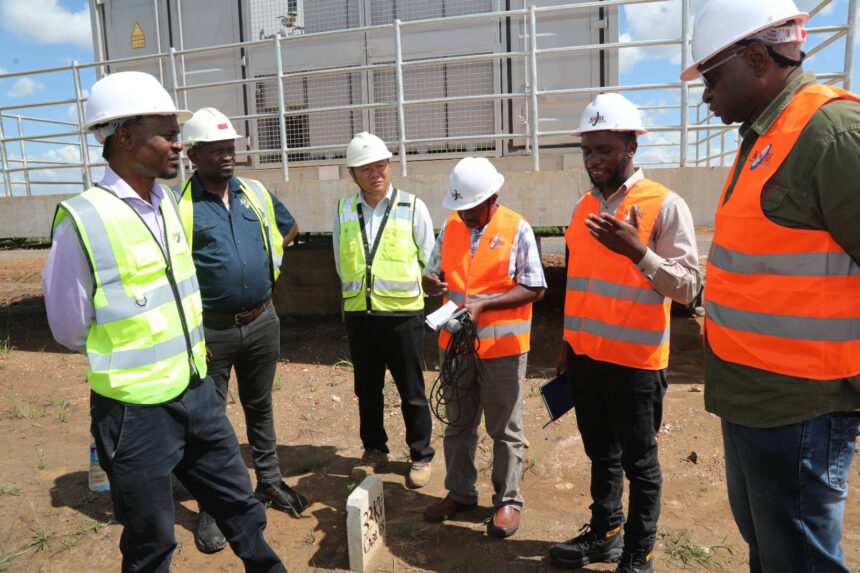
Yesterday, Zambia reinforced its commitment to renewable energy as Information and Media Principal Public Relations Officer Shamwinda Tembo toured the Chisamba Solar Plant. This visit highlighted the Government’s strategic focus on clean and sustainable energy, emphasizing the importance of expanding access for all citizens. The Central Province Solar Plant’s expansion is a landmark project that signals Zambia’s dedication to reducing reliance on non-renewable energy sources. By doubling the plant’s capacity from 100 megawatts to 200 megawatts, the initiative aims to provide affordable electricity to households and businesses while strengthening national energy security. This project represents a convergence of technological innovation, economic growth, and environmental responsibility, underscoring Zambia’s leadership in renewable energy development.
The expansion adds 100 megawatts to the existing capacity, positioning the plant as one of the key contributors to Zambia’s clean energy goals. ZESCO Principal Engineer Wakina Nchimba reported that the project is currently 32 percent complete, with a targeted finish date of August 2026. Procurement processes are fully complete, with 62 percent of solar modules and 42 percent of screw piles already delivered on site. These developments not only enhance infrastructure but also create significant employment opportunities for local communities. The initiative also focuses on knowledge transfer, ensuring that local engineers and technicians gain expertise in solar energy technologies, which aligns with the presidential directive to add 1000 megawatts of solar power nationwide.
Beyond energy generation, the Chisamba Solar Plant expansion drives social and economic development across the Central Province. By providing reliable and affordable electricity, businesses can expand operations, households can access modern energy services, and public institutions can operate more efficiently. The project also encourages innovation in renewable energy solutions and fosters environmental stewardship by reducing greenhouse gas emissions. With sustainable energy at its core, the plant supports Zambia’s broader vision of a green economy while addressing the pressing need for energy diversification. This approach demonstrates how infrastructure development can simultaneously promote economic resilience and environmental protection.
The government’s focus on clean energy reflects a long-term strategy to strengthen national energy security while supporting sustainable growth. The Chisamba project not only reduces the country’s dependence on fossil fuels but also positions Zambia as a regional leader in renewable energy deployment. The ongoing expansion is a model for integrating energy development with job creation, technology transfer, and community engagement. By aligning infrastructure projects with environmental sustainability, Zambia sets a benchmark for balancing economic growth with ecological responsibility. The plant exemplifies how strategic investments in renewable energy can deliver tangible benefits across multiple sectors of society.
The expansion of the Chisamba Solar Plant represents a pivotal step in Zambia’s pursuit of a sustainable energy future. By doubling its capacity and integrating advanced solar technologies, the project enhances energy security, drives economic and social development, and promotes environmental sustainability. The government’s commitment to renewable energy, reinforced through leadership visits and project oversight, showcases Zambia’s determination to achieve a greener economy. As the plant progresses toward completion in 2026, it will serve as a cornerstone for national energy policy, illustrating the transformative potential of clean energy initiatives.