







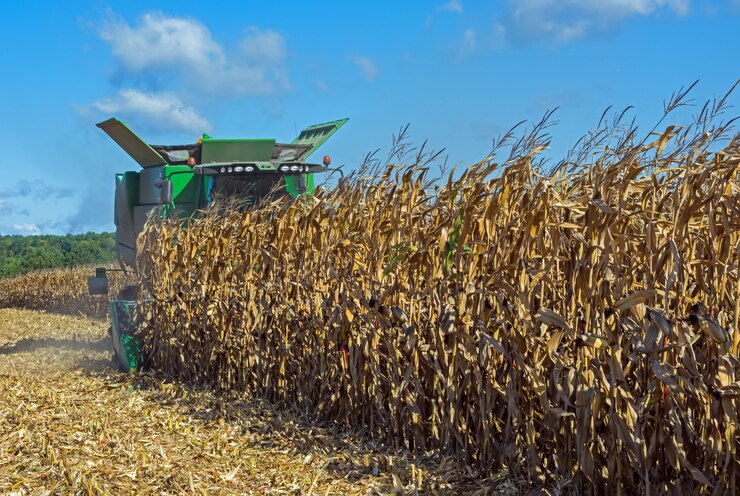
The Zambian Cabinet has approved the export of 500,000 tonnes of surplus maize to other countries, a policy shift aimed at leveraging the country’s bumper harvest to generate economic benefits. Agriculture Minister Mtolo Phiri announced the decision, citing objectives to boost foreign exchange earnings, expand market opportunities for local farmers, and reinforce Zambia’s role as a reliable regional food supplier.
Minister Phiri emphasised that the move followed a careful review of national food security. The Food Reserve Agency confirmed that maize stocks are sufficient to meet domestic consumption even with the export quota. He assured that exports will not threaten local supply and that measures will be in place to prevent shortages and price spikes.
The approval follows a strong agricultural season, driven by favourable rainfall patterns and government support programmes. Authorities identified maize as a critical export crop capable of generating foreign currency inflows, supporting Zambia’s efforts to strengthen its balance of payments.
The government plans to involve smallholder farmers in the supply chain to ensure benefits reach grassroots producers. Minister Phiri explained that arrangements will allow these farmers to access export contracts, earning higher returns than from domestic sales alone.
Regional trade partners have welcomed the move. Zambia’s surplus maize is expected to supply countries facing shortages, particularly in southern Africa where drought has affected production. This step could expand Zambia’s market share and strengthen long-term trade relationships.
Economists highlight potential ripple effects on the wider economy. Increased foreign exchange earnings may stabilise the kwacha, support essential imports, and reduce external debt pressures. However, experts caution that exports must be balanced with domestic needs to avoid shortages and price increases.
Concerns have been raised about urban food security, logistics, and infrastructure readiness. Exporting 500,000 tonnes requires coordinated transport, storage, and border clearance. The government is working with private sector partners, including transporters and millers, to ensure efficient grain movement.
Regional food security considerations are also under review. Experts recommend bilateral agreements to secure reciprocal benefits, such as access to other essential commodities if Zambia faces future supply challenges.
Minister Phiri noted that the maize export policy forms part of a broader strategy to transform Zambia’s agricultural sector into a commercially competitive industry. The approach aims to make agriculture a key driver of economic growth and poverty reduction.
The initiative’s success depends on disciplined implementation, transparent regulation of export licences, and fair participation of both large-scale and small-scale farmers. If executed effectively, the policy could serve as a model for export-led strategies in other agricultural commodities, supporting a stronger, diversified Zambian economy.
The announcement has injected optimism among producers and traders, many of whom have long advocated for such a policy. As the first consignments of maize are prepared for shipment, stakeholders will monitor closely how the government balances export opportunities with domestic food security.