




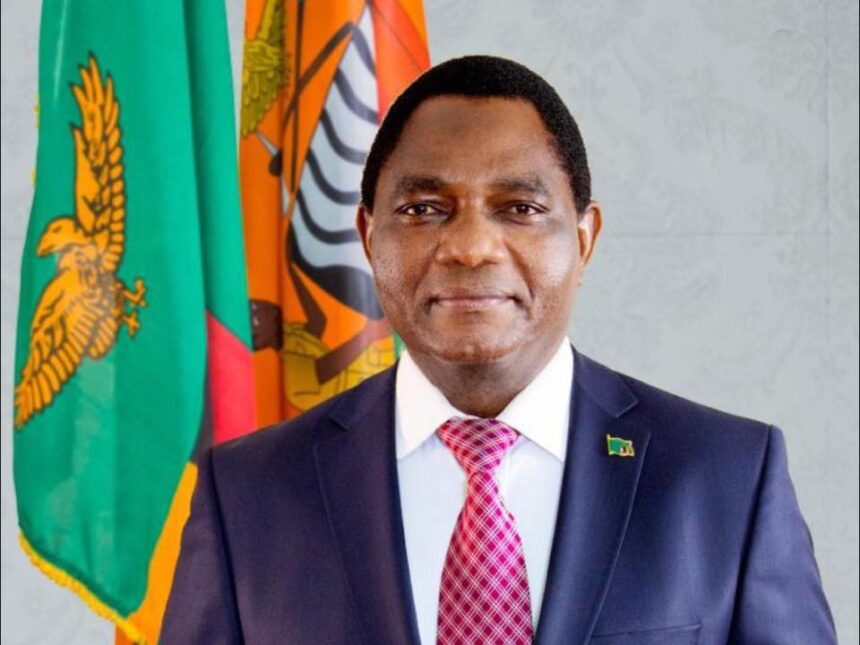
In a landmark diplomatic meeting held at State House, President Hakainde Hichilema has called for a fundamental reset in the relationship between Zambia and the United States, urging both countries to move beyond the traditional aid-based framework toward a commercially driven partnership focused on investment, technology transfer, joint ventures, and shared economic growth.
Meeting with U.S. Ambassador Mike Gonzalez and his delegation, President Hichilema acknowledged the longstanding and warm historical ties between Zambia and the United States but emphasized the urgent need for a more structured and results-oriented collaboration. “This is not about mourning the past,” President Hichilema said. “We are saying the coin has two sides. What can we do to find convergence between the new thrust in America and our own desire to grow the economy?”
While President Hichilema expressed gratitude for the significant development assistance Zambia has received over the years—including vital U.S. support in debt restructuring—he stressed that the next phase of Zambia-U.S. relations must focus on measurable outcomes such as job creation, industrialization, and inclusive growth. He outlined four priority areas for this redefined engagement: mobilizing fairly priced capital, accessing appropriate technology, forming joint ventures with American firms, and promoting local value addition in key sectors, particularly mining.
“We don’t want the old model where foreign direct investment comes in and holds 100 percent ownership,” the President noted. “We want partnerships at equity and management levels. We want the best skills, even from outside, if they help us employ a hundred Zambians.”
Highlighting Zambia’s strengthened macroeconomic position, President Hichilema pointed to recent milestones, including the reopening of previously closed mining shafts, the revival of free education policies benefiting two million children, and an anticipated copper output approaching one million tonnes annually. “Compare that to where we were four years ago,” he said. “We had minus 2.8 percent GDP. This year, we believe we can whisper to six percent. That’s where jobs are, that’s where business opportunities are, and that’s where treasured revenue is.”
He acknowledged the important role played by U.S.-anchored institutions like the IMF and World Bank in Zambia’s debt restructuring, which created fiscal space for development initiatives. “Debt relief was not an end in itself, but a platform for building a stronger, fairer economy,” he emphasized.
On governance, President Hichilema stressed that Zambia’s democratic achievements must translate into economic benefits for its citizens. “Democracy must deliver results. These results must be seen in jobs, in the economy, and in business opportunities—not just for foreign investors, but for Zambian citizens and local businesses.”
He further called for greater agility from U.S. corporations in their decision-making processes, recognizing the fast pace of the global economy. “We are a small economy in a hurry,” he said. “We understand U.S. corporations have structures and stock exchange rules, but we are asking how can those decisions be made faster so we can grow together?”
President Hichilema underscored the importance of mutual respect in diplomatic and commercial engagements. “You diplomats must respect that we are doing what is supposed to be done for the people of Zambia first. In doing that, we meet in the middle where American interests align with Zambian interests.”
Closing the meeting, the President expressed gratitude to Ambassador Gonzalez for the timely engagement, highlighting it as a testament to the depth of the partnership and the shared intention to elevate cooperation.
President Hichilema’s clear message sets the stage for a new chapter in Zambia-U.S. relations—one not defined by donor-recipient dynamics but by mutual ambition, equitable partnerships, and tangible results. This bold reset could unlock new opportunities for economic transformation, technological advancement, and sustainable development for Zambia, while offering American businesses fruitful avenues for growth and collaboration.
As Zambia continues on its path of economic recovery and industrial growth, the call for a commercially driven partnership with the United States signals a promising future built on shared prosperity and strategic cooperation.