






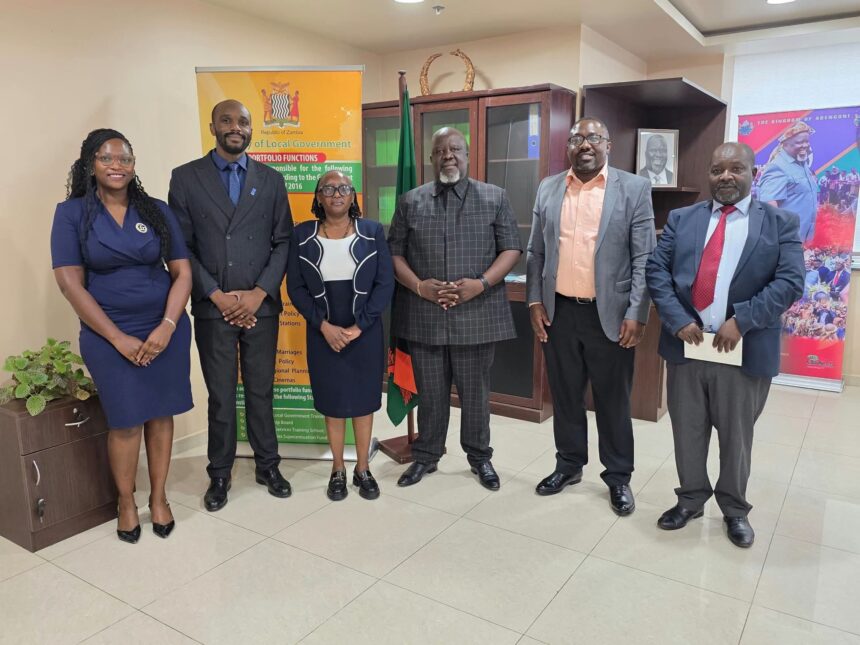
The Local Government Association of Zambia (LGAZ) has held a courtesy meeting with the Minister of Local Government and Rural Development, Hon. Gift Sialubalo, MP, to discuss issues surrounding local governance, decentralisation and improved service delivery across the country. The meeting took place yesterday at the Ministry of Local Government and Rural Development and provided an opportunity for the Association and the Minister to engage on matters affecting local authorities. The discussions highlighted the importance of maintaining strong working relationships between the Ministry and local government institutions. Both institutions recognise that effective local governance is essential to national development because local authorities play a direct role in addressing the needs of communities. The engagement also reaffirmed the need for continued cooperation to strengthen local government administration and improve the delivery of public services throughout Zambia.
The courtesy call provided an important platform for the Local Government Association of Zambia to engage with the Minister on matters affecting councils and local authorities across the country. Local authorities are responsible for providing essential services that directly influence the daily lives of citizens. These responsibilities include maintaining local infrastructure, managing public spaces, supporting sanitation programmes and facilitating various community development activities. Their effectiveness depends on sound administration, adequate resources and strong institutional support. Regular engagement between LGAZ and the Ministry is therefore important in identifying challenges, discussing possible solutions and strengthening the overall performance of local government institutions.
Decentralisation remains a key component of Zambia’s efforts to improve governance and bring public services closer to the people. The approach seeks to strengthen the role of local authorities and ensure that communities have greater opportunities to participate in decisions affecting their development. Through decentralisation, local institutions can become more responsive to the specific needs and priorities of the communities they serve. This is particularly important because development challenges differ across districts, depending on population, infrastructure, economic activities and available resources. Strong cooperation between the Ministry and LGAZ can help ensure that decentralisation continues to deliver practical benefits to communities.
The Ministry of Local Government and Rural Development plays an important role in providing policy direction and oversight for local governance in Zambia. Its relationship with local authorities is essential to ensuring that government policies and development programmes are implemented effectively at community level. Meanwhile, the Local Government Association of Zambia represents the interests of local authorities and provides a platform for addressing issues affecting council operations. Through its engagement with the Ministry, LGAZ can communicate the concerns and priorities of local authorities while contributing to discussions on policy and institutional improvements. This relationship creates opportunities for better coordination and a shared understanding of the challenges facing the local government sector.
Improving service delivery remains one of the most important responsibilities of local authorities. Citizens expect councils to provide efficient services, maintain public infrastructure and respond to local development needs. However, delivering these services requires effective planning, financial management, skilled personnel and appropriate institutional capacity. Local authorities must also operate transparently and remain accountable to the communities they serve. Continued engagement between LGAZ and the Ministry can help identify areas where councils require additional support and encourage practical measures to improve their performance. Strengthening local government institutions ultimately contributes to better living conditions and more responsive public administration.
The engagement also highlights the importance of cooperation in advancing the decentralisation agenda. Successful decentralisation requires more than transferring responsibilities to local institutions. It also requires the development of administrative capacity, effective financial systems and clear accountability arrangements. Local authorities must have the necessary institutional support to carry out their responsibilities and respond to the expectations of residents. The Ministry and LGAZ therefore have complementary roles in creating an environment where councils can perform effectively. Maintaining regular dialogue can help strengthen these efforts and support the consistent implementation of decentralisation policies across the country.
Strong local governance is also closely connected to economic and social development. Well-functioning councils can help create a better environment for businesses, support local economic activities and facilitate infrastructure development. Efficient waste management, improved sanitation, properly maintained roads and effective town planning all contribute to more organised and productive communities. Local authorities also play an important role in identifying development priorities and supporting initiatives that improve the welfare of residents. Strengthening their capacity can therefore produce benefits that extend beyond public administration and contribute to broader national development objectives.
The Local Government Association of Zambia’s engagement with Hon. Gift Sialubalo also reinforces the importance of maintaining open communication between Government and institutions representing local authorities. Constructive dialogue allows both parties to discuss challenges affecting the sector and identify areas where collaboration can produce meaningful results. It also provides an opportunity to align institutional priorities with the broader national development agenda. Such partnerships are particularly important in ensuring that government policies translate into practical improvements at district and community levels. A coordinated approach can help strengthen public confidence in local institutions and improve the quality of services delivered to citizens.
The courtesy call marks another opportunity to strengthen the working relationship between the Ministry of Local Government and Rural Development and the Local Government Association of Zambia. As the country continues pursuing decentralisation and improved public service delivery, the role of local authorities will remain central to achieving development objectives. Stronger councils, effective administration and closer cooperation between national and local institutions are necessary for building responsive communities. The engagement reaffirmed the shared importance of collaboration in addressing local governance challenges and supporting the development of local authorities across Zambia. Continued partnership between the Ministry and LGAZ will be essential in ensuring that decentralisation delivers meaningful results and that communities benefit from more efficient, accountable and effective local government services.