



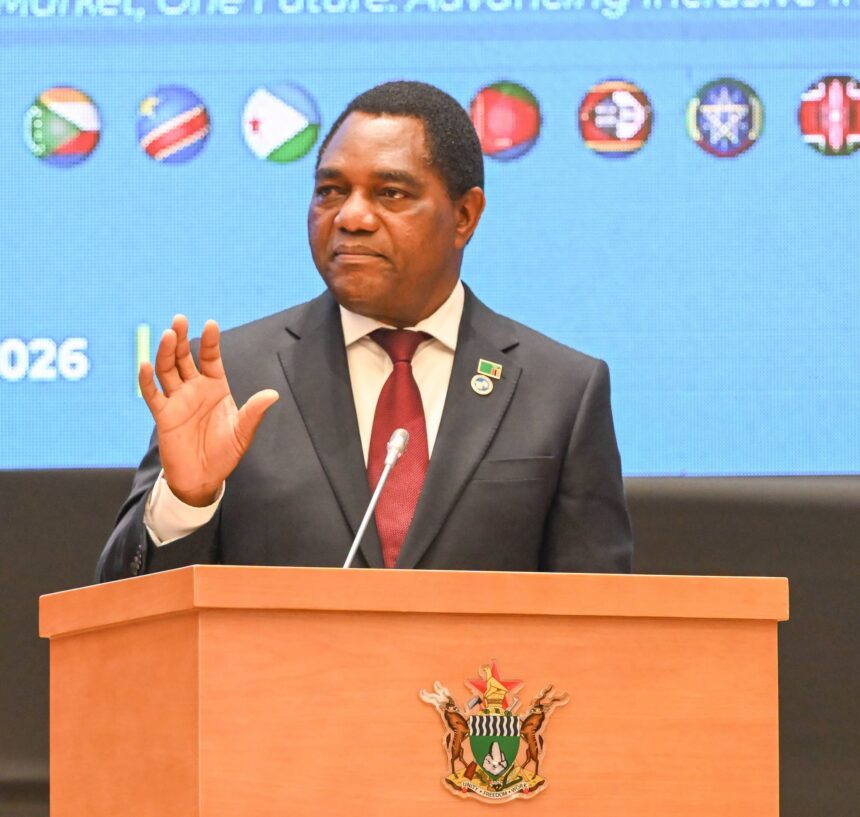
Zambia has called on member states of the Common Market for Eastern and Southern Africa (COMESA) to strengthen trade among themselves, create more jobs and expand business opportunities across the region. Speaking at the 25th COMESA Heads of State and Government Summit in Harare, Zimbabwe, President Hakainde Hichilema urged the 21 member states to prioritise regional trade before seeking opportunities in other markets. His address focused on the importance of economic cooperation, regional integration and the creation of sustainable opportunities for businesses and citizens. The summit also marked Zambia’s assumption of the COMESA Vice-Chairperson role, giving the country an opportunity to contribute to discussions on the region’s economic priorities. President Hichilema’s message placed greater intra-regional trade at the centre of efforts to promote economic growth and improve livelihoods across Eastern and Southern Africa.
The call for increased trade among COMESA member states reflects the importance of regional markets in supporting economic development. When countries trade more with one another, businesses can reach new customers, expand production and explore opportunities beyond their domestic markets. Stronger regional trade can also help companies reduce their dependence on a limited number of export destinations and build more resilient supply chains. For Zambia, closer economic cooperation with neighbouring and regional economies can create opportunities for producers, manufacturers, farmers and service providers. President Hichilema emphasised that prioritising trade within COMESA could contribute to job creation and open up new opportunities for businesses across the member states.
COMESA brings together 21 member states with the shared objective of promoting regional economic integration and facilitating trade and investment. The regional bloc provides a framework for countries to cooperate on issues affecting commerce, industrial development and cross-border economic activity. However, the benefits of regional integration depend on how effectively governments and businesses use the opportunities available to them. Improving trade links requires attention to practical challenges such as transport costs, border procedures, customs administration and differences in regulatory requirements. Greater cooperation in these areas can make it easier for goods and services to move between countries and help businesses compete more effectively. President Hichilema’s appeal therefore highlights the need to turn regional cooperation into tangible economic benefits for citizens.
For Zambia, stronger COMESA trade ties could support economic diversification by helping local businesses access a wider regional customer base. Farmers and agricultural processors may find additional markets for their products, while manufacturers could expand sales and increase production as demand grows. Small and medium-sized enterprises could also benefit from improved access to regional supply chains and new commercial partnerships. Increased business activity can create demand for workers in production, transportation, warehousing, retail and other supporting services. These outcomes are not automatic, as businesses also need reliable infrastructure, access to finance, competitive production costs and predictable trade rules. Nevertheless, deeper regional trade offers an important avenue for expanding economic activity and creating opportunities for Zambians.
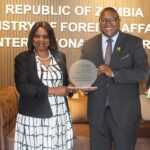
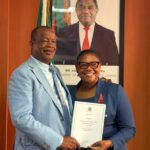
A key development at the Harare summit was Zambia’s handover of a certificate of title deed for the proposed new COMESA headquarters in Lusaka. The handover provides an important step towards making land available for the regional institution’s planned headquarters in the Zambian capital. Hosting the headquarters could strengthen Lusaka’s role as a centre for regional economic cooperation and institutional engagement. It could also create opportunities for local businesses that provide accommodation, transport, professional services and other forms of support to regional activities. The longer-term economic impact will depend on the headquarters project, its implementation and the extent to which related opportunities benefit local communities. The title deed handover nevertheless signals Zambia’s contribution to the development of COMESA’s institutional presence and its continued participation in regional integration efforts.
The summit also provided an opportunity for discussions on Zambia’s Grow Zambia Agenda, which President Hichilema identified as an important national priority. The agenda, as presented in his statement, calls for continued contributions from citizens towards the country’s development goals. Achieving broad-based economic growth requires participation from government institutions, private businesses, farmers, workers, entrepreneurs and communities. Citizens can contribute through productive economic activity, business development, skills improvement and efforts to increase the value of locally produced goods and services. Government policies and public investment also play a role by shaping the environment in which individuals and businesses operate. Continued attention to these different contributions can help connect national development priorities with practical opportunities at community level.
The relationship between the Grow Zambia Agenda and regional trade is particularly relevant as businesses seek opportunities to grow beyond domestic markets. Access to customers in other COMESA countries could help Zambian companies increase sales, improve their competitiveness and build the capacity needed to serve larger markets. Regional demand may also encourage investment in processing, manufacturing and other activities that add value to locally available resources. To make these opportunities accessible, businesses need information about market requirements, product standards, payment arrangements and cross-border trading procedures. Better coordination between public institutions and the private sector can help address these needs and support companies seeking to enter regional markets. In this way, regional integration can complement domestic development efforts while giving Zambian enterprises more room to expand.
Another important part of the summit was the transfer of the COMESA Chairpersonship to Zimbabwean President Emmerson Dambudzo Mnangagwa by Kenyan President William Samoei Ruto. The handover marked a change in leadership within the regional organisation as member states continued their discussions on shared economic priorities. Zambia’s assumption of the Vice-Chairperson role places the country within the bloc’s leadership structure and provides an opportunity to participate in guiding its work. Regional leadership also involves building consensus among countries with different economic conditions, national priorities and development needs. Progress depends on continued cooperation and the implementation of agreed commitments. The summit’s leadership transition therefore forms part of the wider process through which COMESA member states seek to strengthen economic relations and advance regional integration.
For ordinary citizens, the value of these regional commitments will ultimately depend on whether they translate into practical improvements in daily life. Businesses need easier access to markets, farmers need dependable buyers and workers need opportunities to earn a living. Young people and new entrepreneurs also need conditions that allow them to develop skills, establish enterprises and participate in economic activity. Governments can support these objectives by improving infrastructure, reducing unnecessary trade barriers and promoting clear, consistent rules for businesses. Member states must also work together to address obstacles that prevent regional trade agreements from delivering their intended benefits. Stronger cooperation can provide a foundation for wider economic participation, but measurable progress will require sustained effort and effective implementation.
Following the conclusion of the 25th COMESA Heads of State and Government Summit in Harare, President Hichilema announced his departure for Lusaka, Zambia. His statement reaffirmed his government’s commitment to working towards the country’s development goals and encouraged citizens to continue contributing to the Grow Zambia Agenda. The summit brought together regional priorities that included trade expansion, economic cooperation, institutional development and leadership within COMESA. Zambia’s call for member states to trade more with one another highlighted the potential for regional markets to support employment and business growth. The handover of the title deed for the proposed COMESA headquarters also represented a practical step in the country’s engagement with the regional organisation.
Zambia’s participation in COMESA reflects the close connection between national development and regional economic cooperation. Stronger trade among the 21 member states could create wider markets for businesses, support investment and open up opportunities for employment across the region. The benefits will depend on the commitment of governments to address trade barriers and the ability of businesses to respond to new market opportunities. As Zambia takes on the Vice-Chairperson role and continues promoting the Grow Zambia Agenda, the challenge will be to translate regional commitments into outcomes that citizens can experience. President Hakainde Hichilema’s message calls for continued cooperation, greater economic participation and a shared focus on development. Sustained action by governments, businesses and citizens will be essential to turning these priorities into lasting progress for Zambia and the wider COMESA region.