







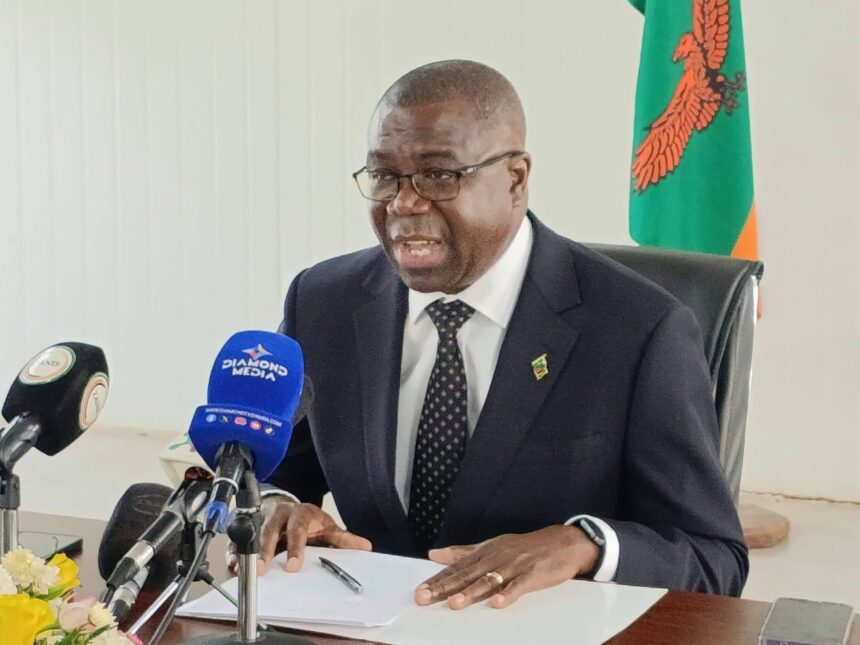
The Zambian Government is set to sign a revised Health Memorandum of Understanding with the United States Government this Thursday after concerns over data protection, specimen sharing and intellectual property were addressed through technical reviews and consultations. Minister of Health Professor Roma Chilengi says Cabinet has approved the revised agreement for signing after amendments were made in response to concerns raised by stakeholders and members of the public. The agreement is expected to provide a major framework for health-sector cooperation and financing between Zambia and the United States. Under the revised arrangement, the United States is expected to contribute up to US$1.5 billion over five years, while Zambia will progressively increase its domestic contribution as American support declines. The combined financing is expected to mobilise a total health financing envelope of US$3.6 billion over the five-year period.
The decision to revise the Health MOU follows concerns that emerged around the handling of health information, biological specimens and intellectual property. Professor Chilengi said the review specifically examined specimen sharing, data protection, the duration of the agreement and its two appendices. Technical teams and stakeholders considered these issues before amendments were made to the document. The Government has now determined that the revised agreement addresses the concerns sufficiently for Cabinet approval and signing. The process demonstrates the importance of addressing questions surrounding international health cooperation before a major agreement enters into implementation.
Data protection was one of the issues that attracted particular attention during the review process. Professor Chilengi clarified that information sharing under the revised MOU will be limited to data necessary for programme monitoring and evaluation. This clarification addresses concerns about the potential sharing of individual patient information through the health partnership. Protecting patient information remains an important consideration whenever health programmes involve data collection, analysis or cooperation between institutions in different countries. The Government’s position is that the revised arrangement will restrict information sharing to what is required for monitoring and evaluating programmes rather than providing unrestricted access to individual patient information.
Specimen sharing was another issue considered during the technical review of the agreement. Health programmes can involve the collection and analysis of biological specimens for purposes connected to disease surveillance, diagnosis, research and programme monitoring. Questions around who can access specimens, how they can be used and what rights apply to information or discoveries generated from them can become important when countries cooperate on health programmes. Professor Chilengi said specimen sharing formed part of the concerns that prompted the review of the MOU. The amendments were therefore intended to provide greater clarity on the provisions that had generated questions among stakeholders and members of the public.
The revised MOU is also expected to establish a significant health financing framework for Zambia over the next five years. Professor Chilengi said the United States will contribute up to US$1.5 billion during the period covered by the agreement. The contribution is expected to be highest during the first year before progressively declining over the remaining years. This financing pattern means Zambia will need to increase its own contribution to the health sector as United States support reduces. The approach is intended to help Zambia manage the transition and reduce the risk of a sudden funding gap when external support declines.
The combined health financing envelope is expected to reach US$3.6 billion over five years when the contributions from Zambia and the United States are considered together. This makes the revised Health MOU an important component of the country’s health financing plans. The arrangement places emphasis on a gradual increase in domestic financing rather than continued dependence on the same level of external support. Zambia’s increasing contribution is intended to strengthen domestic ownership of health-sector financing over time. The effectiveness of this approach will depend on the Government’s ability to maintain and increase the resources allocated to healthcare as external support declines.
The financing structure also highlights the broader challenge of maintaining health services when international assistance changes. External support can provide substantial resources for health programmes, but countries need sustainable domestic financing to maintain services over the long term. The progressive reduction in United States funding under the revised arrangement makes Zambia’s domestic contribution increasingly important. Government will therefore need to plan carefully to ensure that available resources are aligned with health-sector priorities. The five-year framework is intended to provide time for Zambia to increase its contribution and prepare for the changing balance between external and domestic financing.
Professor Chilengi has also rejected reports suggesting that the Health MOU is connected to a separate agreement concerning critical minerals. He clarified that the two Memoranda of Understanding are separate matters. The clarification is significant because the health agreement has generated public interest, particularly because of the scale of the proposed financing and the earlier concerns over data and specimen sharing. Separating the two agreements helps distinguish health-sector cooperation from discussions concerning Zambia’s critical mineral resources. According to the Minister, the revised Health MOU should therefore be considered independently from any separate critical minerals arrangement.
The revised agreement is expected to be formally signed on Thursday at the Ministry of Finance after the completion of the review and approval process. Cabinet approval represents the Government’s formal decision to proceed with the revised document. The signing will mark the completion of the process described by the Ministry of Health following the technical reviews, consultations and amendments. It will also establish the framework under which the proposed health financing cooperation is expected to operate. The timing of the signing means attention will now shift from negotiations and revisions to implementation and the management of the resources provided under the agreement.
The Minister also addressed questions about whether the Health MOU requires parliamentary consideration. Professor Chilengi said Memoranda of Understanding are not ordinarily subject to parliamentary consideration, except where matters covered by an agreement involve Government borrowing and related debt obligations. This position forms part of the Government’s explanation of the process followed in reviewing and approving the agreement. The distinction is important because parliamentary approval requirements can differ depending on the nature and legal implications of a government agreement. In this case, the Government says the revised Health MOU proceeded through technical review, consultation and Cabinet approval rather than parliamentary consideration.
Questions have also been raised about whether the final MOU will be made publicly available after signing. Professor Chilengi indicated that Government will not make the document publicly available, explaining that it has not been established practice to publish Government Memoranda of Understanding. He nevertheless said stakeholders can engage the Ministry of Health on specific concerns relating to the agreement. The decision not to publish the MOU is likely to remain an important part of the public discussion because the agreement involves substantial health financing and provisions concerning areas such as data and specimen sharing. Continued engagement between Government and stakeholders could therefore remain important as the agreement moves from approval to implementation.
The revised Health MOU comes at a time when Zambia is seeking to strengthen the financing and delivery of healthcare while increasing domestic responsibility for the sector. The planned five-year financing framework provides an opportunity to direct additional resources towards health priorities while preparing for a gradual reduction in external support. At the same time, the concerns that prompted the review demonstrate the need for clear safeguards around health data, biological specimens and intellectual property. Resolving those concerns before signing allows the Government to proceed with an agreement that has undergone additional technical scrutiny. The success of the arrangement will ultimately depend on how effectively the agreed financing and safeguards are implemented.
The signing of the revised Zambia-US Health MOU therefore represents an important development in the country’s health financing and international health cooperation. The agreement is expected to bring up to US$1.5 billion in United States support over five years and contribute to a combined health financing envelope of US$3.6 billion with Zambia’s domestic contribution. Its financing model is designed to give Zambia time to increase domestic health spending as American support gradually declines. The Government has also stated that concerns surrounding data protection, specimen sharing, intellectual property and other provisions were considered during the review process. If implemented effectively, the revised agreement could provide Zambia with significant health-sector resources while supporting a gradual shift towards greater domestic responsibility for financing healthcare.