





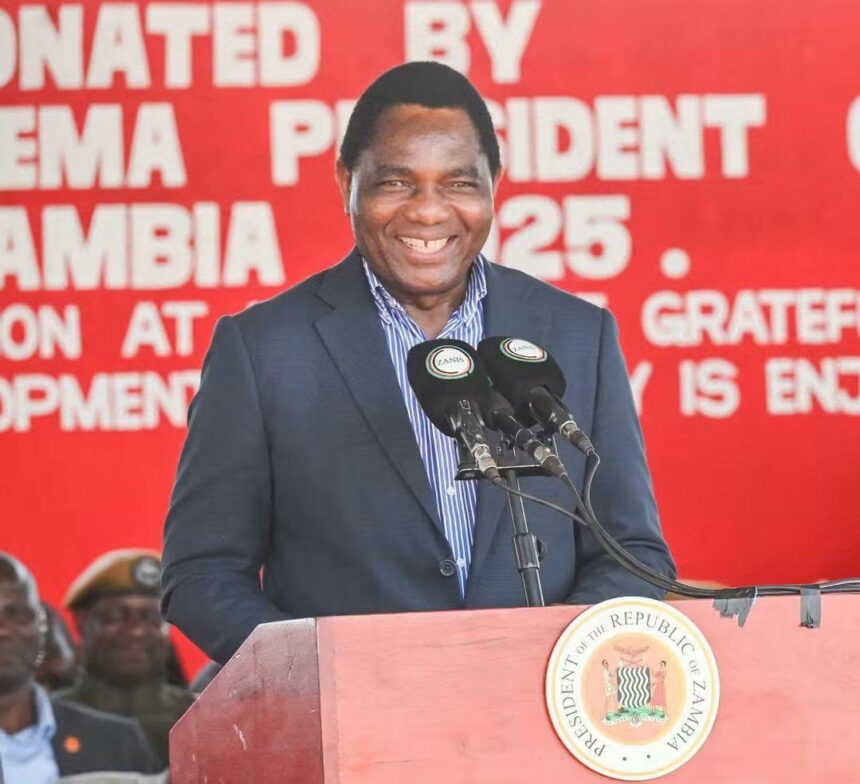
President Hakainde Hichilema has called on traditional leaders to play a stronger role in supporting the Government’s Grow Zambia Agenda as he officiated at the 2026 Samu Lyamoomba traditional ceremony of Chief Choongo in Monze District. The annual ceremony brought together thousands of people, including Government officials, traditional leaders, corporate executives and local residents. The event provided an opportunity to celebrate the cultural heritage of the Tonga people while also highlighting the connection between traditional leadership and national development. President Hichilema said traditional ceremonies should serve purposes beyond cultural celebration and reflection. He encouraged traditional authorities to use their influence to mobilise communities around agriculture, entrepreneurship, production and economic development.
The President emphasised that traditional leaders have an important influence over rural communities and can help drive the implementation of national development priorities. He urged traditional authorities to actively integrate cultural ceremonies with community mobilisation efforts that support the Grow Zambia Agenda. The initiative is focused on creating local wealth, increasing national production and strengthening food and economic security. President Hichilema said traditional ceremonies could provide a platform for communities to discuss and pursue practical economic activities. He therefore encouraged traditional leaders to work closely with Government in turning rural communities into stronger centres of production.
According to President Hichilema, traditional ceremonies should not only provide an opportunity for communities to preserve their heritage and celebrate their identity. They can also become platforms for promoting economic transformation and encouraging people to participate in productive activities. Agriculture and entrepreneurship can form an important part of this approach because rural communities have significant potential to contribute to national food production and local economic activity. Traditional leaders can help communicate development priorities and encourage communities to take advantage of available opportunities. This connection between culture, community leadership and economic activity was a central message from the President at the Samu Lyamoomba ceremony.
The President linked national self-reliance to increased productivity in rural areas. He said traditional leaders have considerable influence over communities and can help encourage greater participation in agricultural and entrepreneurial initiatives. Increased production at community level can contribute to national food security while creating opportunities for households to generate income. Combining farming with other forms of enterprise can also allow rural communities to diversify their sources of livelihood. President Hichilema therefore encouraged traditional authorities to support initiatives that can increase production and strengthen economic activity within their communities.
The Grow Zambia Agenda was presented as an important framework for achieving these objectives. The President said the agenda seeks to create local wealth, accelerate national production and ensure food and economic security for citizens. Its implementation requires participation from different parts of society rather than Government acting alone. Traditional leaders have a particularly important role because of their close relationship with communities and their influence over local development discussions. President Hichilema’s call was therefore for traditional authorities to become active partners in promoting productive economic activities. Greater cooperation between Government and traditional leadership could help ensure that national development priorities reach rural communities.
The Samu Lyamoomba ceremony also highlighted the importance of preserving Zambia’s cultural heritage. President Hichilema urged citizens to uphold and protect the country’s traditions and culture. Traditional ceremonies provide opportunities for communities to pass cultural knowledge between generations and maintain practices that form part of their identity. The presence of traditional dances, cultural rituals, agricultural displays and livestock at the event reflected this connection between heritage and community life. Preserving these traditions remains important as Zambia pursues economic development and other national priorities.
The annual ceremony attracted a diverse gathering from different sections of society. Government officials and traditional leaders joined corporate executives and local residents at the event, demonstrating the broad interest surrounding the Samu Lyamoomba ceremony. Such gatherings provide opportunities for people from different sectors to interact and engage with issues affecting communities. They also create a public platform where national leaders can communicate development priorities directly to citizens. The large attendance reflected the continuing importance of traditional ceremonies in Zambia’s social and cultural life.
Chief Choongo, the host of the ceremony, expressed gratitude to President Hichilema for his continued support for traditional ceremonies. He also praised the Government’s decentralised development policies, which he said continue to benefit rural communities. Decentralised development is particularly relevant to traditional areas because many rural communities depend on public investment and local economic opportunities. Improved access to development programmes can create conditions that allow communities to participate more actively in the national economy. The Chief’s remarks reinforced the importance of cooperation between traditional authorities and Government in advancing development in rural areas.
The presence of agricultural produce and cattle at the ceremony also reflected the economic importance of agriculture in traditional communities. Agriculture provides food and income for many households and remains closely connected to rural livelihoods. Encouraging communities to increase agricultural productivity can support the broader objectives of food security and economic growth. Traditional leaders can help promote responsible land use, productive farming practices and participation in community development initiatives. The President’s message placed this existing agricultural foundation within the wider goal of increasing Zambia’s national production.
Entrepreneurship was another important element of the President’s call for stronger rural productivity. Rural economic development does not depend only on farming, as communities can create additional opportunities through processing, trading and other businesses linked to local production. Developing these activities can allow communities to retain more value from resources produced within their areas. It can also create opportunities for young people and other residents to participate in local economies. By encouraging both agriculture and entrepreneurship, traditional leaders can help communities pursue a broader range of economic opportunities.
The conclusion of the 2026 Samu Lyamoomba ceremony featured traditional dances, displays of agricultural produce, cattle and cultural rituals honouring ancestors. These activities demonstrated the continuing role of traditional ceremonies in preserving cultural practices and bringing communities together. At the same time, the President’s message gave the gathering a wider development dimension by connecting cultural participation with economic productivity. The ceremony showed that cultural preservation and economic development can exist alongside each other when communities use their traditional institutions to promote constructive development activities. This balance between heritage and progress remains important for Zambia as it pursues national economic transformation.
President Hichilema’s message at the Samu Lyamoomba ceremony placed traditional leadership at the centre of Zambia’s efforts to increase rural productivity and support the Grow Zambia Agenda. His call for traditional authorities to mobilise communities around agriculture, entrepreneurship and production reflects the important influence they have in many rural areas. The ceremony also reinforced the need to preserve Zambia’s cultural heritage while pursuing economic development and food security. Chief Choongo’s support for decentralised development further highlighted the importance of cooperation between traditional institutions and Government. As Zambia continues to pursue the Grow Zambia Agenda, stronger partnerships with traditional leaders could help translate national development goals into practical economic activities within communities.