



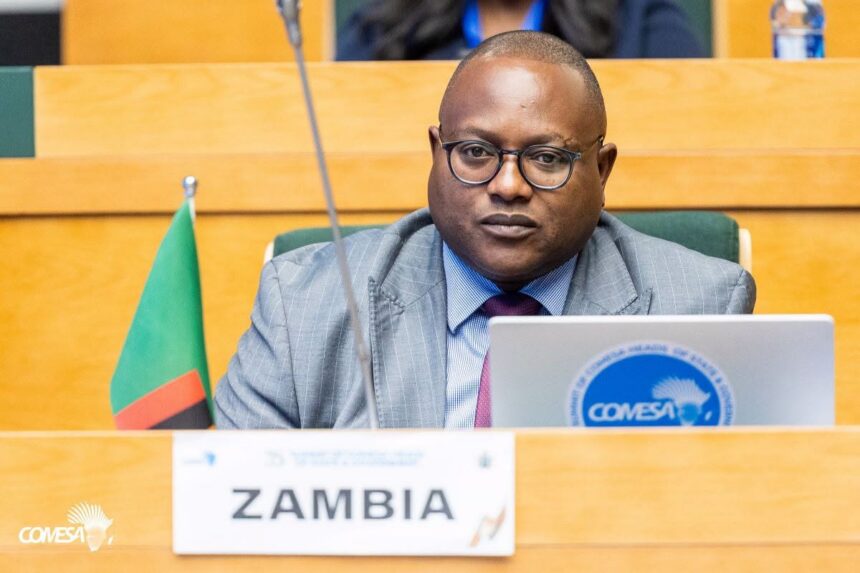
Zambia’s Minister of Foreign Affairs and International Cooperation, Hon. Mulambo Haimbe, S.C., M.P., has called on member states of the Common Market for Eastern and Southern Africa (COMESA) to strengthen regional integration, promote peace and improve cooperation in addressing security challenges affecting the region. Haimbe made the call during the 21st Meeting of COMESA Ministers of Foreign Affairs, which opened at the New Parliament Building in Harare, Zimbabwe. He stressed that peace and regional integration are closely connected and remain essential to achieving sustainable economic growth, improved livelihoods and greater prosperity for citizens. His remarks highlighted the need for African countries to work together to address shared challenges and build a stable environment for development. Zambia reaffirmed its commitment to a peaceful, prosperous and integrated COMESA region, with regional cooperation remaining central to its diplomatic priorities.
The meeting brought together foreign affairs ministers and representatives from COMESA member states to discuss issues affecting regional cooperation, stability and development. It was officially opened by Hon. Professor Amon Murwira, Zimbabwe’s Minister of Foreign Affairs and International Trade and Vice Chairperson of the 21st Meeting of COMESA Ministers of Foreign Affairs. COMESA Secretary-General Her Excellency Chileshe Mpundu Kapwepwe also took part in the opening proceedings. The gathering provided an opportunity for member states to exchange views on shared priorities and strengthen their commitment to regional collaboration. Such meetings are important because political stability, economic cooperation and coordinated regional policies can help countries respond more effectively to challenges that cross national borders.
In his vote of thanks, Haimbe emphasised that peace and regional integration must advance together if countries are to achieve lasting prosperity. He noted that dignity, improved living standards and sustainable development cannot be fully realised in environments affected by conflict and instability. Political tensions and insecurity can disrupt trade, discourage investment and place additional pressure on public resources. They can also undermine efforts to improve access to education, healthcare and other essential services. Haimbe’s remarks therefore placed peace and stability at the centre of the region’s broader economic and social development agenda.
The Zambian minister urged COMESA member states to strengthen their collective ability to prevent and resolve conflicts before they escalate. He also called for stronger democratic governance and support for peaceful political transitions as essential elements of regional stability. Effective governance can help build public trust, encourage accountability and create conditions for countries to pursue development priorities without unnecessary political disruption. Peaceful transitions of power are particularly important in maintaining institutional stability and reinforcing confidence in democratic processes. Through stronger cooperation, member states can share experiences and develop approaches that support peace, democratic institutions and long-term regional progress.
Haimbe also highlighted several emerging security challenges that require coordinated regional responses. These include terrorism, violent extremism, irregular migration, climate-related security risks and economic shocks. Such challenges can affect multiple countries at the same time and may become more difficult to manage when governments act independently. Terrorism and violent extremism can threaten public safety and disrupt economic activity, while irregular migration can place pressure on border management systems and public services. Climate-related pressures and economic instability can also deepen existing vulnerabilities, making cooperation between governments increasingly important.
To address these concerns, Haimbe stressed the need for enhanced regional cooperation, information-sharing, preventive diplomacy and coordinated responses. Information-sharing can help governments identify potential threats earlier and improve communication between relevant institutions. Preventive diplomacy provides a means of addressing disagreements through dialogue and negotiation before they develop into serious conflicts. Coordinated responses can also help member states use their resources more effectively when dealing with cross-border security concerns. By strengthening these approaches, COMESA countries can improve their ability to protect citizens, maintain stability and support a more predictable environment for economic activity.
The minister further urged member states to translate regional commitments into practical results that improve the lives of ordinary people. Regional agreements can establish common goals, but their value ultimately depends on effective implementation and measurable progress. Citizens need to experience the benefits of cooperation through better economic opportunities, improved livelihoods and greater security. Stronger regional integration can support trade, investment and collaboration between businesses, while improved stability can create more favourable conditions for development. Haimbe’s message underscored the importance of ensuring that regional initiatives produce tangible benefits rather than remaining commitments on paper.
COMESA plays an important role in promoting economic cooperation and regional integration among its member states. Its work provides a framework for countries to pursue shared objectives in areas such as trade, investment and broader economic development. However, achieving these objectives also depends on political stability, effective institutions and the ability to manage security risks. Conflict or instability in one country can affect neighbouring states through disrupted trade routes, population movements and uncertainty for businesses. Stronger diplomatic cooperation can therefore help protect the conditions needed for regional economic growth and deeper integration.
For Zambia, participation in the COMESA Ministers of Foreign Affairs meeting provides an opportunity to contribute to discussions on the future of regional peace, security and cooperation. Haimbe’s remarks reaffirmed the country’s commitment to working with neighbouring states and other regional partners to address shared challenges. Zambia’s position reflects the importance of diplomacy in resolving disputes, strengthening relationships and encouraging collective action. Regional cooperation can also support national development by helping create a more stable environment for trade, investment and cross-border economic activity. Continued engagement through COMESA gives Zambia and other member states a platform to discuss common priorities and pursue practical solutions.
Haimbe also expressed appreciation to the COMESA Secretary-General and Secretariat, participating delegations, development partners and the officials and teams who contributed to preparing and conducting the meeting. His remarks recognised the coordination and institutional support required to bring regional representatives together for high-level discussions. Successful diplomatic meetings depend on cooperation among governments, technical teams and partner organisations. These efforts help create opportunities for dialogue and strengthen the institutions that support regional collaboration. The appreciation also reinforced the importance of continued engagement among member states as they work towards shared objectives.
The 21st COMESA Ministers of Foreign Affairs meeting highlighted the close relationship between regional integration, peace and sustainable development. Haimbe’s call for stronger conflict prevention, democratic governance, information-sharing and coordinated security responses placed practical cooperation at the centre of the regional agenda. His emphasis on translating commitments into tangible benefits also underscored the need to connect diplomatic decisions with the everyday needs of citizens. As COMESA member states continue to address political, economic and environmental challenges, sustained cooperation will remain essential to achieving shared progress. Zambia’s reaffirmed commitment to a peaceful, stable, prosperous and integrated COMESA region reflects its support for a future in which regional partnership helps improve security, strengthen economic opportunities and raise living standards across Eastern and Southern Africa.