






Chinsali General Hospital has successfully performed its first-ever craniotomy in Muchinga Province, marking a significant development in access to emergency neurosurgical care in the region. The procedure saved the life of a 40-year-old man from Chinsali District who suffered a severe head injury during an altercation. The patient was admitted to the hospital in a semi-conscious state with paralysis on the right side of his body and an inability to speak. Medical investigations later revealed a serious blood clot that was putting pressure on his brain and required urgent surgical intervention. The successful operation has demonstrated the potential of local health facilities to provide specialised emergency treatment closer to patients’ homes.
A craniotomy is a surgical procedure in which a surgeon temporarily removes part of the skull to gain access to the brain. In this case, doctors performed the operation to access and evacuate an epidural haematoma, which is a collection of blood that forms between the skull and the outer covering of the brain. An epidural haematoma can place dangerous pressure on the brain and may become life-threatening without timely treatment. The condition in this patient was particularly serious because medical imaging showed that the bleeding had caused the brain to shift from its normal position. The emergency nature of the case required doctors to act quickly to relieve the pressure and prevent further neurological damage.
The 40-year-old Chinsali resident was admitted to Chinsali General Hospital after being struck on the head with a log during an altercation. At the time of admission, he was semi-conscious and displayed serious neurological symptoms. He had right-sided paralysis and was unable to speak, indicating the severity of the head injury. Medical staff proceeded with investigations to determine the extent of the damage and identify the appropriate treatment. A CT scan provided critical information that allowed the medical team to assess the injury and determine that surgical intervention was necessary.
The CT scan revealed an extensive left parieto-temporal epidural haematoma, accompanied by mild intracerebral haemorrhage and a shift of the brain to the right. These findings indicated that the blood accumulation was exerting significant pressure within the skull. Because the skull forms a rigid enclosure around the brain, bleeding inside or around the brain can increase pressure and cause serious complications. The brain shift seen on the scan added to the urgency of the patient’s condition. In such circumstances, rapid assessment and appropriate treatment can be critical to preventing further neurological deterioration.
Chinsali General Hospital Acting Head of Clinical Care, Dawin Sichimba, said the patient was initially scheduled for referral to the University Teaching Hospital in Lusaka for neurosurgical care. Referring patients to specialised centres remains an important part of healthcare systems when local facilities do not have the required expertise or equipment. In this case, however, the planned referral was halted after neurosurgeon Dr. Jones Njobvu from Levy Mwanawasa University Teaching Hospital reviewed the patient’s CT scan. Dr. Njobvu offered to perform the emergency procedure at Chinsali General Hospital. This decision allowed the patient to receive urgent surgical treatment without having to travel to Lusaka for the operation.
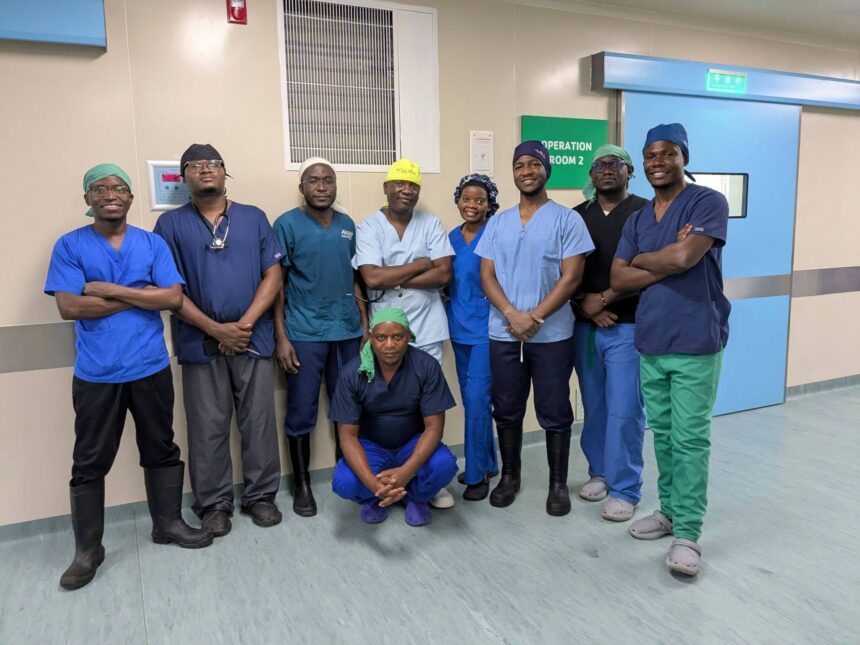
The successful intervention depended on collaboration between medical professionals from different institutions and departments. The operation was performed by a team comprising Dr. Jones Njobvu, Dr. Dawin Sichimba, Dr. Poster Mutambo, Medical Licentiate Ronald Muma, Anaesthetist Rebecca Nachinga and Operating Theatre Nurses Yvonne Tembo and Mary Chilufya. Porter Emmanuel Mufunga was also part of the team. Each member contributed to the delivery of the emergency surgical care required by the patient. The case demonstrates how coordinated teamwork can support the delivery of complex medical procedures in a regional hospital setting.
Dr. Sichimba said the medical team unboxed and used a new set of specialised instruments acquired for the procedure. Having appropriate surgical equipment is an important component of providing safe and effective specialised care. The availability of the instruments meant the team could carry out the craniotomy at Chinsali General Hospital rather than relying entirely on a referral to a distant facility. Equipment alone, however, cannot deliver complex surgical care without appropriately trained personnel and a functioning operating theatre. The case therefore highlights the combined importance of medical equipment, specialist expertise, trained support staff and institutional coordination.
The craniotomy lasted approximately two hours and 30 minutes. During the procedure, the surgical team removed a small section of the patient’s skull to gain access to the affected area and evacuate the blood clot. Removing the accumulated blood helped relieve the pressure affecting the brain. Following the operation, the patient was admitted to the Intensive Care Unit for close monitoring and continued medical care. The postoperative period was particularly important because patients recovering from serious head injuries require careful observation for potential complications and changes in neurological condition.
The patient’s recovery following surgery provided an encouraging indication of the effectiveness of the emergency intervention. Dr. Sichimba said the patient was able to speak less than 24 hours after the operation, although he remained confused at that stage. Within 48 hours, the patient was fully conscious and able to speak normally. These improvements represented a substantial change from his condition when he first arrived at the hospital. The patient has since been discharged from the Intensive Care Unit and transferred to the General Surgical Ward, where he is expected to make a full recovery.
The case represents an important development for healthcare delivery in Muchinga Province because it shows that specialised surgical procedures can be performed closer to communities when the necessary expertise, equipment and institutional support are available. Patients with serious medical conditions can face additional challenges when specialised treatment is only available in distant cities. Emergency conditions such as severe head injuries can make timely access to appropriate treatment particularly important. The ability to provide certain specialised procedures at a regional hospital can reduce the need for some patients to travel long distances for urgent care. It can also strengthen the capacity of local health facilities to respond to complex medical emergencies.
Dr. Sichimba said the successful craniotomy demonstrates the growing accessibility of surgical care in Muchinga Province. He also stressed the importance of institutional collaboration and capacity building in bringing health services closer to people’s homes. Building healthcare capacity involves more than acquiring equipment because it also requires skilled health professionals, appropriate infrastructure, effective referral systems and continued professional development. Collaboration between specialists and regional hospitals can help transfer expertise and create opportunities for local medical teams to participate in complex procedures. Such cooperation can strengthen the ability of provincial health facilities to provide timely and appropriate care.
The successful operation also highlights the importance of rapid diagnosis in serious head injuries. The CT scan provided doctors with detailed information about the location and extent of the bleeding and the resulting shift of the brain. This information helped guide the decision to pursue emergency surgical treatment. Without timely imaging and clinical assessment, serious complications from an epidural haematoma can be difficult to identify and treat appropriately. The case therefore demonstrates how diagnostic services, specialist knowledge and emergency surgical capacity must work together when dealing with potentially life-threatening injuries.
For Chinsali and the wider Muchinga Province, the achievement carries significance beyond one patient’s recovery. It demonstrates how investment in healthcare infrastructure, specialised equipment and human resources can expand the range of services available outside major urban centres. It also shows the value of collaboration between institutions when specialist expertise is needed in a regional facility. The involvement of a neurosurgeon from Levy Mwanawasa University Teaching Hospital enabled the emergency procedure to take place at Chinsali General Hospital. Such collaboration can help strengthen local capacity while giving patients access to specialised care closer to where they live.
The first-ever craniotomy at Chinsali General Hospital is therefore an important milestone in the development of surgical services in Muchinga Province. The successful treatment of the 40-year-old patient demonstrates what can be achieved when timely diagnosis, specialised expertise, appropriate equipment and coordinated teamwork come together. His rapid neurological improvement after surgery provides an encouraging outcome following a severe head injury. Dr. Sichimba’s emphasis on institutional collaboration and capacity building also points to the importance of sustained investment in healthcare services. As surgical capacity continues to grow, bringing safe, timely and affordable treatment closer to patients could make a meaningful difference in access to healthcare across Muchinga Province.