



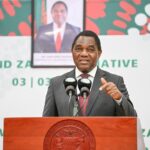




The Government of the Republic of Zambia has reaffirmed its commitment to strengthening people-centred early warning systems through greater collaboration, inclusion and innovation. The commitment was highlighted on 4 September 2026 during the National Inception and Stakeholder Mapping Workshop for the ActionFIRST™ Initiative in Lusaka. The initiative seeks to strengthen the connection between weather and climate information and the actions that communities, institutions and decision makers take before hazards cause serious impacts. With Zambia facing increasing risks from droughts, floods, storms and prolonged dry spells, the need for effective early warning and early action has become increasingly important. The initiative represents an effort to ensure that accurate forecasts reach the people who need them in a form that is understandable, relevant and useful.
ActionFIRST™ is being implemented with support from the United Kingdom Foreign, Commonwealth and Development Office, the United Kingdom Met Office, the World Meteorological Organization, the Weather and Climate Information Services for Africa Programme and other cooperating partners. The initiative focuses on strengthening collaboration between organisations involved in weather forecasting, disaster risk management, climate adaptation and community resilience. Rather than treating forecasting as an end in itself, the programme promotes an approach that links forecasts to potential impacts and appropriate actions. This means that information about an approaching hazard should help people understand what could happen, who may be affected and what steps can be taken to reduce the consequences. Such an approach can make early warning systems more practical and responsive to the needs of communities across Zambia.
Speaking during the workshop, Ministry of Green Economy and Environment Permanent Secretary Dr Douty Chibamba emphasised that Zambia needs to move beyond simply producing accurate weather forecasts. He explained that weather and climate information must be translated into timely and practical action if it is to provide meaningful protection to people and livelihoods. Climate change is exposing the country to increasingly frequent and severe droughts, floods, storms and prolonged dry spells, creating risks for communities and key sectors of the economy. These hazards can affect food production, water availability, infrastructure, household incomes and national economic activity. The challenge therefore involves not only knowing what weather conditions are expected, but also understanding their potential impacts and determining what should be done before those impacts occur.
Dr Chibamba said, “The true value of a forecast lies not only in its scientific accuracy but in its ability to help communities, institutions and decision makers take timely action that saves lives and protects livelihoods.” His statement captures the central principle behind impact-based forecasting, which seeks to make forecasts more meaningful for the people who use them. A warning about heavy rainfall, for example, becomes more useful when it explains the possible consequences for roads, settlements, agriculture, water systems or other vulnerable areas. Users can then make decisions based on the expected effects rather than relying only on technical descriptions of weather conditions. This approach can strengthen preparedness and give communities and authorities more time to act before a disaster develops.
The ActionFIRST™ Initiative promotes impact-based forecasting and the co-production of weather and climate services. This model brings together meteorological experts, disaster management authorities, Government institutions, humanitarian organisations, researchers, private sector representatives, the media and communities. Their involvement is intended to ensure that weather and climate services reflect the actual information needs of the people and organisations that depend on them. By involving users in the design of these services, the initiative can help ensure that forecasts are accurate while also being relevant, accessible, trusted and actionable. The approach also recognises that different sectors and communities may require different types of information depending on the hazards they face and the decisions they need to make.
The National Inception and Stakeholder Mapping Workshop marks the beginning of Zambia’s national co-production process under the initiative. Participants are expected to identify key stakeholders and examine the country’s priority weather and climate hazards. They will also consider institutional roles and responsibilities while identifying communication gaps that could prevent warnings from reaching people in time. The workshop will contribute to the development of a national roadmap for action-based forecasting, providing a framework for strengthening cooperation and improving the delivery of useful weather and climate information. These discussions are important because an effective early warning system requires clear responsibilities, reliable communication and coordinated action before, during and after hazardous events.
Dr Chibamba also recognised progress made by the Zambia Meteorological Department in improving weather forecasting services. However, he highlighted several areas that require further attention if forecasts are to translate into effective early action. These include stronger user engagement in the design of weather services, greater participation by women, persons with disabilities and vulnerable communities, clearer communication of technical information and stronger feedback mechanisms. Improving coordination among stakeholders and identifying reliable communication channels for communities most at risk are also essential. These measures can help close the gap between producing information and ensuring that the information reaches the right people in a form they can understand and act upon.
The Government has also stressed the importance of adopting a whole-of-society approach to early warning and early action. No single institution can build and operate an effective early warning system on its own because disaster risks affect multiple sectors and communities. Stronger partnerships are therefore needed among Government institutions, the National Disaster Risk Management Division, local authorities, agriculture, water, health and transport sectors, humanitarian agencies, academia, civil society organisations, traditional leaders, the media and local communities. Each stakeholder has a role to play in identifying risks, communicating warnings, preparing responses and supporting early action. Better coordination between these groups can help ensure that warnings do not stop at the point where they are issued but lead to practical measures that reduce risks.
Gender Equality, Disability and Social Inclusion is another important element of the initiative. Dr Chibamba reaffirmed the Government’s commitment to ensuring that women, young people, persons with disabilities, older people, rural communities and other vulnerable groups have a meaningful voice in the design of early warning systems. People who face greater exposure to hazards or additional barriers to receiving and responding to warnings need to be included in the planning process. This requires more than simply distributing information because warning systems must consider accessibility, language, communication preferences and the circumstances of different communities. Meaningful participation can help ensure that early warning services respond to real needs and reach groups that may otherwise be left behind during emergencies.
The workshop outcomes are expected to support Zambia’s implementation of the Early Warnings for All Initiative while also contributing to national disaster risk reduction strategies and climate adaptation efforts. The process is expected to improve communication of weather and climate information, support the development of user-centred forecast products and strengthen institutional coordination for early action. It can also contribute to better public understanding of weather warnings by helping communities interpret information and understand what action is expected when a warning is issued. These improvements are particularly relevant as climate-related hazards continue to place pressure on communities, infrastructure, agriculture and other sectors. Strengthening the connection between warnings and action can therefore form an important part of Zambia’s broader efforts to build resilience to climate and disaster risks.
Dr Chibamba encouraged stakeholders taking part in the workshop to actively share their experiences, identify challenges, explain their information needs and define practical actions that can be taken when warnings are issued. This participatory approach is central to the co-production model because it allows technical experts and users of weather information to work together rather than operating separately. Stakeholder experience can help identify weaknesses in existing systems while community knowledge can provide important insights into how hazards affect people on the ground. At the same time, technical specialists can help translate scientific information into useful forecasts and warnings. The combination of these perspectives can contribute to a more responsive system that supports informed decisions at national, local and community levels.
Meanwhile, Disaster Risk Management Division National Coordinator Mr Norman Chipakupaku welcomed the ActionFIRST™ Initiative and called for stronger multi-hazard early warning and early action systems in Zambia. He emphasised the importance of moving beyond simply knowing that a hazard is likely to occur and instead understanding the impacts it may cause and the actions that should be taken in advance. This perspective reinforces the need for forecasting systems to provide information that directly supports preparedness and decision-making. It also highlights the importance of coordination between institutions responsible for monitoring hazards, issuing warnings and responding to emergencies. A stronger multi-hazard system can help Zambia prepare for different threats while ensuring that communities and institutions receive information that supports timely action.
The launch of the ActionFIRST™ national process provides Zambia with an opportunity to strengthen the way weather and climate information supports disaster preparedness and climate resilience. The initiative brings together scientific expertise, Government coordination, community participation and international cooperation around a shared objective of turning forecasts into meaningful early action. Its success will depend on sustained collaboration, inclusive participation, effective communication and continued investment in the systems and people responsible for delivering warnings. By focusing on the needs of users and the impacts of hazards, Zambia can strengthen its ability to protect lives, livelihoods, infrastructure and essential resources. The commitment demonstrated at the Lusaka workshop shows that strengthening early warning systems is not only about predicting the weather, but about ensuring that people have the information, time and support needed to act before hazards become disasters.