







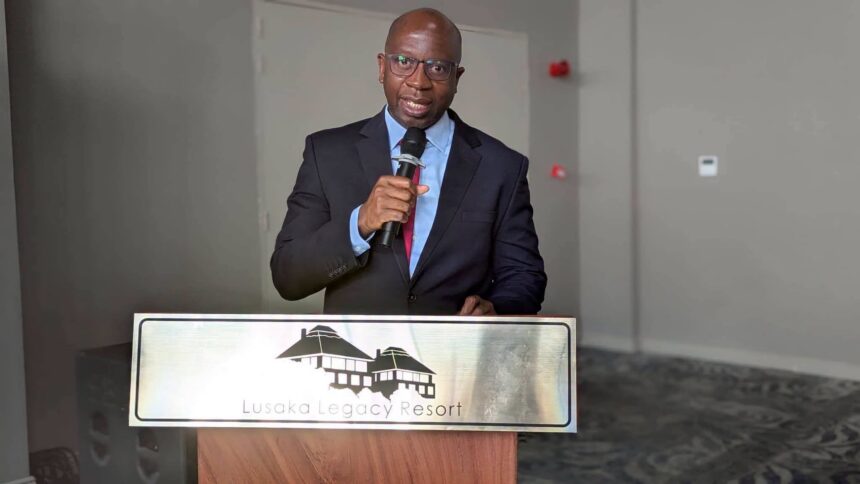
The green economy is being positioned as a central part of Zambia’s Grow Zambia Agenda, with the Government seeking to balance economic development with environmental sustainability. Permanent Secretary in the Ministry of Green Economy and Environment, Dr Douty Chibamba, says Zambia’s economic transformation must take place without undermining the natural resources and ecosystems that support livelihoods and development. Speaking during a special interview on ZNBC TV1, Dr Chibamba explained that environmental considerations are closely connected to major sectors of the economy. These include mining, agriculture, tourism, energy and industrialisation, all of which depend on sustainable access to natural resources. His remarks highlight the growing focus on green financing, renewable energy, carbon markets, clean cooking, waste management and nature-based projects as potential drivers of economic growth and employment.
Dr Chibamba said the Ministry of Green Economy and Environment provides an environmental foundation for Zambia’s industrialisation and wider economic development. Industrial activity can generate jobs, investment and government revenue, but it also needs systems that manage environmental risks and protect natural resources. The same principle applies to mining, agriculture, tourism and energy development, which can all have significant effects on land, water, forests and communities. Integrating environmental considerations into economic planning can help Zambia pursue growth while addressing long-term sustainability concerns. This approach places the green economy within the broader development agenda rather than treating environmental protection as a separate policy area.
The concept of a green economy focuses on economic activity that supports growth while using natural resources responsibly and reducing environmental damage. For Zambia, this approach is particularly relevant because the country has substantial natural resources that support both economic activity and rural livelihoods. Agriculture depends on productive soils and reliable water resources, while tourism relies heavily on wildlife, forests, landscapes and other natural assets. Mining and energy development also require effective environmental management to reduce risks associated with pollution, land degradation and resource use. A stronger green economy can therefore help protect the resources that Zambia needs for both current development and future economic activity.
Green financing is one of the areas the Ministry is pursuing as it seeks to support sustainable development at scale. Dr Chibamba said Government is working with other public institutions and the private sector to mobilise financing through instruments such as green bonds, sustainability bonds and blended financing. These financial mechanisms can help direct capital toward projects that have environmental or sustainability benefits while supporting economic activity. Green bonds can be used to raise funds for qualifying environmental projects, while sustainability-linked approaches can connect financing with defined sustainability objectives. Blended financing can combine different sources of capital to help make projects more attractive and support investments that might otherwise struggle to secure sufficient funding.
The mobilisation of green finance could open new opportunities for Zambia’s private sector and public institutions. Sustainable infrastructure projects often require substantial upfront investment, particularly in areas such as renewable energy, waste management and clean technology. Access to appropriate financing can help businesses develop projects that reduce environmental impacts while creating economic value. It can also support the expansion of technologies and services that may require significant capital before they become commercially viable. The success of these financing efforts will depend on strong project development, clear regulations, investor confidence and effective environmental standards.
Renewable energy is another area highlighted by Dr Chibamba as a potential source of economic opportunity. Zambia has significant potential for renewable energy development, particularly through technologies that can expand access to reliable and cleaner sources of power. Increased renewable energy investment can support businesses, households and productive activities while creating demand for construction, engineering, maintenance and other services. Energy development can also support industrialisation because reliable electricity is essential for manufacturing and other economic activities. Expanding clean energy therefore has implications for both environmental sustainability and Zambia’s broader economic development objectives.
Clean cooking also presents an important opportunity within Zambia’s green economy. Many households in developing economies continue to rely on traditional cooking fuels and technologies that can contribute to indoor air pollution and environmental pressure. Expanding access to cleaner cooking solutions can improve household conditions while creating markets for new products, services and technologies. The transition can also support employment in distribution, installation, maintenance and related sectors. By treating clean cooking as both an environmental and economic issue, Zambia can address household energy needs while developing new areas of green economic activity.
Waste management is another sector with potential to create economic opportunities while addressing environmental challenges. Growing towns and cities generate increasing amounts of household, commercial and industrial waste that require effective collection, treatment and disposal systems. Better waste management can reduce pollution and improve public health while creating opportunities for recycling, waste recovery, composting and other activities. These industries can generate employment for workers at different skill levels and create opportunities for local enterprises. Developing a stronger waste economy can therefore support both environmental protection and job creation.
Carbon markets are also emerging as an area of interest within Zambia’s green economy strategy. Carbon markets can provide financial incentives for projects that reduce or remove greenhouse gas emissions, depending on the applicable rules and standards. Projects involving forests, renewable energy, improved land management and other activities may have potential to generate carbon-related revenues when they meet relevant requirements. Effective regulation and credible measurement systems are essential because carbon projects need to demonstrate that claimed environmental benefits are real and properly accounted for. Zambia’s development of carbon market opportunities therefore requires careful coordination between government, investors, communities and technical institutions.
Nature-based projects provide another possible link between environmental protection and economic development. Such projects can involve activities that protect, restore or sustainably manage ecosystems while generating economic or environmental benefits. Zambia’s forests, wetlands, wildlife areas and other natural ecosystems have value for communities and the wider economy. Protecting these resources can support tourism, climate resilience, water security and livelihoods. If properly designed, nature-based projects can also create employment and attract investment while helping communities participate in sustainable resource management.
Mining remains particularly important to Zambia’s economic ambitions, especially as the country seeks to increase copper production. Dr Chibamba stressed that environmental compliance and modern technologies are essential as mining activity expands. Higher copper production can contribute to economic growth, but mining operations must operate within environmental requirements designed to manage their impacts. Modern technologies can help companies improve efficiency, monitor environmental conditions and manage waste and other risks. Strong environmental oversight will therefore remain important as Zambia seeks to expand its mining industry while maintaining responsible management of natural resources.
The relationship between mining and environmental sustainability is especially important because mineral extraction involves significant use of land, water, energy and other resources. Effective environmental management can help reduce risks while allowing mining companies to continue contributing to national economic development. Compliance with environmental requirements also provides a framework for companies to manage their responsibilities to surrounding communities and ecosystems. The adoption of modern technology can support better monitoring and more efficient operations where appropriate. Zambia’s challenge is to maintain investment and production growth while ensuring that environmental standards remain an integral part of mining development.
Dr Chibamba also called for stronger cooperation between Government, the private sector, traditional leaders and local communities. Environmental challenges often extend beyond the boundaries of individual projects and require cooperation between different groups. Traditional leaders and communities can provide important local knowledge and have a direct interest in how land and natural resources are managed. Private companies bring investment, technology and operational capacity, while Government provides policy, regulation and institutional coordination. Bringing these groups together can improve the design and implementation of sustainable development initiatives.
Community participation is particularly important when green economy projects involve land, forests, water resources or other assets that support local livelihoods. People living in affected areas need meaningful opportunities to participate in decisions that influence their communities and natural resources. Strong engagement can also help identify local priorities and reduce misunderstandings around development projects. Where projects generate economic benefits, transparent arrangements can help ensure that communities understand how those benefits are created and distributed. This makes collaboration a practical part of environmental governance rather than simply a policy principle.
The green economy agenda also has implications for employment in Zambia. Renewable energy, waste management, sustainable agriculture, environmental services, carbon markets and nature-based projects can create demand for workers with different technical and professional skills. Green jobs can range from engineering and project management to recycling, environmental monitoring, construction and community-based activities. Developing these opportunities will require investment in skills training and education so that Zambians can participate in emerging industries. Local workforce development can help ensure that green investment contributes to broader economic participation rather than creating benefits that remain concentrated among external companies and specialised contractors.
Dr Chibamba’s remarks present the green economy as a practical component of Zambia’s economic development strategy rather than an issue limited to environmental protection. The Government’s focus on green financing, renewable energy, carbon markets, clean cooking, waste management and nature-based projects reflects an effort to identify economic opportunities within the transition toward more sustainable development. At the same time, the emphasis on environmental compliance in mining shows that existing industries remain central to the approach. The success of this agenda will depend on investment, effective regulation, technology, skills and cooperation across different parts of society. For Zambia, integrating environmental sustainability into economic planning could help create conditions for growth while protecting the natural resources that future development will depend on.