






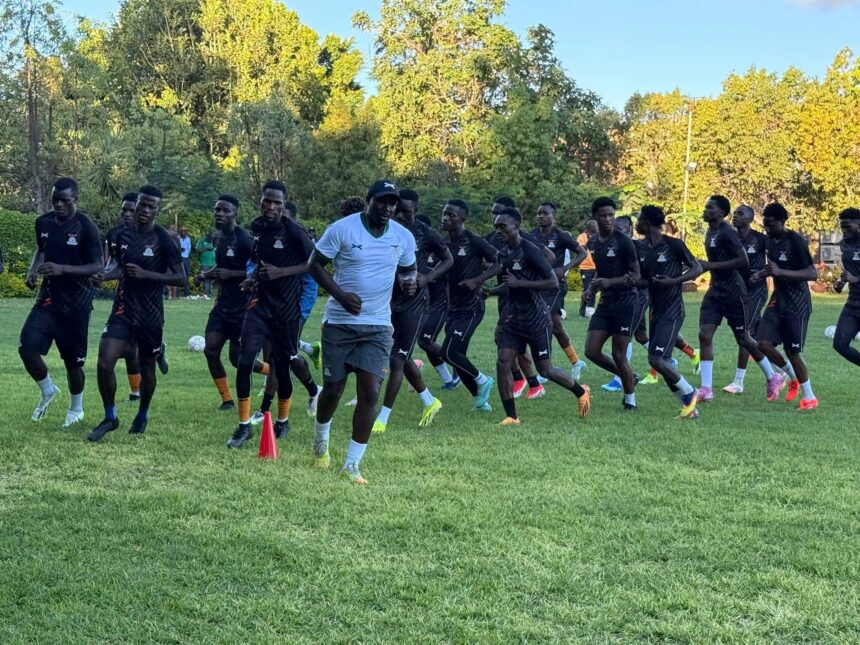
The Football Association of Zambia (FAZ) has appointed Chisi Mbewe as head coach of the Zambia Under-23 Men’s National Team as the country begins preparations for the 2027 Africa Cup of Nations Under-23 qualifiers. The appointment places Mbewe in charge of a team with both immediate and long-term objectives, including qualification for the Under-23 Africa Cup of Nations in Egypt and a potential place at the 2028 Olympic Games in Los Angeles. Mbewe brings considerable experience within Zambia’s youth development structures after previously working with the Under-15 and Under-20 national teams. His familiarity with the country’s emerging players will be important as the team prepares for a demanding qualifying campaign. FAZ has also assembled a technical bench made up largely of experienced local coaches and former national team figures.
FAZ General Secretary Charles Chakatazya confirmed that Mbewe, who currently coaches Super League side Red Arrows, will lead the Under-23 technical team. He will be assisted by Numba Mumamba as first assistant coach, George Chilufya as second assistant coach and Kalililo Kakonje as goalkeeper coach. The coaching structure also includes 2012 Africa Cup of Nations winning vice-captain Chintu Kampamba, who has been appointed physical coach. Luka Kaunda will serve as the video analyst while Mumba Mwila takes up the role of team manager. The appointments reflect FAZ’s decision to place local coaching talent at the centre of the Under-23 programme as Zambia looks to build a competitive squad for the next stage of its development.
Mbewe’s previous work with Zambia’s youth teams gives him a strong foundation for the new assignment. He was previously head coach of the Zambia Under-20 team that qualified for the Under-20 Africa Cup of Nations in Egypt in 2023. His involvement at different youth levels has also given him an opportunity to work with players at various stages of their development and understand the demands of transitioning young footballers into senior international football. That experience could prove valuable as the Under-23 side prepares to face opponents in a competition where tactical discipline and player development are equally important. Mbewe will now be expected to use that experience to create a team capable of competing for continental qualification while preparing players for the possibility of representing Zambia at the Olympic Games.
Chakatazya said the appointments followed a rigorous process through which FAZ identified some of the country’s strongest local coaching talents. He highlighted Mbewe’s previous involvement in the national youth system as one of the reasons he was considered suitable for the position. The FAZ General Secretary also stressed that the coaching staff has been given a long-term mandate that extends beyond the immediate qualification campaign. The first objective will be to secure qualification for the 2027 Under-23 Africa Cup of Nations in Egypt. The bigger target will then be to use that platform to pursue qualification for the 2028 Olympic Games in Los Angeles.
Zambia face a challenging route to the 2027 Under-23 Africa Cup of Nations after being handed a second-round tie against either Sierra Leone or Burkina Faso. The identity of Zambia’s opponent will depend on the outcome of the first-round contest between those two nations. Zambia will enter the qualifying competition at the second-round stage, giving Mbewe and his technical team limited time to prepare the squad before the first decisive matches. The first leg is scheduled for 9 November, with the return leg set to take place eight days later. The two-match tie will provide an early test of Mbewe’s tactical approach and his ability to prepare young players for the pressure of competitive international football.
Qualification for the Under-23 Africa Cup of Nations has proved difficult for Zambia in recent years. The country’s last appearance in the qualification phase came in 2019 in Egypt under coach Beston Chambeshi, with the campaign ending in a first-round exit. Zambia will therefore be aiming to make significant progress this time around and return to the continental Under-23 competition. Reaching the tournament would give the country’s emerging players an opportunity to compete against some of Africa’s strongest youth teams. It would also provide valuable international exposure for players who could form part of Zambia’s senior national team in the years ahead.
The technical bench includes several individuals with experience across different areas of football development and national team operations. Chintu Kampamba brings experience from Zambia’s successful 2012 Africa Cup of Nations campaign and will focus on the physical preparation of the players. Kalililo Kakonje will be responsible for developing the team’s goalkeeping department, while Numba Mumamba and George Chilufya will support Mbewe in the technical and tactical preparation of the squad. The inclusion of Luka Kaunda as video analyst also highlights the growing importance of match analysis and tactical preparation in modern football. Together, the staff will be responsible for ensuring that the players arrive at the qualifiers physically prepared, tactically organised and mentally ready for the demands of international competition.
The wider support team also includes Mumba Mwila as team manager, Ndaba Sipuke as team doctor and Nimrod Musongwa as physiotherapist. Nchimunya Mwila has been appointed security manager, while former Zambia international Given Singuluma will serve as equipment manager. Singuluma was the golden boot winner at the 2009 African Nations Championship, giving the technical team another former international with significant experience of high-level African football. The different roles are important because success at international youth level depends on more than coaching and tactics. Player welfare, logistics, medical support, equipment management and match preparation will all contribute to the team’s ability to perform during the qualifying campaign.
For Mbewe, the appointment represents an opportunity to continue his work in Zambia’s youth football structures while taking on a larger competitive challenge. His experience with the Under-15 and Under-20 teams means he has already worked within the national development pathway and understands the importance of identifying and developing talent. The Under-23 level is particularly important because it sits close to senior international football, making it a crucial stage for players hoping to progress to the Chipolopolo. A successful campaign could therefore benefit both the immediate Under-23 team and Zambia’s broader national team programme. Mbewe will need to strike a balance between achieving results and developing a group of players capable of making the step into senior football.
The Olympic objective adds another layer of importance to the assignment. Qualification for the 2027 Under-23 Africa Cup of Nations is the immediate target, but the tournament can also serve as a pathway towards the 2028 Olympic Games in Los Angeles. That means the technical team must think beyond the November qualifiers and develop a squad with enough depth and quality to compete over a longer period. Players will need consistent opportunities to train together, while the coaching staff will have to monitor performances across domestic football and identify individuals who can strengthen the national setup. The success of the programme will ultimately depend on how effectively FAZ, the technical team and the clubs work together to prepare the next generation of Zambian international players.
With the first qualifying leg scheduled for 9 November, Mbewe now faces the task of quickly assembling and preparing his squad. The potential opponents, Sierra Leone or Burkina Faso, will bring different tactical challenges and will require careful preparation. The first leg and return match will also leave little room for mistakes, making defensive organisation, fitness and efficient use of chances particularly important. Zambia’s previous difficulties in reaching the Under-23 Africa Cup of Nations underline the significance of every match in the qualification process. Mbewe and his technical team will be expected to make the most of the preparation period and give the players a clear tactical identity before the qualifiers begin.
FAZ’s decision to appoint Mbewe and surround him with an experienced local technical team signals a clear focus on developing Zambia’s young football talent while pursuing competitive results. The immediate challenge is to navigate the second round of the 2027 Under-23 Africa Cup of Nations qualifiers and secure a place in the tournament in Egypt. Beyond that, the programme carries the larger ambition of taking Zambia to the 2028 Olympic Games in Los Angeles. Mbewe’s previous youth coaching experience, combined with the expertise of his technical and support staff, gives the team a structure from which to build. The coming qualifiers will provide the first major test of that plan and could mark an important step in Zambia’s efforts to strengthen its next generation of international footballers.